

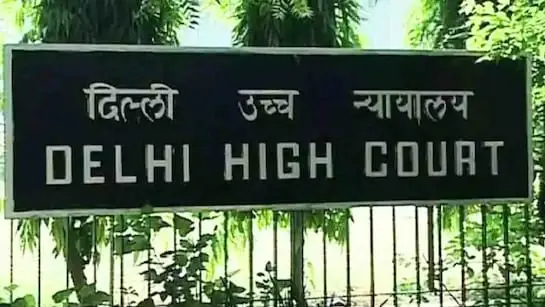
New Delhi: In a significant step to ensure the speedy prosecution of question paper leak cases and other examination-related offences, the Delhi High Court has designated a special fast-track court at the Rouse Avenue Courts. District Judge Anu Grover Baliga has been appointed as the Special Judge to exclusively hear criminal cases arising from question paper leaks, impersonation, cheating, and the use of unfair means in public examinations.
The decision comes amid growing concerns over repeated allegations of paper leaks and recruitment examination scams across the country. In recent weeks, students have staged protests demanding greater transparency in the examination system and stricter action against those responsible for compromising the integrity of competitive and recruitment examinations. The establishment of a dedicated court is intended to accelerate judicial proceedings in such cases.
According to the Delhi High Court’s order, the special court will exclusively hear criminal matters registered under the relevant legal provisions relating to question paper leaks, examination fraud, impersonation, cheating, and the use of unfair means in public examinations. The primary objective is to ensure the timely disposal of these cases and strengthen accountability for offences that undermine the credibility of the examination process.
Judge Anu Grover Baliga, who is currently serving as District Judge (Commercial)-04 in the South-East District, has been entrusted with presiding over the newly designated court. The judiciary expects that the specialised court will help reduce the backlog of pending cases while reinforcing public confidence in the fairness and integrity of the examination system.
The development follows Prime Minister Narendra Modi’s recent announcement that dedicated fast-track courts would be established to deal with paper leak cases. The Prime Minister had stated that those involved in question paper leaks and recruitment examination fraud would face strict legal action and that judicial proceedings in such cases would be expedited. The Delhi High Court’s move is widely seen as an important step in implementing that broader initiative.
In recent years, several states have witnessed high-profile cases involving question paper leaks in competitive examinations and government recruitment processes. These incidents have affected the careers of millions of aspirants and raised serious concerns about the transparency, credibility, and fairness of public examinations. Investigating agencies have, in several cases, uncovered allegations of organised networks, middlemen, and technology-enabled operations allegedly involved in leaking examination papers.
Legal experts believe that the creation of a dedicated fast-track court will enable such cases to receive greater judicial priority than they would in regular courts. They say the specialised mechanism is expected to improve coordination between investigating agencies, prosecutors, and the judiciary, resulting in faster trials and quicker resolution of pending cases. Timely convictions, they add, could also serve as a strong deterrent against future examination-related fraud.
Experts in education and recruitment administration emphasise that judicial reforms alone will not be sufficient to eliminate paper leaks. They argue that stronger preventive measures—including enhanced question paper security, encrypted distribution systems, advanced digital surveillance, biometric verification, tighter monitoring at examination centres, and robust cybersecurity infrastructure—are equally essential. According to them, only a combination of administrative reforms and an efficient judicial framework can ensure the long-term credibility, transparency, and integrity of public examinations.
