

The pitch was irresistible to any small business owner trying to break into international markets. A professional-sounding caller, sometimes using a foreign WhatsApp number, would reach out with an offer: their firm could connect the exporter with verified overseas buyers, handle export documentation, and secure the certifications needed to close international deals.
All it required was a small registration amount to get started.
That Rs 5,000 opening fee was the first step in a carefully engineered trap. By the time victims realised what was happening, they had paid Rs 19,780 for export service packages and Rs 41,300 for purported Global GAP and Trust Certifications — documents that existed only as fabrications.
On Wednesday, the Cyber Police Station of New Delhi District shut the operation down.
Inside The Raid
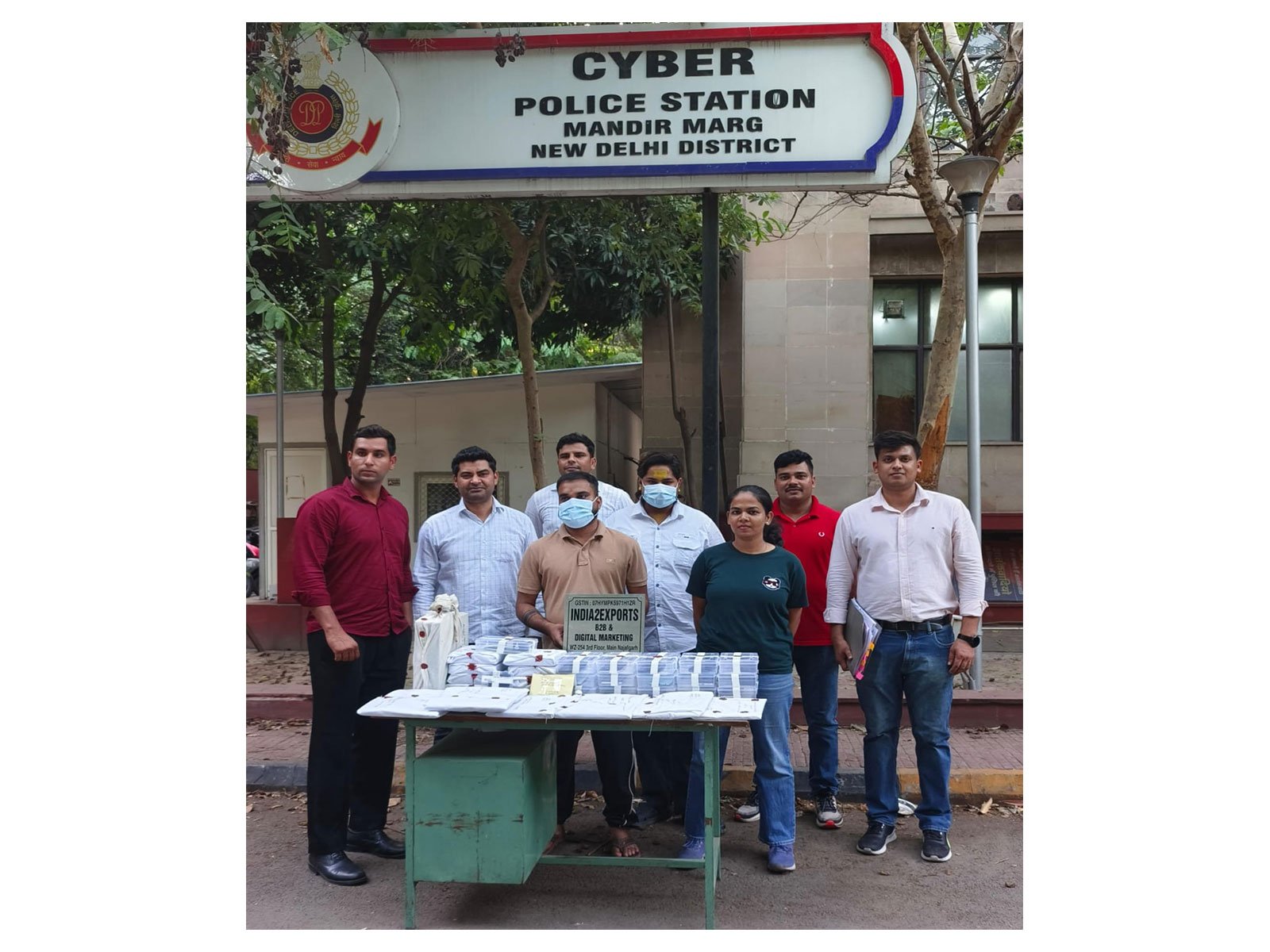
Acting on multiple NCRP cyber fraud complaints received from different parts of the country, a dedicated team from the Cyber Police Station raided a premises in Delhi under the supervision of the SHO and ACP of Connaught Place, busting a fake call centre engaged in fraudulent export consultancy operations.
Eighteen people were apprehended, including the alleged mastermind and owner of the call centre, identified as Pradeep Kumar. A second accused, Sammi Kumar Giri, along with 16 telecallers — 14 women and 2 men — has been bound down under the relevant provisions of the Bharatiya Nagarik Suraksha Sanhita. Investigators recovered 20 mobile phones, 35 SIM cards, 6 laptops, 9 CPUs and one debit card from the premises. All seized devices are undergoing forensic analysis.
So far, 19 cyber fraud complaints involving a total cheated amount of Rs 10,57,780 have been linked to the syndicate. Investigation is continuing to identify additional victims and trace the full proceeds of the crime.
The Three-Stage Trap
The fraud operated with a discipline that reveals careful planning. It moved through distinct stages, each designed to deepen the victim’s financial commitment before the final exit.
Stage one was legitimacy. Fraudsters posed as representatives of a genuine-sounding export consultancy firm, using international WhatsApp numbers to create the impression of a globally connected business. Fabricated communications — fake purchase orders, forged buyer correspondence — were sent to reassure victims that real international interest existed in their products.
Stage two was the fee ladder. The initial Rs 5,000 registration amount was small enough to feel like a reasonable business expense. Once paid, it unlocked the next demand: Rs 19,780 for an export service package. The logic presented to victims was consistent — these were standard procedural costs, necessary steps before the buyer’s advance payment could be released.
Stage three was the certification trap. Victims were told that a large international wire transfer could not clear unless they uploaded specialised documentation — Global GAP, Trust Certifications or other export-related clearances. When victims stated they did not possess these documents, the fraudsters offered to process them overnight through their empanelled agencies for additional fees. The certification packages, once delivered, were completely fabricated templates used solely to extract more money.
After the final payment, the calls stopped. The buyers never materialised. The orders never arrived.
A Growing Target: India’s Export Community
This is the second major export fraud bust in Delhi in a short span. A similar operation was recently dismantled in Dwarka, where a call centre at Aggarwal Mall ran an identical multi-stage scheme targeting traders and small business owners with promises of ISO and CTPAT certifications and overseas contracts. In that case too, the masterminds had already absconded by the time police arrived.
The pattern points to a deliberate targeting of a specific and vulnerable community — India’s small and medium exporters. These are business owners who are actively looking to grow, who may not be deeply familiar with international trade compliance requirements, and who are conditioned to expect administrative costs as part of doing business globally. The fraudsters understand this psychology and build their scripts around it.
India’s export ambitions are real and growing. So, unfortunately, is the ecosystem of fraud that feeds off them.
What Exporters Must Know
No legitimate export consultancy cold-calls a business owner, demands upfront certification fees before showing a single verified buyer, or processes Global GAP and international trade certifications overnight for a fixed fee paid into a personal account. Verify any firm claiming to connect you with foreign buyers through official channels — the DGFT, APEDA, FIEO or the Ministry of Commerce. If you have already paid fees to such a firm and received nothing in return, file a complaint immediately at cybercrime.gov.in or call 1930.
Follow for daily updates on cybercrime, corporate fraud, DFIR, hacking, investigations, and digital forensics
