
Follow us on Google News

A 64-year-old man from Karamadai in Tamil Nadu’s Coimbatore district has allegedly lost ₹28.07 lakh after being persuaded to invest in a fraudulent online stock trading scheme promoted through WhatsApp.
The victim, identified as A Prabhuram, transferred the money to multiple bank accounts over approximately one month after being promised attractive returns on his investments.
The Coimbatore district cybercrime police registered a case on Thursday following an examination of his complaint. Investigators are looking into the financial transactions to identify those responsible for the alleged fraud.
FCRF’s Chief AI Officer Certification Returns on November 14 to Prepare Future AI Leaders
WhatsApp Trading Offer Leads To ₹28 Lakh Financial Loss
According to the complaint, Prabhuram was contacted through WhatsApp by an individual identifying himself as Amartha Dev, who introduced him to an online stock trading investment opportunity.
The individual allegedly persuaded Prabhuram to invest money by promising substantial returns. Believing the offer to be genuine, the senior citizen began transferring funds to bank accounts specified by the suspected fraudster.
Between August 29 and September 29, Prabhuram transferred a total of ₹28,07,480.
However, the promised investment returns never materialised. The individual who had encouraged him to invest subsequently stopped responding to his messages, leaving Prabhuram unable to recover his money.
Realising that he had allegedly been cheated, the victim approached the cybercrime police and submitted a complaint.
Following a preliminary investigation, police registered a case on November 12.
Investigators have not publicly confirmed the actual identity of the person who introduced himself as Amartha Dev. No arrests or recovery of the stolen money have been reported so far.
Fraudulent Trading Schemes Exploit Investors’ Trust
Online investment frauds frequently begin with unsolicited messages on WhatsApp, Telegram or other social media platforms. Criminals approach potential victims while presenting themselves as financial advisers, experienced traders or representatives of investment companies.
Their objective is to convince individuals that they can earn substantial profits through stock market investments without possessing extensive financial knowledge.
In several such schemes, fraudsters provide access to fake trading applications or websites that display fabricated investment balances and profits.
These platforms can make victims believe their money is generating returns even when no genuine investment has been made.
Some operators allow small initial withdrawals to establish credibility before persuading investors to transfer larger amounts. When victims subsequently attempt to withdraw their money, the operators may impose additional charges or stop communicating altogether.
Police have not disclosed whether Prabhuram was provided access to a fraudulent trading application or shown fabricated investment statements. However, the alleged promise of attractive returns and instructions to transfer money into multiple accounts are consistent with methods frequently used in investment fraud.
Such schemes can be particularly damaging for senior citizens who may invest money accumulated over several decades. A substantial financial loss can affect their ability to meet healthcare expenses, household costs and other long-term financial commitments.
Coimbatore Records Hundreds Of Online Trading Fraud Complaints
The latest investigation comes amid continuing concerns about investment-related cybercrime in Coimbatore district.
In September 2026, District Cybercrime Inspector K Kavitha disclosed that police had received 216 complaints concerning fraudulent online trading schemes during the year.
The district’s rural cybercrime unit had registered 118 cybercrime cases over nine months, arrested 25 individuals and recovered approximately ₹2.10 crore.
Earlier, in August, Coimbatore district cybercrime police registered three separate cases involving online trading frauds with combined losses of around ₹99 lakh.
One of those cases involved a 41-year-old resident who allegedly lost ₹39.93 lakh after following investment recommendations shared through a WhatsApp group called Golden Pathway.
The victim reportedly invested through a fraudulent mobile trading application but was unable to withdraw his money.
In another case, a 30-year-old resident of Sulur transferred ₹21.31 lakh through 29 transactions after being approached through WhatsApp and promised high returns on an online trading platform.
These investigations are separate from Prabhuram’s complaint. However, they demonstrate the repeated use of messaging platforms to establish contact with victims and direct money into suspected fraudulent investment operations.
Police Face Challenges In Tracing Fraudulent Investments
Recovering money lost through online trading fraud can become increasingly difficult when funds pass through several bank accounts.
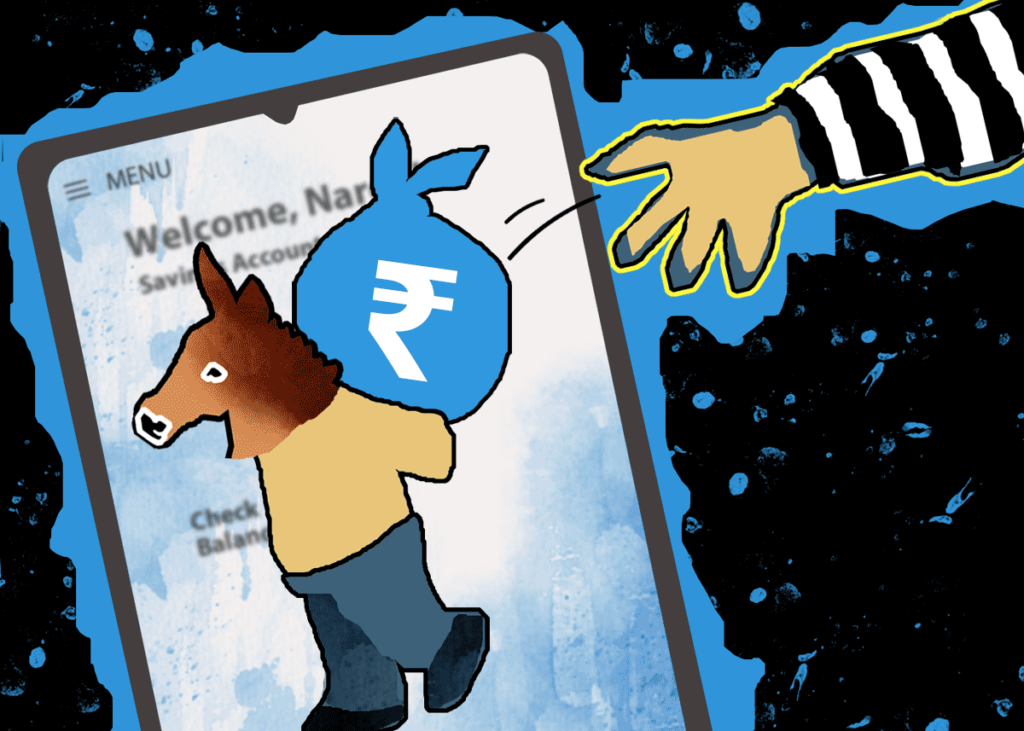
Criminal networks frequently use accounts belonging to other individuals, commonly known as mule accounts, to receive and transfer fraud proceeds.
Investigators must establish who controls these accounts, examine transaction records and determine where the money was subsequently transferred.
Timely reporting can improve the possibility of freezing suspicious transactions before the funds are withdrawn or moved elsewhere.
The Securities and Exchange Board of India has repeatedly cautioned investors against fraudulent trading platforms promoted through social media, particularly those promising guaranteed profits or unusually high returns.
Investors can independently verify whether stockbrokers and investment advisers are registered with the regulator before transferring money.
In the Karamadai case, the investigation remains focused on identifying the suspected fraudster and tracing the ₹28.07 lakh transferred by Prabhuram. Police have not yet established whether the accounts receiving his money are connected to other cybercrime complaints.
What This Means For You:
Never transfer investment funds on the instructions of an unknown WhatsApp contact, and independently verify trading platforms and financial advisers through SEBI’s official website. If you suspect investment fraud, immediately contact your bank and report the incident through the national cybercrime helpline 1930 or cybercrime.gov.in.