
Follow us on Google News

Bihar Police have identified 1,09,475 suspected mule bank accounts containing a combined balance of ₹72.53 crore, marking a major expansion of the state’s crackdown on financial networks supporting cybercrime.
The accounts, spread across all 38 districts, will be targeted under the newly launched Cyber Prahar 5.0 campaign. Police are preparing legal action against individuals suspected of facilitating fraudulent financial transactions through these accounts.
Inspector General of Police, Cyber Crime and Security Unit, Ranjit Kumar Mishra disclosed the findings during a press conference at the police headquarters in Patna on Friday.
The development comes as Bihar continues to record substantial financial losses from cyber fraud, with criminals increasingly relying on networks of bank accounts to receive and transfer stolen money.
Patna Tops List Of Districts With Suspected Mule Accounts
According to the latest police assessment, Patna accounts for the largest number of suspected mule bank accounts in Bihar, with 14,644 accounts identified.
Gaya follows with 6,172 accounts, while Muzaffarpur has 4,244. Police have also flagged 4,197 accounts in Bhagalpur, 4,146 in Nalanda and 3,945 in West Champaran.
Other districts with substantial numbers include Siwan, Vaishali and Aurangabad.
The findings indicate that the suspected financial infrastructure supporting cybercrime extends well beyond Bihar’s traditionally identified fraud hotspots.
Mishra said Nawada, Nalanda and Patna continue to report a high incidence of cyber fraud. Police also plan to establish an additional cybercrime police station in Patna district to strengthen investigative capacity.
The classification of an account as a suspected mule account does not automatically establish criminal involvement by its registered holder. Investigators must examine the circumstances under which each account was opened, operated and used for financial transactions.
Bihar Records ₹121 Crore In Cyber Fraud Losses In Two Months
The police disclosure also highlighted the financial impact of cybercrime during September and October 2026.
Bihar recorded 47,659 cybercrime complaints during the two-month period, while the nationwide complaint count stood at 5,69,160.
Cyber fraud losses in Bihar amounted to ₹121.26 crore during these months.
Coordinated intervention by police and financial institutions helped place ₹36.94 crore on hold, representing 30.46% of the reported losses. Of the affected funds, ₹8.04 crore has already been returned to victims.
Bihar’s fund-freezing rate exceeded the national average of 28.35%.
However, placing money on hold and returning it to a victim are separate processes. Investigators must establish ownership of the funds, examine the transaction trail and complete the necessary legal procedures before the money can be released.
The ₹72.53 crore currently held in the newly identified suspected accounts should not be confused with the ₹36.94 crore placed on hold during September and October.
Cyber Prahar Expands Crackdown On Banking And SIM Card Networks
The latest operation follows several earlier phases of Bihar Police’s Cyber Prahar campaign.
Under Cyber Prahar 4.0, investigators identified 3,177 suspected mule accounts, registered 15 FIRs and arrested seven suspects. Notices were also issued to 448 individuals.
The subsequent Cyber Prahar 4.1 campaign identified another 1,226 accounts, resulting in 17 FIRs and 12 arrests. Those arrested included six point-of-sale SIM card sellers.
Police also blocked 385 SIM cards and 442 mobile handsets during their enforcement operations.
The involvement of SIM card sellers highlights the connection between fraudulent banking activities and the telecommunications infrastructure used by cybercriminals.
Registered mobile numbers are frequently required for banking verification, transaction notifications and authentication. Access to SIM cards connected to mule accounts can therefore help criminals control financial transactions remotely.
In an earlier crackdown in July, Bihar Police identified 5,035 suspected mule accounts linked to complaints involving nearly ₹63 crore in cyber fraud losses.
Investigators also examined the role of banking personnel and branches suspected of facilitating the opening of fraudulent accounts.
Why Mule Accounts Remain Central To Cybercrime
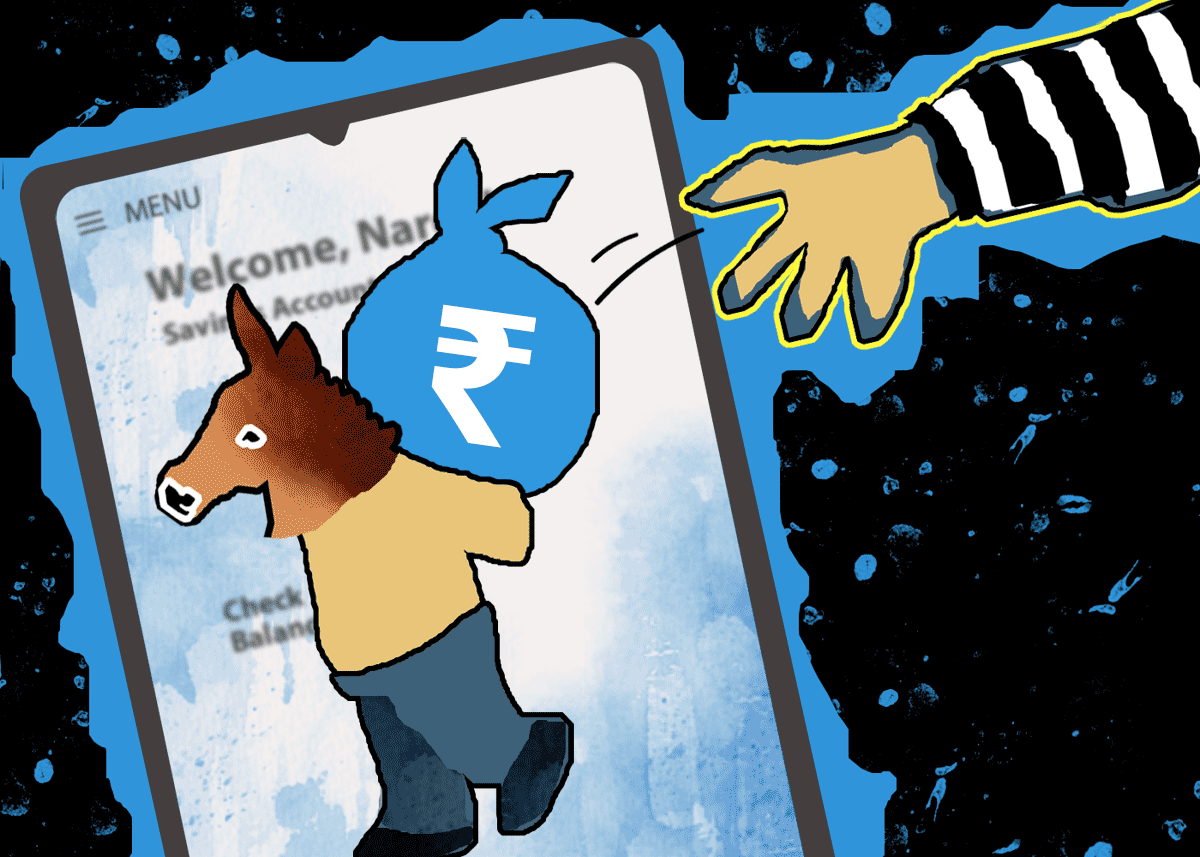
Mule accounts allow cybercriminals to receive and transfer stolen money without necessarily using bank accounts registered in their own names.
Criminals may offer commissions to individuals willing to surrender control of their accounts, while others may obtain banking facilities through stolen identities or fraudulent documents.
Once fraud proceeds enter these accounts, they can be transferred elsewhere, withdrawn or distributed across additional beneficiaries.
This makes identifying and restricting suspicious accounts an important part of preventing financial fraud.
In May 2026, the Indian Cyber Crime Coordination Centre and the Reserve Bank Innovation Hub signed an agreement to strengthen the detection of mule accounts using financial intelligence and artificial intelligence tools, including MuleHunter.ai.
Bihar Police have also expanded public awareness campaigns. Messages encouraging victims to call the national cybercrime helpline 1930 are being printed on 20 lakh Sudha milk packets daily, with plans to extend the initiative to electricity bills.
The latest Cyber Prahar campaign will focus on examining the suspected accounts and identifying the individuals and financial intermediaries responsible for their misuse.
What This Means For You:
Never allow another person to operate your bank account, SIM card or banking credentials in exchange for money or commissions. If you notice suspicious transactions or become a victim of financial fraud, immediately contact your bank and report the incident through 1930 or cybercrime.gov.in.