

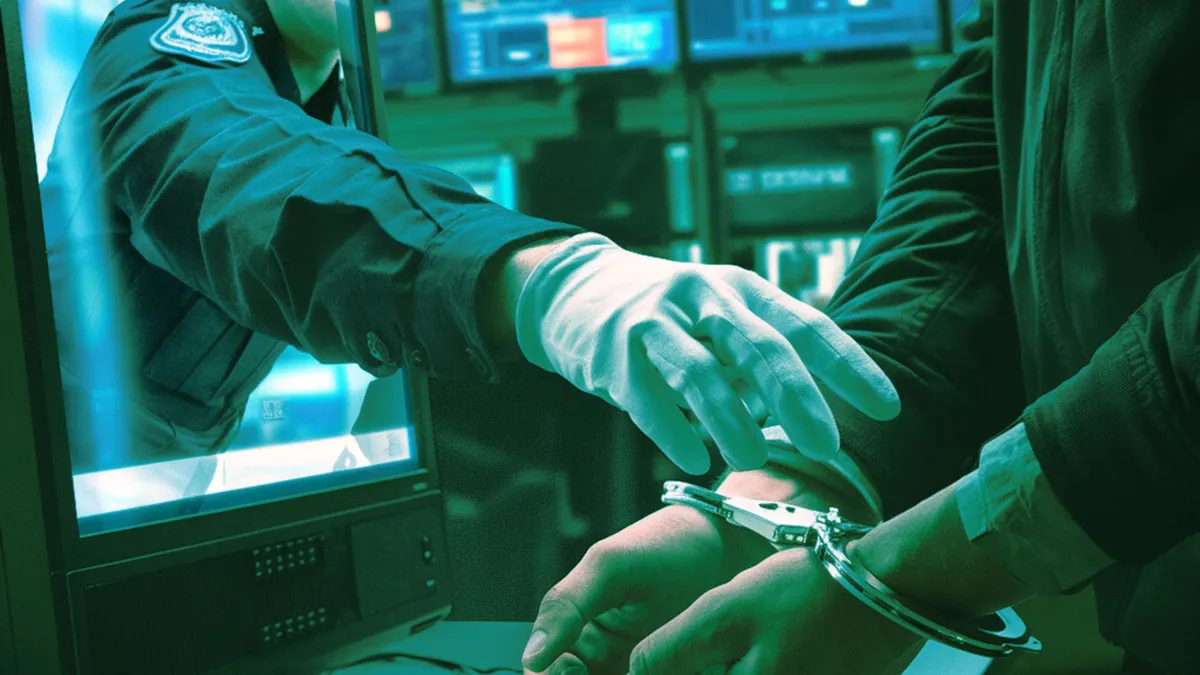

Coimbatore Cyber Crime Police have arrested a 46-year-old man from Kerala in connection with a digital-arrest fraud in which a retired government doctor from the city was allegedly cheated of ₹98.03 lakh.
The accused, identified as Rajesh K.R., allegedly received ₹20 lakh from the defrauded amount in a bank account operated by him before transferring the money onward.
Police allege that Rajesh received ₹15,000 as commission for routing the funds.
Investigators are now examining other suspicious transactions through his account to determine whether it was repeatedly used to receive and move cybercrime proceeds.
FCRF Launches CP-FRM to Build India’s Next Generation of Fraud Risk Professionals
Doctor Was Told Her Bank Account Was Linked to Crime
The original fraud took place in August.
According to Coimbatore City Cyber Crime Police, the retired government doctor received a WhatsApp video call from a person claiming to be a senior Central Bureau of Investigation officer.
The callers allegedly told her that suspicious or illegal financial transactions had been detected through her bank account.
They then claimed that she was under “digital arrest” and would need to cooperate with an investigation.
The doctor was allegedly instructed to transfer her savings into accounts provided by the callers for verification.
Police said she ultimately transferred ₹98,03,495 through multiple transactions.
After the money was transferred, the callers became unreachable.
The doctor subsequently approached Coimbatore Cyber Crime Police, which registered a case and began tracing the beneficiary accounts.
₹20 Lakh Allegedly Reached Kerala Accused’s Account
The investigation into those bank transfers eventually led police to Rajesh.
According to the latest police findings, ₹20 lakh from the doctor’s allegedly defrauded money reached an account operated by him.
Investigators allege that the money was subsequently transferred to another bank account.
Rajesh allegedly received a commission of ₹15,000 for allowing or facilitating the transaction.
Police are now trying to establish who instructed him to move the money and who ultimately received it.
The investigation will also examine whether Rajesh knowingly participated in the alleged cyber fraud network or whether his account was being used primarily to route funds.
His guilt has not been established in court.
Police Find Other Suspicious Transactions
Investigators say Rajesh’s account contained several other transactions that appeared suspicious and may be linked to separate cyber fraud complaints.
That has widened the scope of the probe.
Police are comparing the account history with existing cybercrime records to determine whether money from other victims was routed through the same account.
Such accounts are commonly referred to as mule accounts when they are used to receive or transfer fraud proceeds on behalf of a larger criminal network.
The mule account holder may receive a commission for allowing access to the account or for transferring incoming funds elsewhere.
In organised cybercrime, stolen money is often moved rapidly through several such accounts to make recovery and investigation more difficult.
Police Team Traced Accused to Kerala
Rajesh is a native of Manganam in Vijayapuram panchayat of Kerala’s Kottayam district.
Police said he had been residing at Punnavely near Mallappally in Pathanamthitta district.
A Coimbatore cybercrime team travelled to Kerala and arrested him before bringing him back to Tamil Nadu for further investigation and legal proceedings.
The police are now examining his banking history, mobile communications and connections with other suspected members of the network.
Investigators are also expected to trace the account to which the ₹20 lakh was allegedly transferred after reaching him.
What Is a Digital Arrest Scam?
There is no legal procedure in India called a “digital arrest”.
The term describes a cyber fraud in which criminals impersonate police officers, CBI officials, ED officers, customs authorities or other government agencies and frighten victims with fabricated criminal allegations.
Victims may be told that their Aadhaar number, mobile phone, parcel or bank account has been connected to money laundering, narcotics trafficking or another serious offence.
The fraudsters often keep the victim on a video call for hours or even days while pretending to conduct an official investigation.
They may then demand that money be transferred to a supposed “safe account” for verification.
No genuine law-enforcement agency asks citizens to transfer their savings to private or temporary accounts for such verification.
Money Trail Becomes Key to Wider Network
The latest arrest shows why investigators follow the movement of money even after the person who directly contacted the victim remains unidentified.
Each bank account can provide another link in the chain.
Account-opening documents, mobile numbers, login information, transfer records and ATM withdrawals can help police identify the people responsible for moving or withdrawing the proceeds.
In this case, investigators are now attempting to establish how many accounts were used after the doctor transferred her ₹98.03 lakh and whether the same financial network handled money from other victims.
The ₹20 lakh allegedly routed through Rajesh represents only part of the total amount lost.
The investigation into the remaining money and the people who directly impersonated law-enforcement officers continues.
What this means for you
Police, CBI, ED and other government agencies do not place people under “digital arrest” through WhatsApp or video calls and will not ask you to transfer money for verification. If such a demand is made, disconnect immediately and report the attempt through 1930 and the National Cyber Crime Reporting Portal.
Follow for daily updates on cybercrime, corporate fraud, DFIR, hacking, investigations, and digital forensics
