


Dutch eyewear retailer Hans Anders has suspended sales of Meta’s Ray-Ban smart glasses in the Netherlands and Belgium amid growing concerns that the camera-equipped devices can be used to record people without their knowledge.
The company said the decision followed an intensifying public and political debate around smart glasses and questions over the circumstances in which such technology should be used.
Hans Anders has stopped selling the glasses for an indefinite period, making it one of the first major eyewear retailers to take such action against Meta’s wearable devices.
The decision comes amid wider scrutiny in Europe and the United States over how smart glasses collect video, how clearly bystanders are informed when recording is taking place and what happens to captured material.
FCRF Launches CP-FRM to Build India’s Next Generation of Fraud Risk Professionals
Camera Glasses Can Look Almost Like Ordinary Eyewear
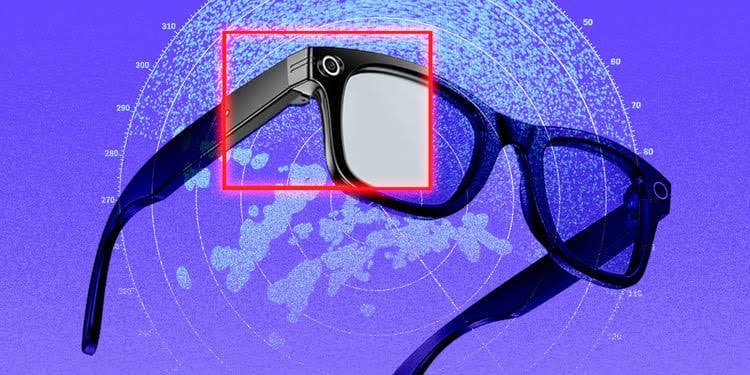
Meta’s Ray-Ban smart glasses combine cameras, microphones, speakers and artificial intelligence features within frames designed to resemble conventional eyewear.
Users can take photographs and record videos without holding a phone.
They can also use voice commands to interact with Meta’s AI assistant and perform functions such as making calls, listening to audio or asking questions about their surroundings.
That discreet design is part of the product’s appeal.
It is also at the centre of the privacy debate.
A person standing nearby may not immediately realise that a camera is present or that recording has started.
Dutch consumer group Consumentenbond has warned that the glasses make it relatively easy to record people without permission because they look similar to ordinary spectacles.
Dutch Consumer Group Says Recording Light Can Be Covered
Meta has repeatedly pointed to a small recording indicator light built into the glasses as a privacy safeguard.
The light flashes when the camera is recording and, according to Meta, cannot be disabled through software.
However, Consumentenbond said its tests showed the indicator could still be physically covered.
The organisation reported that placing something as simple as a sticker over the light could make it more difficult for people nearby to know that recording was taking place.
It also said software changes intended to prevent covert recording had not completely resolved the problem.
That raises a broader question about whether an indicator light is enough when the camera itself is integrated into something people wear throughout the day.
Hundreds of Women and Girls Allegedly Recorded Without Consent
Privacy concerns intensified in the Netherlands after reports that hundreds, and potentially thousands, of women and girls had been secretly filmed using camera-equipped smart glasses.
Dutch media reported that footage recorded in places including beaches, shopping streets and bathrooms had circulated through Telegram groups and so-called “creepshot” websites.
Online abuse prevention organisation Offlimits has called for stronger action and is working on legal proceedings related to the issue.
These allegations have increased pressure on retailers carrying the glasses.
Hans Anders said its decision was linked to the wider public debate rather than to one individual incident.
Dutch Privacy Regulator Raises Consent Concerns
The Netherlands’ privacy regulator has also raised questions about how recordings from smart glasses comply with data protection rules.
Under European privacy law, photographs or videos showing identifiable people can constitute personal data.
The rules governing such material depend on how and why the recording is made and what subsequently happens to it.
Reuters reported that Dutch privacy regulator Autoriteit Persoonsgegevens emphasised that videos containing identifiable people generally cannot simply be shared without appropriate legal grounds or consent.
Obtaining such consent can be particularly difficult when smart glasses are used in busy public environments.
The issue becomes more complicated when recordings are uploaded, processed by AI systems or shared on social platforms.
Meta Says Recording Indicator Protects Bystanders
Meta has defended the design of its smart glasses.
The company says the recording indicator was deliberately made visible so people nearby can recognise when video is being captured.
Meta also says the indicator cannot be disabled through software.
The company told Reuters that it continues to develop the product and pointed to the visible blinking light as an important privacy feature.
The company has not announced plans to stop sales because of the Dutch criticism.
Meta has instead continued expanding its wearable AI strategy.
Earlier this year, strong US demand even led Meta to delay the international rollout of its newer Ray-Ban Display glasses because supply was constrained.
Privacy Backlash Is Spreading Beyond the Netherlands
The concerns are not limited to Dutch consumers.
In Britain, pub chain Wetherspoon has restricted the use of Meta’s smart glasses because of concerns about covert recording.
In the United States, Meta and eyewear partner EssilorLuxottica are facing litigation alleging that videos captured using the glasses were reviewed by human annotators without the knowledge of people appearing in the footage.
The allegations remain subject to court proceedings.
California lawmakers have also debated tighter restrictions on wearable recording devices.
A bill that would have introduced additional penalties for secretly recording people using smart glasses was vetoed by Governor Gavin Newsom on October 1, after he argued that its definition of wearable recording technology was too broad.
Hans Anders Operates Hundreds of Stores Across Europe
Hans Anders is part of eyewear group Nexeye, which is owned by private equity firm KKR.
The group operates 776 stores across five countries.
However, Reuters reported that Meta’s Ray-Ban glasses were being sold through Hans Anders only in the Netherlands and Belgium.
Those sales have now been suspended.
The retailer has not announced when or whether it intends to resume selling the glasses.
Its decision could put pressure on other optical retailers to reassess whether they are comfortable selling camera-equipped eyewear while regulators and consumer groups continue examining privacy concerns.
Smart Glasses Create a Different Privacy Problem From Smartphones
A smartphone camera is usually obvious.
A person holding a phone toward someone else generally creates at least some visual indication that filming may be taking place.
Smart glasses change that dynamic.
The camera remains at eye level, can operate hands-free and is built into an object normally associated with vision rather than recording.
That makes it easier to capture natural interactions.
It also makes informed consent harder.
As AI features become increasingly integrated into wearable devices, regulators will have to address not only who records the footage but also how companies process it, whether AI systems analyse it and how long the resulting data is stored.
What this means for you
If someone is wearing camera-equipped smart glasses around you, do not assume the device works like ordinary eyewear. Recording may be possible without a phone being visible, and privacy rights can become especially important in workplaces, homes, changing areas and other sensitive spaces.
Follow for daily updates on cybercrime, corporate fraud, DFIR, hacking, investigations, and digital forensics
