
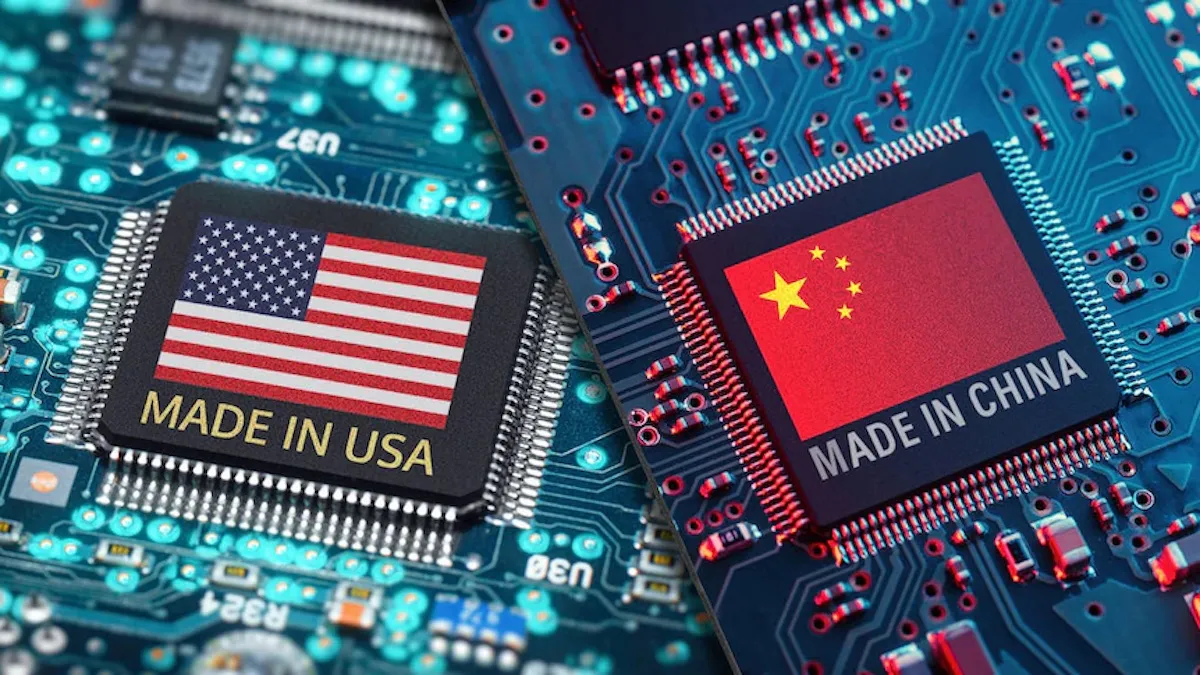

The geopolitical competition between China and the United States over artificial intelligence has intensified following the BRICS summit, transforming advanced technology into a central battleground for diplomatic influence and economic power. While China has proposed establishing a shared, open-source technological ecosystem for BRICS partners, the United States is actively restricting access to cutting-edge chips, semiconductor manufacturing tools, and cloud computing infrastructure to a network of trusted allies. The diverging strategies point toward an increasingly polarized technological landscape, even as countries such as India caution against turning critical technologies into instruments of geopolitical leverage.
Beijing Pushes Open-Source Framework Across Global South
At the concluding session of the BRICS summit in New Delhi on September 13, Chinese President Xi Jinping announced that China would spearhead an open-source artificial intelligence community for member states. The initiative focuses on joint development and deployment of large language models, specialized technical training, and an open infrastructure framework. This marks a strategic contrast to leading American firms, which have prioritized proprietary, controlled frontier models.
The move builds directly on Beijing’s expanding technological outreach to developing economies. In July 2026, China finalized an agreement with 29 nations to launch the World AI Cooperation Organization, bringing together countries such as Brazil, South Africa, Indonesia, Russia, Malaysia, Pakistan, Kenya, and Cuba. Through this initiative, China aims to integrate nations with limited domestic computing capabilities into an alternative, shared technical ecosystem, establishing long-term technological dependencies.
Washington Builds Export Curbs and Strategic Alliances
Washington has countered Beijing’s overtures by leveraging stringent trade restrictions alongside international partnerships to safeguard its competitive edge. The United States has enacted sweeping export controls covering high-performance microprocessors, chipmaking machinery, advanced AI systems, and cloud infrastructure, ensuring that access to critical computing assets remains limited to strategic partners.
Central to this effort is the Pax Silica alliance, a US-led framework dedicated to semiconductor security and AI governance. Following its June 2026 meeting, 34 member countries, including India, signed a joint declaration coordinating technology policy. Concurrently, the American administration has tied advanced semiconductor manufacturing and investment agreements to strategic accords with Gulf states. This deployment of the American technology stack reflects a broader strategy to contain Chinese technical progress while anchoring key regional players to Western digital platforms.
India Warns Against Weaponizing Technology as Global Divide Widens
Addressing the BRICS gathering, Prime Minister Narendra Modi warned against viewing technological growth solely through the lens of Sino-American competition. Modi cautioned that the weaponization of critical minerals and technology threatened to stall shared economic growth, insisting that transformative technologies like AI must remain accessible to developing nations across the Global South. Meanwhile, the European Union has maintained an independent regulatory posture, using strict compliance and safety mandates under its AI legislation to govern domestic market entry.
The rift between open technological communities and targeted export walls is expected to dominate discussions in the upcoming bilateral meeting between Xi Jinping and US President Donald Trump later this month. With data centers, compute capacity, and critical minerals becoming fundamental instruments of statecraft, the competition has moved past raw algorithmic innovation toward an enduring contest over global supply chains, market access, and strategic alignment.
Follow for daily updates on cybercrime, corporate fraud, DFIR, hacking, investigations, and digital forensics
