

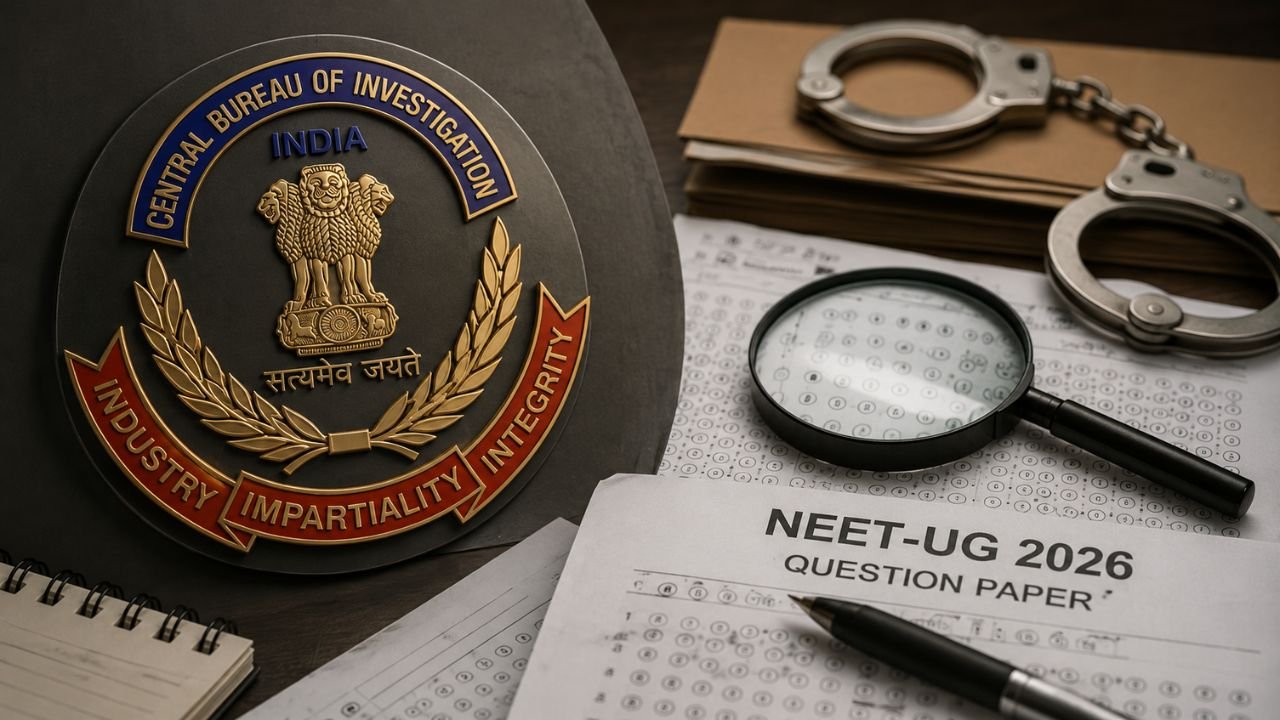

New Delhi | Amid the ongoing controversy surrounding the NEET-UG paper leak case, the Director of the Central Bureau of Investigation on Friday provided a detailed briefing to a parliamentary committee of the Rajya Sabha on the progress of the investigation. The meeting reviewed the current status of the probe, arrests made so far, and the steps being taken to trace absconding accused individuals.
According to sources, the session was held before the Government Assurances Committee, where a broader review of transparency in examinations and the integrity of the testing system was conducted. CBI Director Praveen Sood informed the panel that the investigation is progressing at multiple levels, with agencies linking different parts of the suspected network through technical and digital evidence.
FCRF’s Flagship Cyber Law Certification Returns With a New Four-Week Cohort
Senior officials, including the Higher Education Secretary Vineet Joshi, Director General of the National Testing Agency, and representatives of the National Medical Commission, also attended the meeting. Officials briefed the committee that enhanced security arrangements are being put in place for the upcoming re-examination scheduled for June 21, ensuring fairness, transparency, and strict monitoring at all examination centres.
The committee was informed that surveillance mechanisms at exam centres are being strengthened and digital security systems upgraded to prevent any recurrence of malpractice or paper leaks. Authorities emphasized that multi-layer verification and tighter invigilation protocols are being introduced as part of the re-exam framework.
Members of the parliamentary panel instructed officials to ensure that the medical admission seat matrix and counselling schedule remain unaffected under any circumstances. The seat matrix, which determines the allocation of undergraduate medical seats across institutions and categories, was described as a critical component that must remain stable and transparent throughout the admission cycle.
The discussion also revisited earlier assurances made in Parliament regarding the integrity of national-level examinations. Officials stated that recommendations made by an expert committee on examination reforms are being gradually implemented to strengthen security, reduce vulnerabilities, and improve the overall fairness of the testing system.
On the investigation side, the CBI informed the committee that several arrests have already been made, while efforts continue to apprehend other accused individuals who are still at large. The agency is examining digital records, mobile communications, and financial transactions to reconstruct the full network behind the alleged leak.
Officials further indicated that the probe is focused on identifying whether a coordinated syndicate operated across multiple locations to compromise the examination process. Investigators are also analysing whether any intermediaries or facilitators played a role in circulating leaked content or manipulating exam-related systems.
Experts believe that recurring paper leak incidents have raised serious concerns about the credibility of competitive examinations in India. As a result, both the government and investigative agencies are now prioritising long-term structural reforms alongside immediate enforcement actions.
The parliamentary committee reportedly emphasised that reforms in the examination system should not be limited to short-term fixes but must include sustained institutional safeguards to prevent future breaches. The focus, according to officials, is on building a more secure, technology-driven and accountable examination framework.
The CBI investigation remains ongoing, and officials have indicated that further arrests and additional revelations are likely in the coming days as the probe advances into deeper layers of the suspected network.
