

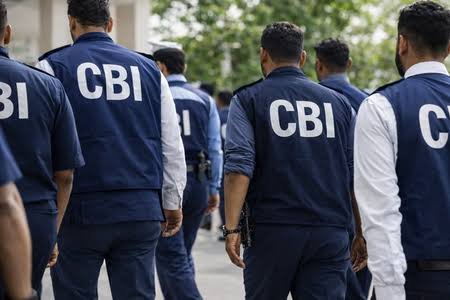

The Central Bureau of Investigation has arrested two people in Gujarat after conducting coordinated searches at 22 locations across 10 states in an ₹11.42 crore digital-arrest fraud case.
The accused, Himanshu Prasad and Unis Biswas, allegedly helped receive, layer and disperse part of the money transferred by a victim who was kept under a fake “digital arrest” for around three months. The action was carried out under Operation Chakra-VI, the CBI’s ongoing crackdown on organised cybercrime networks.
The searches led to the seizure of banking documents, account records, digital devices and other material that the agency is now examining to trace the wider financial and technical network behind the fraud.
Proposal for Conducting Cyber Crisis Drill, Tabletop Exercise (TTEx) & CCMP Readiness Exercise
Victim allegedly kept under digital arrest for three months
According to the CBI, cybercriminals impersonated police officers and officials of the Telecom Regulatory Authority of India, or TRAI.
The victim was allegedly made to believe that he was under investigation and was kept under constant psychological pressure for about three months. During this period, he was coerced into transferring ₹11.42 crore to bank accounts controlled by the syndicate.
Digital-arrest scams rely on fear rather than any real legal authority.
Fraudsters typically pose as police, CBI, customs, RBI or telecom officials and claim that a victim’s Aadhaar number, SIM card or bank account is linked to money laundering, narcotics or another serious offence.
They then pressure the victim to remain on a video or phone call and transfer money for supposed verification or safekeeping.
There is no legal process in India called a “digital arrest”.
₹2.5 crore allegedly routed through private company account
The new arrests are important because investigators say they have identified part of the financial chain used to move the victim’s money.
The CBI alleges that Prasad and Biswas used the bank account of M/s Hexaquest Global Pvt Ltd to receive ₹2.5 crore out of the ₹11.42 crore transferred by the victim.
The money was then allegedly sent onward to multiple accounts belonging to associates.
The agency says the purpose was to obscure the original trail and make it more difficult to connect the stolen funds with the people controlling the operation.
This process is often called layering.
Instead of allowing stolen money to remain in one account, fraud networks move it through several companies, mule accounts or individuals before withdrawing or converting it.
Each extra transaction makes tracing and freezing the funds more difficult.
CBI says accused also used APK files in cybercrime operations
The agency has also made a more unusual allegation against the two arrested men.
It says they were involved in using bank accounts and installing APK files to siphon proceeds generated through digital-arrest frauds and other cybercrimes.
An APK is the file format used to install applications on Android phones.
Legitimate apps also use APK files, but cybercriminals frequently send malicious versions through WhatsApp or SMS while disguising them as traffic challans, bank updates, KYC files or official documents.
Once installed and granted sensitive permissions, such apps can potentially access SMS messages, notifications or other device functions.
The CBI has not yet publicly detailed exactly how the APK files were used in this particular network or which victims were affected.
Searches spread across 10 states
The September 27 operation involved searches at 22 locations across 10 states.
The CBI said the locations were selected after financial and technical analysis of the money trail.
Investigators recovered banking records, account-related documents, digital devices and chats that may help identify other members of the network.
The seized devices are being examined forensically.
The agency says its focus is not only on the callers who impersonate officials but also on the beneficiaries, account handlers and people who help move the money after a victim makes a transfer.
That shift is important because the people making threatening calls may be located far from the accounts receiving the money.
Following the financial trail can therefore lead investigators to another layer of the fraud network.
Four cases have triggered 142 searches in 30 days
The new action forms part of a much larger CBI offensive.
The agency says that in four digital-arrest cases over the past 30 days, it has conducted coordinated searches at 142 locations across 22 states and arrested 17 people.
The420.in had earlier reported on Operation Chakra-VI when the CBI searched 89 locations across 20 states in three digital-arrest investigations.
The latest searches therefore represent an expansion of that crackdown rather than a repetition of the earlier operation.
The CBI says the Supreme Court has also directed it to take concerted action against the perpetrators and networks facilitating digital-arrest fraud.
₹11.42 crore case had already seen partial recovery
The victim in this case is reported to be a 73-year-old retired teacher from Ahmedabad.
Earlier this month, Ahmedabad Mirror reported that ₹17 lakh had been recovered out of his ₹11.42 crore loss.
Separate reporting indicates that the case was initially registered by Gujarat’s cybercrime authorities before being transferred to the CBI.
The victim and his family were allegedly threatened for weeks, made to disclose details of savings and investments, and pressured into transferring money in multiple instalments.
That wider background shows how digital-arrest scams can unfold over long periods rather than through a single payment.
Victims may transfer money repeatedly because the fraudsters maintain continuous contact and create the impression that a criminal investigation is still active.
Probe now focuses on remaining handlers
The CBI says efforts are underway to identify and arrest other members of the network.
Investigators will likely examine who controlled the destination accounts, who arranged the private-company account, how the funds were dispersed and whether the same infrastructure was used in other frauds.
The chats, messages and documents seized from the accused could also help connect them to additional victims.
The allegations against Prasad and Biswas remain under investigation and have not been proved in court.
What this means for you: No police, CBI, TRAI or other government agency can place you under “digital arrest” over a phone or video call. If someone threatens arrest and demands a transfer for verification, disconnect, contact the agency through its official number and immediately report the incident through 1930 and the National Cyber Crime Reporting Portal.
Follow for daily updates on cybercrime, corporate fraud, DFIR, hacking, investigations, and digital forensics
