

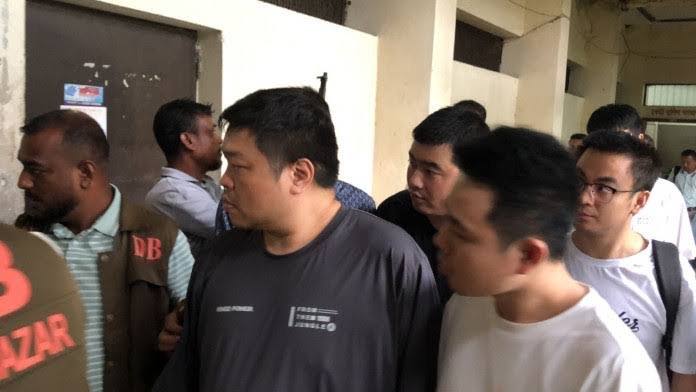

Bangladesh Police have arrested six foreign nationals from a Cox’s Bazar hotel after uncovering what investigators suspect was part of a much larger international online fraud operation involving hundreds of phones, laptops and potentially 250 to 300 foreign nationals.
Police raided Hotel Sea Palace in Cox’s Bazar’s Kalatali area on the night of September 3 and seized 1,938 iPhones, 30 laptops and other communication equipment.
The six suspects were produced before the Cox’s Bazar Chief Judicial Magistrate Court on September 4 and sent to jail following medical examinations.
The Business Standard described all six as Chinese nationals. The Daily Star, however, reported that five were Chinese and one was Taiwanese. Police have said the wider suspected network may involve nationals of both countries.
Proposal for Conducting Cyber Crisis Drill, Tabletop Exercise (TTEx) & CCMP Readiness Exercise
Police Say Hundreds More May Be Involved
The raid was carried out after Dhaka Police supplied information connected with a complaint filed at Ramu Police Station.
Additional Superintendent of Police Ahidur Rahman said investigators believe more than 250 people involved in online fraud may have been operating in Cox’s Bazar and elsewhere in Bangladesh.
Other police sources cited in local reporting put the suspected number even higher.
Around 200 to 300 Chinese and Taiwanese nationals had reportedly rented two hotels along the Cox’s Bazar Marine Drive and were suspected of conducting online-based fraudulent activities.
By September 5, investigators were trying to determine where many of those individuals had gone.
BDNews24 reported that police believed a large number may have dispersed to other parts of Bangladesh after learning that authorities were investigating their activities.
A case has been registered over alleged cybercrime and online fraud.
The seized devices are now likely to become central to establishing what kind of operation was being run, who its victims were and whether the activity was controlled from Bangladesh or connected with networks abroad.
Why Would a Scam Operation Need 1,938 iPhones?
The number of phones seized is one of the most striking elements of the case.
Large online fraud operations can use what cybersecurity investigators commonly call a device farm or phone farm.
That means dozens or even thousands of smartphones are operated together to create accounts, send messages, manage social-media profiles, run applications or communicate with large numbers of potential victims.
A fraud ring does not necessarily need one person physically using each phone.
Devices can sometimes be managed using computers, automation software or specialised communication systems.
The presence of nearly 2,000 iPhones does not by itself establish exactly how they were being used. Police will need to examine the installed applications, SIM cards, account credentials, network connections and communications stored on them.
But the scale of the seizure suggests investigators are looking at something considerably larger than a few individuals conducting occasional online scams.
Bangladesh Has Seen Similar Foreign-Linked Cyber Rings This Year
The Cox’s Bazar operation follows several other investigations involving foreign nationals and alleged online fraud in Bangladesh.
In January, Dhaka Metropolitan Police arrested eight people, including five Chinese nationals, over an alleged Telegram-based job scam.
Police seized an extraordinary 51,251 SIM cards, 51 mobile phones and 21 Voice over Internet Protocol gateway devices. Investigators alleged that victims were lured with fake job opportunities and promises of high investment returns.
In May, another Dhaka operation led to the arrest of six Chinese nationals and three Bangladeshis over allegations involving online gambling, cyber fraud and illegal digital transactions.
Police said they had detected advertisements promoting gambling and deposit-bonus schemes through Facebook, YouTube, Telegram groups and fake websites.
Six of the Chinese accused and two Bangladeshi suspects were later placed on remand as investigators examined allegations that crores of taka had been laundered to China.
Another operation in August led to the arrest of three Chinese nationals and a Bangladeshi woman from a six-storey building in Dhaka’s Bashundhara area.
Detectives alleged that the premises were being used for online fraud, illegal VoIP operations and gambling.
These cases are not proven to be connected with the Cox’s Bazar suspects, but they show a recurring enforcement concern involving technology-heavy fraud operations run from rented premises.
The Bigger Question Is What Kind of Scam Was Running
Police have so far described the Cox’s Bazar group as connected with an international online fraud ring, but detailed information about the alleged fraud method has not yet been publicly disclosed.
That distinction matters.
The seized equipment could potentially support investment scams, romance scams, fake-job operations, gambling platforms or other forms of online deception.
Investigators must establish that from digital evidence rather than infer it merely from the number of devices.
They will also need to determine whether any Bangladeshi nationals supplied SIM cards, bank accounts, accommodation or technical infrastructure to the group.
The case could become significantly larger if police substantiate their suspicion that hundreds of additional people were operating from the area.
For now, the six detainees have been sent to jail while the investigation continues. The allegations against them have not been established in court.
What this means for you: Online fraud operations can now run at industrial scale, using thousands of phones and accounts to contact victims simultaneously. Treat unsolicited job, investment or “easy income” offers on Telegram, WhatsApp and social media with particular caution, especially when they require deposits or cryptocurrency transfers.
https://www.linkedin.com/company/policetechnology/
