

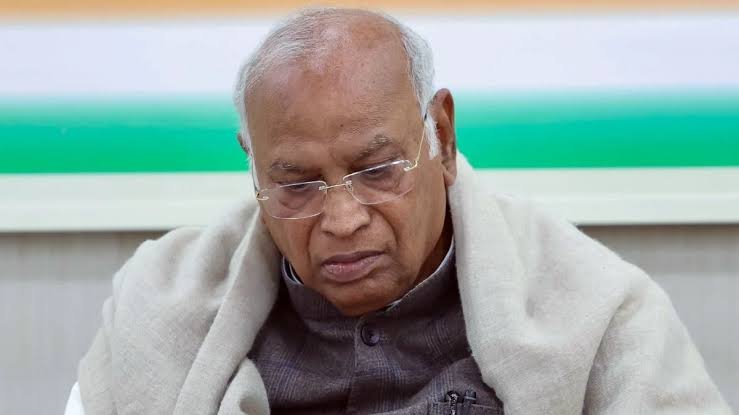

A political controversy that began with a “purification” ritual at Haldwani’s Ramlila Ground has now turned into a multi-state legal battle, with Bengaluru Police registering a Zero FIR against Uttarakhand BJP president Mahendra Bhatt and other party members.
The case stems from a complaint filed by Congress functionary T R Ramappa over a ritual allegedly performed at the venue after Congress president Mallikarjun Kharge addressed a rally there on August 8.
According to the complaint, the ritual was intended to suggest that the ground had become “impure” because of Kharge’s presence. Kharge belongs to a Scheduled Caste community.
BJP leaders have rejected that interpretation, saying the ritual was not organised because of Kharge’s caste and was instead linked to slogans and remarks allegedly made during the Congress event.
Proposal for Conducting Cyber Crisis Drill, Tabletop Exercise (TTEx) & CCMP Readiness Exercise
What Happened at Haldwani’s Ramlila Ground?
Kharge addressed a Congress rally at the Haldwani Ramlila Ground on August 8.
Two days later, members of the Shri Ram Sena Dharmarth Seva Nyas Sangathan conducted a havan and described it as a “shuddhikaran”, or purification, of the ground.
The organisation said the ritual was held because objectionable slogans and remarks concerning Hinduism had allegedly been made during the Congress programme.
Congress leaders strongly disputed that explanation.
They argued that conducting a purification ritual immediately after a rally addressed by Kharge carried an unmistakable caste implication and amounted to an insult rooted in the idea of untouchability.
The issue reached Parliament, where Kharge raised the matter in the Rajya Sabha.
He later wrote to Leader of the House J P Nadda, saying no FIR had been registered in Uttarakhand even 24 days after the incident despite assurances that the matter would be examined.
Uttarakhand BJP chief Mahendra Bhatt also became part of the controversy after publicly defending the ritual.
He argued that the ground had been “polluted” by slogans during the Congress rally and required purification. The BJP had earlier sought to distance itself from the organisation that conducted the ceremony.
What Is a Zero FIR and Why Was It Filed in Bengaluru?
A Zero FIR allows police to register information about a cognisable offence even when the alleged incident occurred outside their territorial jurisdiction.
The case is then transferred to the police station that has jurisdiction over the place where the alleged offence occurred.
In this case, the ritual took place in Haldwani, Uttarakhand. But the complaint was submitted to Vidhana Soudha Police in Bengaluru.
Police sought legal opinion and then registered the Zero FIR under provisions of the Protection of Civil Rights Act, the Scheduled Castes and Scheduled Tribes (Prevention of Atrocities) Act and the Bharatiya Nyaya Sanhita.
The Bengaluru Police have said they will not conduct the substantive investigation themselves. The case will be forwarded to the appropriate police authorities in Uttarakhand.
That distinction matters.
Registration of an FIR means allegations are serious enough to be formally investigated. It does not mean the named individuals have been found guilty.
Investigators in Uttarakhand will have to examine who organised the ritual, what was said before and during it, whether the act was connected to Kharge’s caste and what role, if any, the named BJP leaders played.
Rahul Gandhi Is Also Facing an FIR Over the Same Controversy
The dispute has already produced a separate criminal case on the other side of the political divide.
Haldwani Police registered an FIR against Congress leader Rahul Gandhi after he described the ritual as an act of untouchability and demanded action under the SC/ST Act.
The complaint against Gandhi was filed by Amit Kumar, a member of the Valmiki community and an office-bearer of the organisation connected with the ritual.
He alleged that Gandhi had wrongly given a casteist interpretation to what organisers described as a religious cleaning and havan ceremony.
That means police are now dealing with competing allegations arising from the same event.
Congress argues that the purification ritual itself carried a discriminatory message.
The organisers and BJP leaders argue that Congress converted a religious response to alleged slogans into a caste controversy.
The investigation will therefore depend heavily on video footage, speeches, statements by organisers and the circumstances in which the ritual was planned.
Why the Legal Question Goes Beyond Political Rhetoric
The complaint in Bengaluru invokes laws aimed specifically at caste discrimination and untouchability.
The Protection of Civil Rights Act was enacted to punish practices arising from untouchability, while the SC/ST (Prevention of Atrocities) Act contains offences involving public humiliation, caste-based hostility and discrimination against members of Scheduled Castes and Scheduled Tribes.
Whether those provisions actually apply will depend on intent, context and evidence.
A religious purification ritual is not automatically a caste offence merely because it follows a political event.
Equally, if investigators establish that the act was deliberately meant to portray a venue as impure because a Scheduled Caste leader had occupied it, the legal consequences could become considerably more serious.
For now, both sides are making sharply conflicting claims.
The Zero FIR moves the controversy from political accusation into formal criminal procedure. It does not settle what the ritual meant.
What this means for you: A Zero FIR can be filed even when the alleged offence happened in another state, but it is later transferred to the police station with proper jurisdiction. In politically sensitive cases, an FIR should be read as the beginning of investigation—not proof that the allegations have been established.
https://www.linkedin.com/company/policetechnology/
Follow for daily updates on cybercrime, corporate fraud, DFIR, hacking, investigations, and digital forensics
