
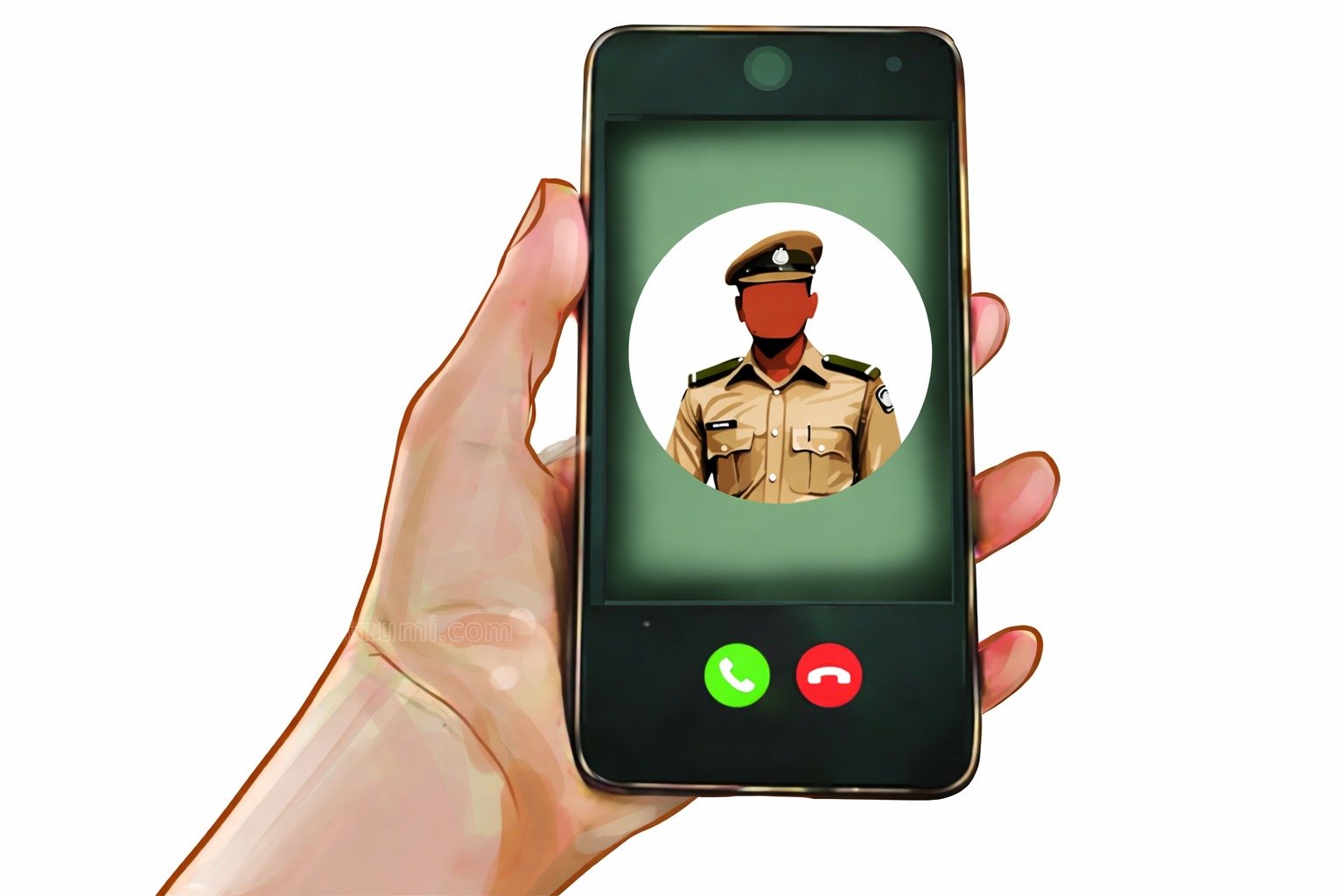
A major cyber fraud network operating under the guise of “cyber crime officers” has been exposed in Uttar Pradesh’s Azamgarh, where victims were allegedly threatened with arrest in fake money laundering cases and coerced into transferring large sums of money. Investigators say the interstate gang used fake identities, encrypted messaging platforms and cryptocurrency channels to orchestrate organised cyber fraud operations targeting unsuspecting individuals across multiple states.
According to investigators, another member of the syndicate, identified as Mohammad Riaz alias Tannu, a resident of Lucknow, has been arrested in connection with the case. Police recovered two mobile phones and cash from his possession. Earlier, three other accused linked to Gujarat and Gorakhpur had already been arrested. Agencies suspect the network may have wider national and international links, including connections with foreign cyber criminals.
Modus operandi — “digital arrest” and social engineering
The case originated from a complaint filed by Nagendra Mishra, a resident of the Maharajganj area, who was allegedly contacted by fraudsters in January 2025. The callers introduced themselves as cyber crime officials and claimed that Mishra’s name had surfaced in a money laundering investigation. The victim was allegedly told that an FIR had been registered against him and that he could face immediate arrest and freezing of his bank accounts unless he cooperated with the “investigation.”
FCRF’s Flagship Cyber Law Certification Returns With a New Four-Week Cohort
Investigators say the fraudsters psychologically pressured the victim through repeated calls and fabricated legal threats, eventually convincing him to transfer ₹34.87 lakh into multiple bank accounts under the pretext of verification and settlement procedures. The scam came to light after the victim realised he had been deceived and lodged a complaint with the cyber crime police station.
Channels, money trail and overseas links
During the investigation, police reportedly discovered that the gang operated through Telegram and WhatsApp groups and remained in touch with foreign cyber operators. The accused allegedly arranged bank accounts for routing fraudulent money and later distributed the withdrawn cash among gang members. Officials further revealed that a portion of the funds was converted into USDT, a cryptocurrency-based digital asset, and transferred as per instructions received from overseas handlers.
Investigators believe the gang heavily relied on social engineering techniques to manipulate victims. Posing as cyber officers, law enforcement officials or financial regulators, the fraudsters allegedly created panic by using terms such as “digital arrest,” “money laundering probe” and “national security investigation.” Victims were often subjected to intimidating video calls, fake notices and forged legal documents designed to make the threats appear authentic.
charges and public advisory
Former IPS officer and noted cyber crime expert Prof. Triveni Singh said such organised fraud networks thrive on fear-based psychological manipulation. According to him, cyber criminals first isolate and mentally destabilise their targets before forcing them into making immediate financial transactions. He noted that the combination of encrypted messaging apps, mule bank accounts and cryptocurrency transfers has become one of the most dangerous operational models in modern cyber fraud cases.
Officials said forensic analysis of the seized mobile phones and digital devices is currently underway. Investigators are examining banking trails, transaction records, IP logs, social media activity and crypto wallet movements to identify additional members of the network and possible international handlers. Sources indicated that some members of the gang were allegedly involved in arranging mule accounts and activating fake SIM cards to facilitate the fraud operations.
Police have registered cases against the accused under multiple sections related to cheating, criminal conspiracy, cyber fraud and provisions of the Information Technology Act. Investigators believe further arrests are likely as the probe expands. Authorities have also advised citizens not to transfer money based on threats related to “digital arrest,” money laundering or account freezing without independently verifying the claims through official government channels.
