
Follow us on Google News

The Allahabad High Court has sharply criticized the Uttar Pradesh government over the arbitrary seizure of a commercial vehicle on unproven suspicions of cattle smuggling, directing the state authorities to pay more than fifteen lakh rupees in total compensation to the vehicle owner. Delivering the judgment in the case of Tej Prakash versus State of Uttar Pradesh and four others, Justice Sandeep Jain quashed the confiscation and attachment orders passed against a DCM Eicher commercial truck intercepted in 2023 while transporting two oxen. The bench held that mere interception of a vehicle in proximity to an interstate border cannot form the legal basis to presume that the livestock was being trafficked to another state for slaughter in the absence of independent and substantive evidence.
Court Strikes Down Vehicle Seizure and Awards Monthly Compensation
The court held that the entire administrative action of impounding and subsequently attaching the commercial truck was illegal, ordering the immediate release of the vehicle to the petitioner. To address the wrongful deprivation of livelihood, the bench directed the state administration to pay compensation at the rate of forty thousand rupees per month, calculated from September 18, 2023, until the actual date of the vehicle’s handover. In addition to the monthly operational compensation, the court ordered the state government to pay an additional sum of twenty-five thousand rupees to the petitioner on account of mental agony, financial distress, and unnecessary official harassment.
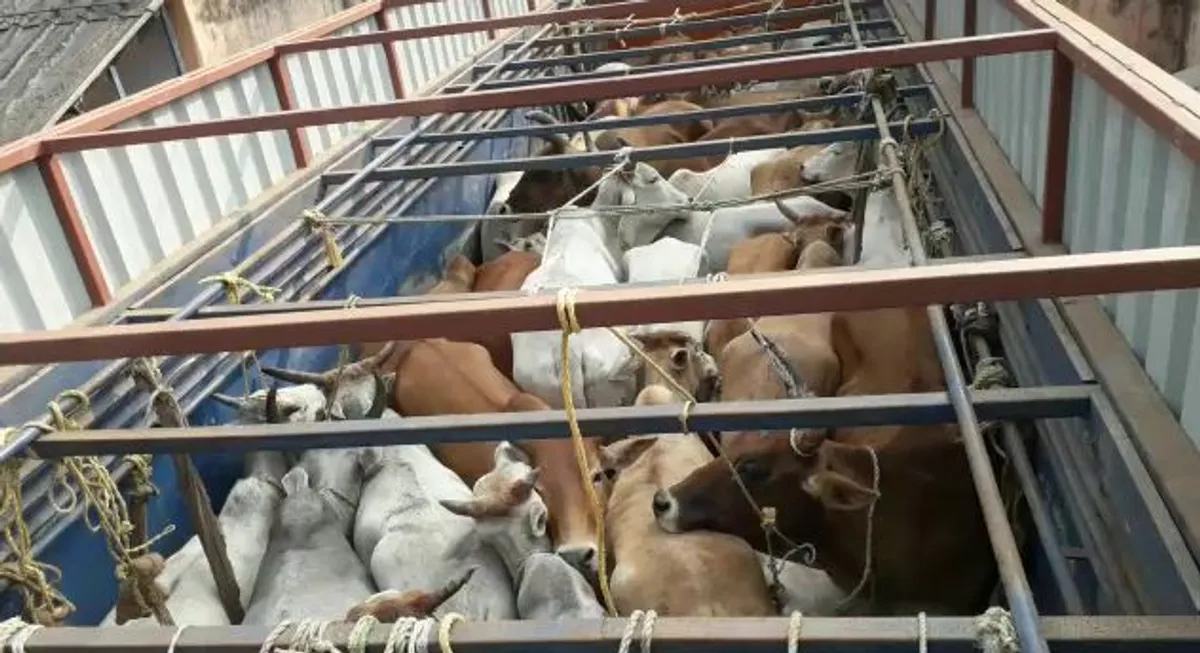
The case originated when enforcement personnel intercepted the commercial truck in Mirzapur district while it was ferrying two oxen. Local authorities asserted that the vehicle was being utilized to transport cattle to West Bengal for slaughter in direct contravention of the Uttar Pradesh Prevention of Cow Slaughter Act, 1955. Acting entirely on this operational assumption, officials seized the vehicle and initiated formal confiscation proceedings against the transporter without conducting an inquiry into the actual destination of the transit.
Border Proximity Alone Cannot Establish Intent for Illegal Transit
Challenging the seizure, the petitioner contended before the High Court that the administrative authorities possessed no tangible material to prove that the two oxen were bound for slaughter in West Bengal. It was further submitted that the vehicle had not been examined for any acts of cruelty against the livestock. Accepting these contentions, Justice Jain observed that law enforcement officers failed to place any objective records on file demonstrating the ultimate delivery destination of the carrier.
The bench observed that the geographical location of Mirzapur and its relative proximity to the Bihar border had merely generated administrative speculation regarding an interstate transit toward West Bengal. The court ruled that the existence of an interstate border cannot itself constitute evidence of illegal transport under the law. Until authorities present positive and concrete proof showing that a vehicle was crossing state lines or that livestock was destined for slaughter, statutory presumptions against a citizen cannot be invoked.
No Requirement of Transit Permit for Movement Within State Limits
Interpreting the statutory framework governing cow slaughter prevention, the High Court clarified that transportation of cows and their progeny between locations within Uttar Pradesh does not require any transit permit. The legal mandate requiring an official permit applies solely when livestock is scheduled to be moved beyond the geographical borders of the state. Because the authorities produced no evidence of interstate movement, the court found the statutory violation charges unsustainable.
The judgment also noted that neither beef nor any animal remains were recovered from the commercial truck, meaning the basic foundational facts required to draw adverse legal inferences were absent. The bench dismissed the allegations of cruelty, pointing out that authorities did not even subject the two oxen to a medical examination by a qualified veterinarian. Taking note of the owner’s vehicle loan obligations and lost earnings, the court permitted the state government to recover the compensation amount from the individual officials responsible for the unlawful confiscation following a departmental inquiry.