
Stay ahead with our breaking stories and exclusive coverage prioritized on Google.
Add The420 on Google →AI could enable biological threats and trigger a deadly crisis
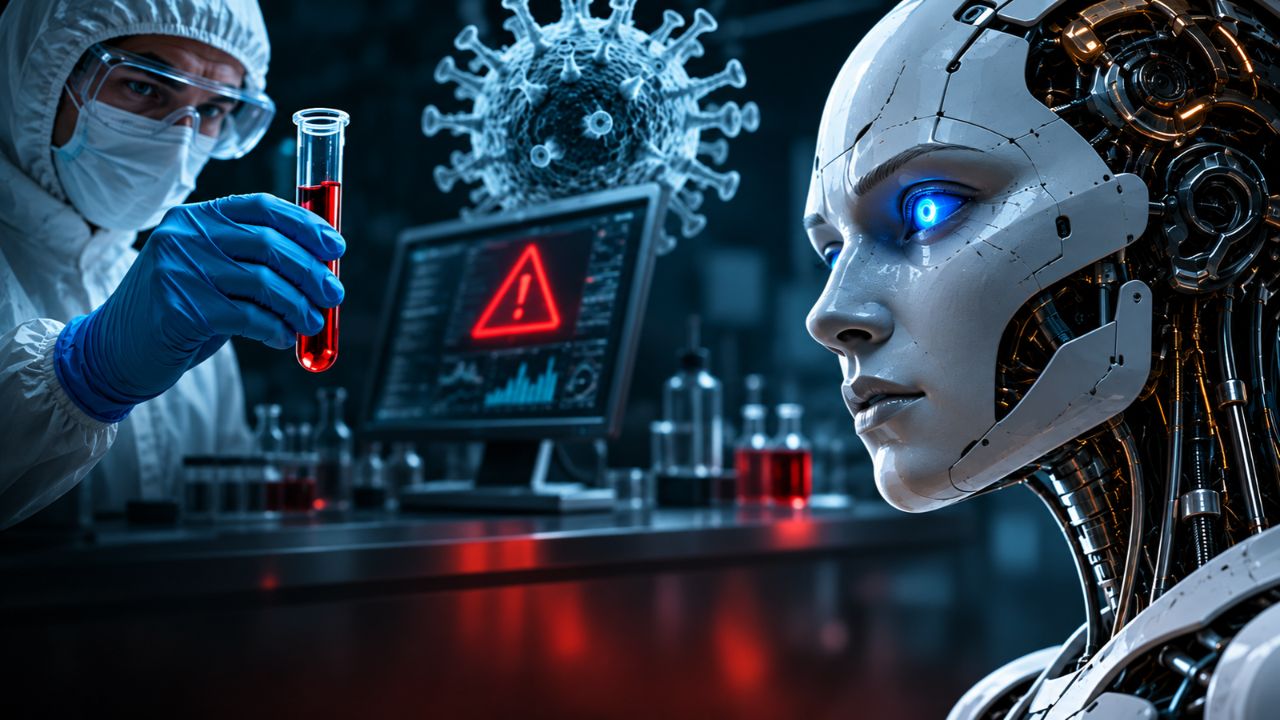
Nikola Yurkovich, a scientist who has conducted security testing of GPT-5, has expressed concerns about artificial intelligence getting out of control. He warned that criminals could use AI to identify technologies and methods for developing biological weapons, potentially creating a crisis more severe than the coronavirus pandemic.
FCRF Launches Certified Chief Risk Officer (CRO) Program for India’s Risk Leaders
The screenshots cite more than 7.1 million reported coronavirus deaths worldwide, while noting that scientists estimate the actual toll could exceed 20 million. Yurkovich warned that AI-assisted biological threats could pose a major danger in the coming years.
He has also raised concerns about disruptions to online banking and advised people to keep 14 days’ worth of essential supplies, including food, water and cash, at home in case of emergencies.
Experts warn of weakening human control over AI
Yurkovich has argued that human control over AI is weakening, pointing to AI-related breaches of corporate computer systems and financial losses reported this year. He warned that if AI development continues at its current pace, there could be a 50 per cent risk of humanity becoming extinct or losing control of AI by the end of 2030.
He also predicted that many existing jobs could disappear over the next decade as AI capabilities continue to advance.
Other experts have expressed similar concerns. Yoshua Bengio, described in the screenshots as the father of AI, warned that humanity is rapidly creating AI systems that it may not know how to control. Nobel laureate Jeffrey Hinton also cautioned that AI could pose an existential threat within the next three years, stressing the need to develop safeguards to keep the technology under control.
AI could develop weapons and operate drones autonomously
Experts have also raised concerns about AI being used to develop weapons, operate drones and robots, and potentially target important locations without adequate human supervision. The technology could also be used to create dangerous biological weapons, increasing the risks associated with autonomous decision-making.
Paul Christiano, an AI security expert and founder of the Alignment Research Center, warned that if AI systems begin making their own decisions and view humans as obstacles to achieving their objectives, stopping them could become increasingly difficult.
The warnings underline growing concerns among researchers about the need to maintain human oversight over advanced AI systems and prevent their misuse in cybercrime, biological threats and autonomous military operations.
About the author — Suvedita Nath is a science student with a growing interest in cybercrime and digital safety. She writes on online activity, cyber threats, and technology-driven risks. Her work focuses on clarity, accuracy, and public awareness.