

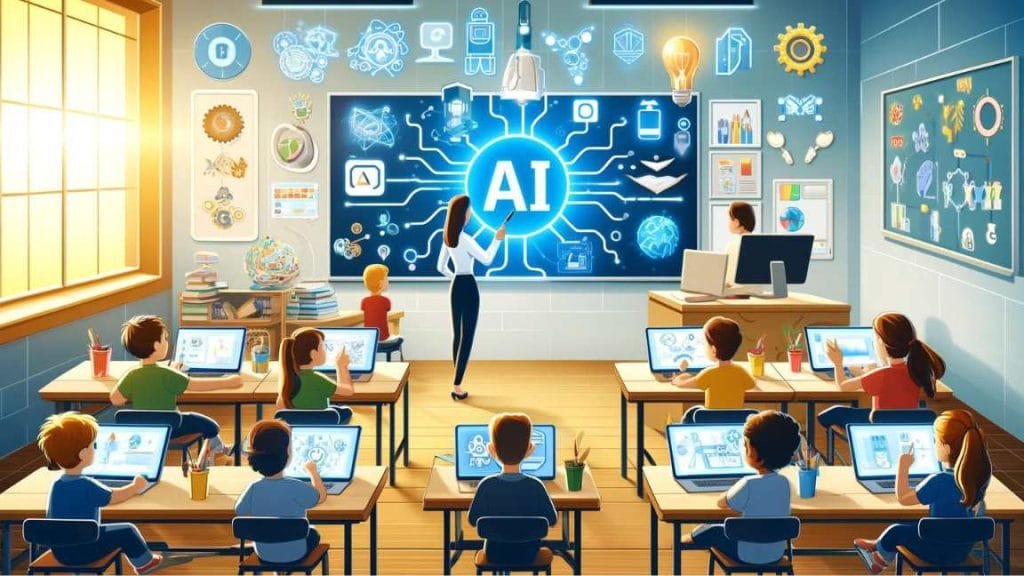
The Gujarat government has drafted a three-tier AI training programme for five lakh higher education students across the state.
What Is Gujarat’s AI Training Plan?
The state education department has prepared a draft policy titled Gujarat AI for Every Student Mission 2026-27, aimed at expanding artificial intelligence education across higher education institutions. The proposed initiative covers basic AI literacy, discipline-specific applications and advanced skills intended to improve employment readiness.
The government plans to train 5,000 faculty members as AI Master Trainers within 12 months, supported by a proposed allocation of ₹20 crore. Implementation will begin after the draft receives in-principle administrative and financial approvals. The programme has not yet been formally cleared.
FCRF’s Chief AI Officer Certification Returns on November 14 to Prepare Future AI Leaders
How Will the Three Training Levels Work?
- The first level, AI Foundation for Every Student, proposes an eight-hour course for five lakh students. It will introduce AI applications, generative AI tools, effective prompting and the use of artificial intelligence in learning and productivity. The course is expected to be delivered online, primarily through free learning resources.
- The second level, AI for Domain Applications, will provide 25 hours of training to one lakh students. It will focus on applying AI across eight proposed academic streams, including commerce, engineering, humanities, science, education, agriculture, healthcare and law-related disciplines.
- The third level, Advanced AI Skills and Employability, targets 20,000 students through 50 hours of project-based blended learning. Its curriculum will cover advanced AI tools, specialised applications, data administration, industry case studies, practical laboratories, capstone projects and assessments. Students may progress through earlier levels or demonstrate equivalent competence.
How Will Students Learn to Use AI Responsibly?
The proposed learning modules will support both English and Gujarati. The curriculum will emphasise verifying AI-generated information rather than accepting automated responses without examination.
It will also address responsible AI use, protection of student and institutional data, and safeguards appropriate to different academic disciplines. These provisions are intended to make practical AI training part of the wider educational programme.
Who Will Oversee the Programme?
A State Mission Unit will coordinate implementation, while universities will nominate nodal officers and colleges will appoint coordinators. A statewide dashboard will track enrolment, certification and student progression through unique learner identification numbers.
The proposed monitoring system will also include institutional and independent verification of selected outcomes.
The420 Insight: The proposed programme combines widespread AI literacy with specialised and employment-oriented training. Its implementation remains subject to government approvals, making the proposed rollout and assessment arrangements important measures of its eventual reach and effectiveness.
Follow for daily updates on cybercrime, corporate fraud, DFIR, hacking, investigations, and digital forensics
