

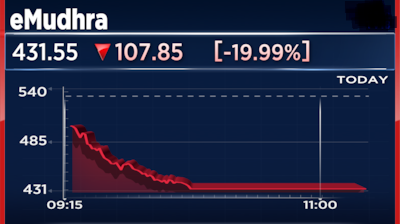

NEW DELHI: Shares of Indian digital authentication and cybersecurity firm eMudhra tumbled 20 percent on Wednesday, October 21, 2026, dropping to 432 rupees and hitting the lower circuit in what was reported as the stock’s sharpest single-day retreat since listing. The heavy selling followed revelations concerning a security incident involving private cryptographic keys linked to eight intermediate digital certificates issued by the company. With the latest slump, the stock trades roughly 58 percent below its peak of 1,024 rupees recorded in December 2024. While the steep fall coincided with growing scrutiny over the ongoing technical inquiry and its potential consequences, available information does not establish a definitive causal link tying the entire market decline solely to the security disclosure.
Cryptographic Key Vulnerability and Impersonation Risks
The issue surfaced on October 17, 2026, when a security researcher alerted Mozilla to an exposure affecting the private keys of eight eMudhra intermediate certificates. Six of these were intended for Transport Layer Security to authenticate website connections over HTTPS, while the remaining two were designated for verifying software publishers through code signing. Because cryptographic keys authenticate an issuing body, unauthorized access theoretically could allow attackers to forge valid digital credentials to impersonate banking institutions, email providers, and state online services. Despite the severity of the theoretical threat, investigators have confirmed that no fraudulent TLS certificates derived from the compromised keys have been publicly identified. Furthermore, the root origin remains undetermined, with circulating theories pointing variously to key theft or weak generation practices that made the cryptographic material susceptible to guessing.
Coordinated Containment by Global Technology Firms
Technology companies moved quickly to isolate the compromised credentials across widespread operating systems, web browsers, and development environments. Mozilla instituted restrictions within Firefox by deploying updates through its OneCRL revocation distribution tool, while Google Chrome enacted containment measures across its security infrastructure. Apple applied defensive configuration changes on October 19, and Microsoft modified its trusted certificate directories the following day. Protective updates spread into popular programming ecosystems as well, with maintainers of the Go language rolling out patches in versions 1.27.3 and 1.26.10 that blocked the eight keys outright. Similar security updates were introduced for the Python Certifi package and the Rust webpki-roots library, requiring developers to rebuild and deploy updated applications to guarantee active safeguards.
Internal Inquiry and Market Trajectory
eMudhra stated that it initiated formal incident-response measures immediately upon learning of the issue, collaborating with major browser maintainers and certificate store authorities to prevent broader fallout. The company emphasized that the incident was strictly confined to eight intermediate certificates produced during an April 2025 ceremony, affirming that its root certificate authority keys remained uncompromised and that no public end-user certificates had been issued under the affected intermediate credentials. Additionally, eMudhra clarified that the scheduled removal of its CA C1 and C3 root certificates from Mozilla’s trust architecture was part of an earlier voluntary roadmap entirely independent of this breach. Market participants now watch the progress of eMudhra’s operational review and security upgrades, recognizing that long-term sentiment hinges on restored credibility alongside fundamental earnings, broader market trends, and prevailing business valuations.
Follow for daily updates on cybercrime, corporate fraud, DFIR, hacking, investigations, and digital forensics
