

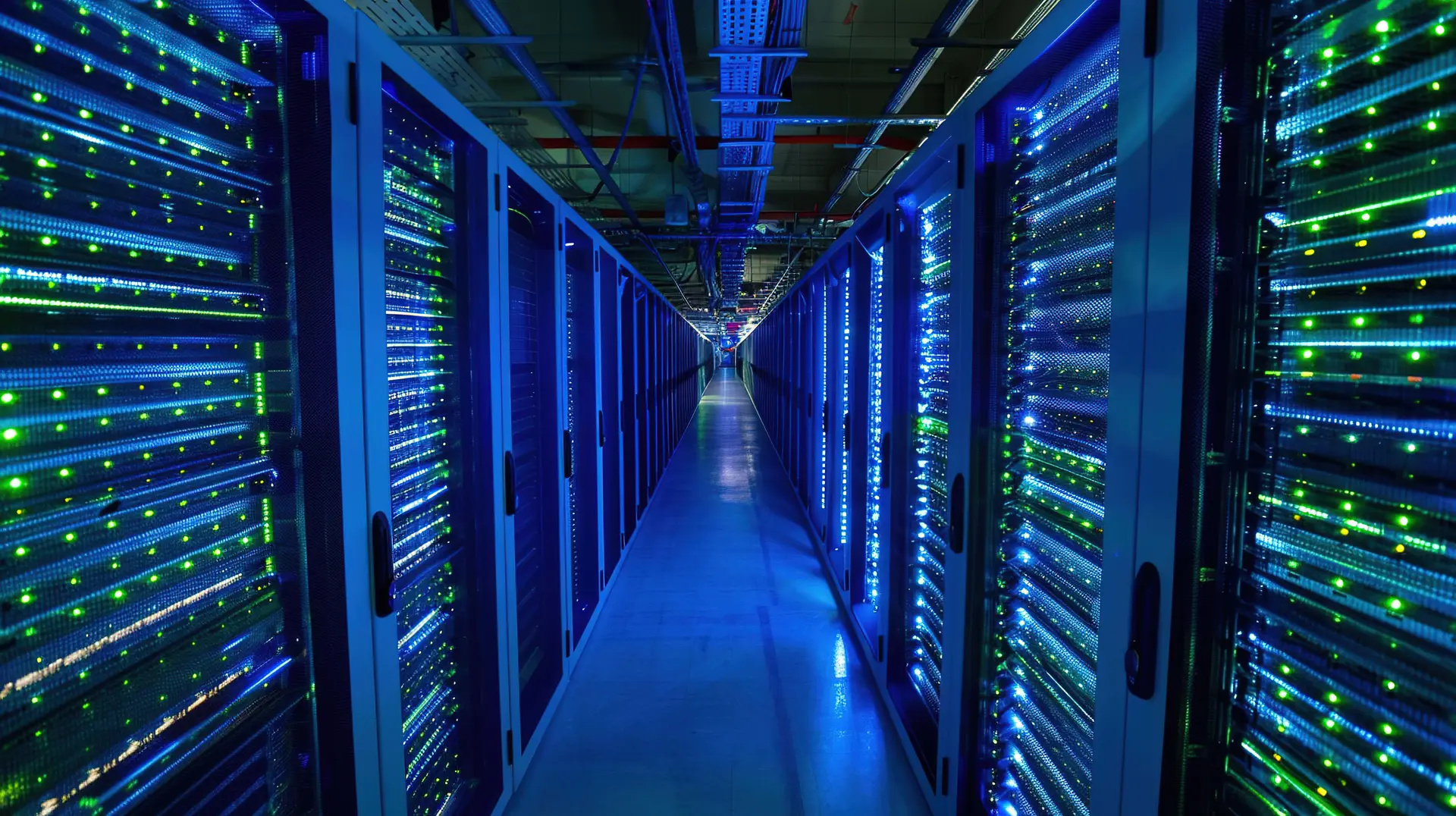

India is preparing a dedicated national policy for data centres as the government looks to expand artificial intelligence and cloud infrastructure without pushing up electricity costs for ordinary consumers.
Minister of State for Electronics and Information Technology Jitin Prasada said the government wants to avoid a situation in which rapidly growing data-centre demand takes power away from households or forces consumers to pay more.
India currently does not have a single dedicated national policy for the sector. Projects are largely approved under existing environmental, building and state-level rules, while several states offer their own incentives to attract investment.
The policy comes as India pitches itself as a major global destination for AI infrastructure and data storage.
FCRF Launches CP-FRM to Build India’s Next Generation of Fraud Risk Professionals
Power Demand Is Becoming the Central Policy Question
Modern data centres consume enormous quantities of electricity because thousands of servers must operate continuously.
AI data centres can require even more power because advanced processors used to train and run AI models consume far more electricity than conventional computing systems.
That demand can place pressure on local electricity grids.
If new generation and transmission capacity do not grow at the same pace, utilities may have to spend heavily on infrastructure. Those costs can eventually affect electricity tariffs.
Prasada said India wants to avoid the problems seen in some other countries, where rapid data-centre growth has contributed to concerns about power availability and higher costs for consumers.
The issue is becoming increasingly important as hyperscale facilities expand.
A hyperscale data centre is a very large computing facility designed to support massive cloud or AI workloads. These campuses can require hundreds of megawatts of electricity, putting them in the same league as major industrial projects.
India sees the sector as a potential $200 billion opportunity.
Protests Put Water and Electricity Use Under Scrutiny
The policy announcement also follows local opposition to major planned data centres.
Residents near an Amazon facility outside Mumbai have raised concerns about pressure on electricity and water supplies, as well as noise.
Environmental groups have also opposed Google’s planned $15 billion data-centre project in Visakhapatnam, raising questions over land use, water consumption and ecological impact.
Amazon and Google have denied wrongdoing and say their facilities use advanced technologies designed to minimise resource consumption.
The disputes show why the government now faces a balancing act.
India wants to attract large technology investments and build domestic AI infrastructure, but data centres are increasingly being treated as major energy and water users rather than ordinary office developments.
That means approvals may eventually have to consider grid capacity, water availability and local environmental impact much more closely.
Why Data Centres Use So Much Power
A data centre does more than run computer servers.
Electricity is also required for cooling systems, networking equipment, backup systems and power conversion.
Cooling can become especially demanding in hot climates such as India’s.
That is why the location of a data centre matters.
The420.in earlier reported that the Union Government had urged Microsoft to consider building future facilities closer to electricity-generation sites rather than concentrating them near coastal cable landing stations.
The logic is simple.
If large data centres are built closer to where electricity is produced, it may reduce pressure on transmission networks and lower the need for expensive grid upgrades.
Other countries are also tightening rules.
The European Union has proposed requiring data centres to disclose their energy and water efficiency, while some Australian regions are considering rules requiring new facilities to secure a substantial share of their own renewable power.
India’s upcoming policy could eventually take a similar direction, although the government has not yet disclosed its detailed scope.
India Wants AI Growth Without Consumer Costs
Prime Minister Narendra Modi has repeatedly encouraged global companies to store more data and build computing infrastructure in India.
The country’s expanding digital economy, large internet population and growing AI ambitions make it attractive for cloud and data-centre investment.
But the economics become more complicated when these facilities begin competing with households and industry for power.
Large data-centre projects can bring construction spending, jobs and technology investment.
They can also require new substations, transmission lines, water systems and renewable-power capacity.
The central policy question is therefore who pays for that infrastructure.
If utilities recover the cost broadly from consumers, ordinary households could end up subsidising infrastructure built primarily for large technology companies.
Prasada’s remarks suggest the government wants the new framework to prevent that outcome.
The details will determine how effective the policy becomes.
India has not yet announced when the policy will be unveiled or whether it will impose mandatory energy-efficiency, renewable-power or water-use requirements.
What this means for you:
India’s data-centre boom could strengthen AI and cloud infrastructure, but it may also increase pressure on local power and water supplies. The new policy will matter most if it ensures that households are not left paying for the infrastructure needed by large technology companies.
Follow for daily updates on cybercrime, corporate fraud, DFIR, hacking, investigations, and digital forensics
