

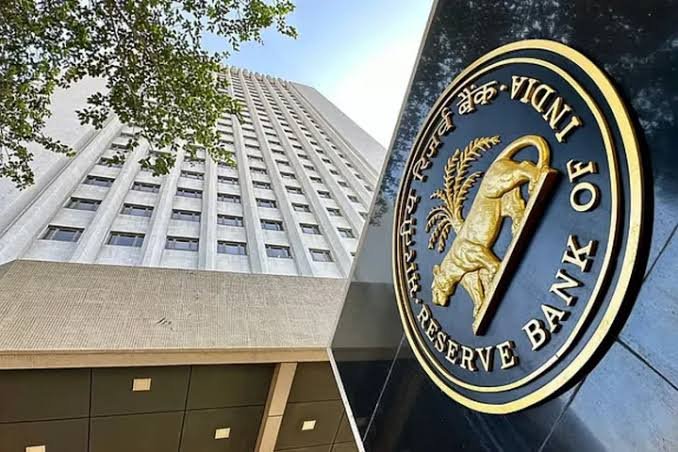

The Reserve Bank of India has tightened daily cash-reserve requirements for scheduled banks, reducing the flexibility they have to manage short-term liquidity.
From the reporting fortnight beginning October 16, banks will have to maintain at least 99% of their prescribed Cash Reserve Ratio requirement every day.
The previous minimum was 90%.
The change follows an RBI review of prevailing liquidity conditions and comes as the central bank moves to absorb excess cash from the banking system.
FCRF Launches CP-FRM to Build India’s Next Generation of Fraud Risk Professionals
CRR Itself Has Not Been Raised to 99%
The distinction is important.
India’s CRR remains 3%.
That means banks are still required to maintain cash with RBI equal to 3% of their net demand and time liabilities.
The new 99% rule applies only to how much of that required CRR must be maintained on each individual day.
Until now, banks could allow their daily balance to fall to 90% of the required amount, provided the average over the reporting fortnight eventually met the full CRR requirement.
From October 16, that daily floor rises to 99%.
A ₹100 Crore Example Explains the Change
Suppose a bank’s prescribed CRR requirement is ₹100 crore.
Under the earlier system, its balance could temporarily fall as low as ₹90 crore on a particular day.
The bank could compensate by maintaining more than ₹100 crore on another day so that the fortnightly average remained compliant.
Under the new system, the same bank must keep at least ₹99 crore on every day of the reporting fortnight.
Its temporary flexibility therefore falls from ₹10 crore to ₹1 crore.
The fortnightly average requirement itself remains unchanged.
RBI Is Trying to Absorb Surplus Liquidity
The move comes at a time when India’s banking system has been carrying significant surplus liquidity.
The surplus stood at around ₹3.88 lakh crore on October 8, according to official data cited by Akashvani.
RBI has also announced the sale of ₹25,000 crore of government securities through open-market operations on October 13.
Reuters reported that the combination of bond sales and the tighter CRR-maintenance requirement is aimed at squeezing excess cash and keeping overnight money-market rates closer to the policy repo rate.
The central bank had earlier raised the repo rate by 25 basis points to 5.50%.
Banks Will Have Less Room to Manage Daily Cash
Banks regularly experience daily fluctuations in deposits, withdrawals, settlements and lending activity.
The previous 90% floor gave treasury departments room to manage those temporary changes within a fortnight.
A 99% minimum means banks will have to keep their RBI balances much closer to the full requirement every day.
Banks facing temporary shortfalls may need to borrow more actively from money markets or RBI liquidity facilities.
That could increase short-term funding pressure for some institutions, particularly when system liquidity becomes tighter.
However, the change does not by itself permanently remove a fixed new amount of money from the banking system.
Will Home Loan or Personal Loan EMIs Rise?
There is no direct RBI order requiring banks to increase lending rates because of this change.
Borrowers should therefore not assume that home-loan, car-loan or personal-loan EMIs will immediately increase on October 16.
The impact, if any, would be indirect.
If tighter liquidity leads to persistently higher short-term funding costs, banks could eventually adjust loan pricing depending on their deposit position, benchmark structure and wider interest-rate conditions.
But the daily CRR rule alone is not enough to predict an EMI increase.
The recent repo-rate hike is likely to have a more direct influence on floating-rate borrowing costs.
Fixed Deposits and Bank Shares Could React Differently
The rule also does not automatically change fixed-deposit rates.
Banks that need to attract more deposits as liquidity tightens could potentially offer higher deposit rates, but that would depend on competition and each bank’s funding requirements.
For bank stocks, investors may focus on liquidity, deposit growth and funding costs.
Institutions with strong low-cost deposit franchises could be better placed than banks that depend more heavily on short-term market borrowing.
Still, the actual earnings impact will become clearer only after the rule has been in operation for some time.
What this means for you
RBI has not asked banks to keep 99% of customer deposits idle. The CRR remains 3%; only the minimum amount of that required reserve that banks must maintain each day is rising from 90% to 99%. For customers, there is no immediate change to withdrawals, fixed deposits or loan EMIs solely because of this rule.
Follow for daily updates on cybercrime, corporate fraud, DFIR, hacking, investigations, and digital forensics
