

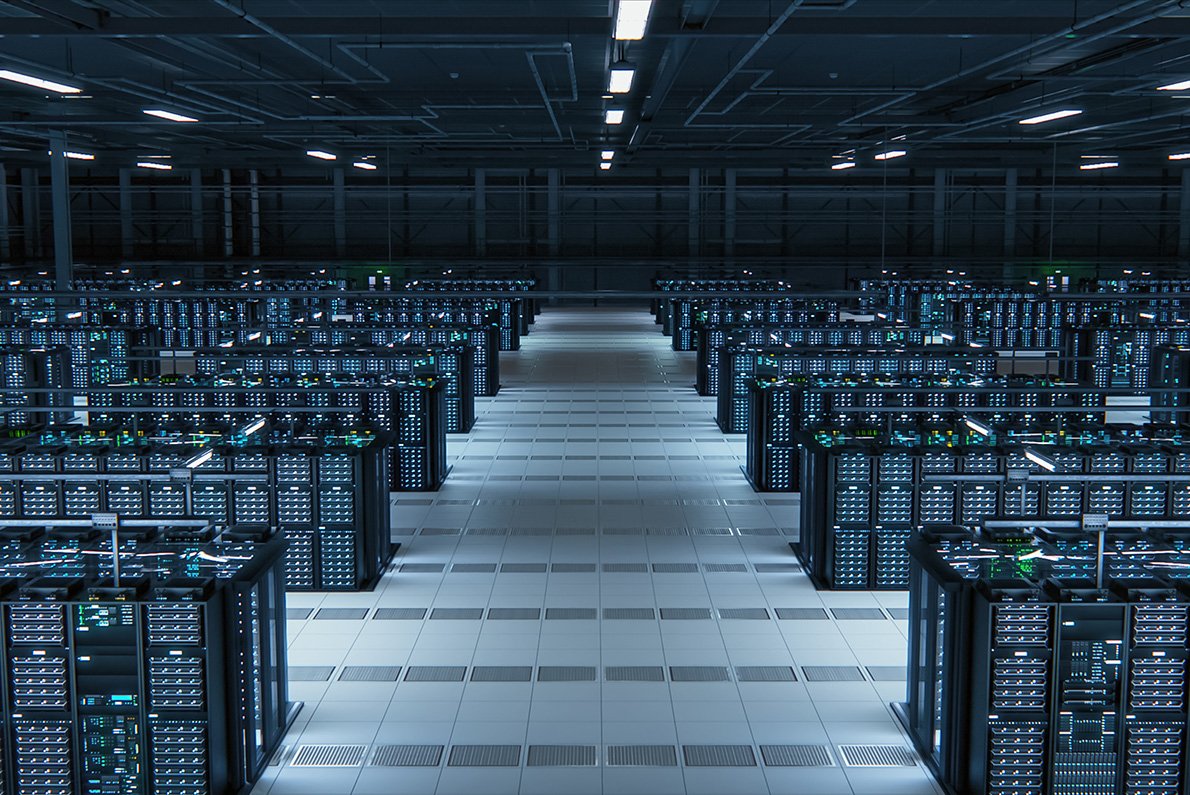

Core Stack and Green Arrow Capital plan to invest more than €1 billion over the next four years to build a network of 13 mid-sized data centres across Italy as demand for digital infrastructure continues to rise.
Core Stack is the digital-infrastructure business of Italy’s Lazzari Group, while Green Arrow Capital is an independent investment manager focused on private markets and alternative assets.
The project will be developed through a strategic joint venture between the two groups.
Unlike many hyperscale developments concentrated in one enormous campus, the companies are planning a distributed network of smaller facilities spread across different parts of the country.
FCRF Launches CP-FRM to Build India’s Next Generation of Fraud Risk Professionals
First Sites Planned in Cremona and Verona
The two most advanced projects are in the provinces of Cremona and Verona in northern Italy.
Core Stack and Green Arrow expect to receive the necessary permits for those sites by the end of 2027.
The first facilities are then expected to begin operating in the first quarter of 2028.
After the initial developments in northern and northeastern Italy, the companies plan to expand into central and southern regions.
The full network is expected to comprise 13 data centres.
More Than €1 Billion Planned Over Four Years
The companies have put the planned investment at more than €1 billion, equivalent to roughly $1.12 billion at current exchange rates.
That figure represents the investment pipeline for the project over the next four years.
It should not be treated as capital already spent or as proof that all 13 sites have received construction approval.
Several projects remain dependent on permitting and development work.
Green Arrow and the Lazzari Group had already disclosed in June that their joint venture was preparing a data-centre investment pipeline worth more than €1 billion.
The October announcement provides greater detail on the planned number of facilities and the initial development locations.
Network Will Use Mid-Sized Data Centres
The strategy differs from the huge hyperscale campuses increasingly being built for global cloud and AI companies.
Instead, the companies plan to operate 13 medium-sized sites as a single national network.
The architecture is intended to provide redundancy, operational continuity and the ability to expand capacity according to local demand.
A distributed model can also place computing infrastructure closer to businesses and users in different regions.
That can reduce latency for some applications and avoid concentrating all capacity in a small number of large metropolitan hubs.
Renewable Power Will Be Produced On-Site
The companies say the data centres will use renewable electricity generated directly at the sites.
This is an important part of the development strategy because electricity has become one of the largest constraints facing the global data-centre industry.
Data centres require constant power for servers, cooling systems, networking equipment and backup infrastructure.
The rapid expansion of artificial intelligence has pushed these requirements even higher because AI computing clusters can consume far more electricity than traditional enterprise servers.
Producing some renewable power on-site could reduce dependence on grid electricity, though the companies have not yet disclosed detailed power capacity, generation technology or the share of demand that will ultimately be met by on-site renewables.
Disused Industrial Areas May Host Some Facilities
The developers are considering former industrial areas for parts of the network.
ANSA reported that the strategy is intended partly to reduce environmental impact by redeveloping already-used industrial land rather than relying only on undeveloped sites.
Brownfield redevelopment can offer advantages for data-centre projects because sites may already have transport links, industrial zoning and access to electricity infrastructure.
However, each project will still depend on local permits, grid connections and environmental requirements.
Companies Promise an Italian Supply Chain
Core Stack and Green Arrow say development of the network will rely on an entirely Italian supply chain.
That could include construction companies, engineering firms, energy providers and other infrastructure suppliers.
The commitment also positions the project as part of Italy’s broader effort to strengthen domestic digital infrastructure rather than simply hosting facilities built around imported services and equipment.
The precise companies involved in the supply chain have not yet been publicly disclosed.
Italy Is Competing for European Data-Centre Investment
The project comes as Europe experiences a major expansion in data-centre construction.
Cloud computing, streaming services and artificial intelligence are increasing demand for both computing capacity and electricity.
Spain and Portugal are among the fastest-growing markets, with the Iberian Peninsula expected to substantially increase its share of European data-centre capacity by 2030.
Spain’s Aragon region alone has attracted more than €60 billion in expected data-centre investment, helped by fast-track permitting and access to renewable power.
Italy is trying to capture a larger share of the same infrastructure expansion.
Smaller Sites Could Avoid Some Hyperscale Problems
Massive hyperscale data centres can create local opposition because of their electricity demand, water use, land footprint and effect on transmission networks.
A distributed system of mid-sized facilities may reduce some of those pressures at individual locations.
It does not eliminate them.
Thirteen facilities can still create substantial combined energy demand, and each site will need suitable grid capacity and cooling infrastructure.
The companies have not yet published detailed information about water consumption, total megawatt capacity or the cooling systems planned for the network.
Those details will be important when individual sites move through the permitting process.
AI Is Increasing the Value of Digital Infrastructure
Although the companies have not described the project solely as an AI infrastructure investment, the wider data-centre boom is increasingly being driven by artificial intelligence.
Training and operating advanced AI models requires large amounts of computing power.
That is leading technology companies and infrastructure investors to compete for data-centre sites, electricity generation, grid connections and semiconductor capacity.
Data centres are therefore increasingly viewed not only as technology infrastructure but also as energy-intensive strategic assets.
The €1 billion Italian project fits into that larger investment cycle.
Project Still Faces Permitting and Execution Risk
The first two sites are not expected to receive permits until the end of 2027.
Operations are targeted for early 2028.
That means the project remains in a development phase and could still be affected by planning rules, energy availability, construction costs or financing conditions.
The companies have announced the investment plan and joint venture, but the full 13-site network will depend on successful execution over several years.
What this means for you
Europe’s data-centre expansion is moving beyond a handful of giant cloud campuses toward distributed infrastructure networks tied closely to local energy supply. The Core Stack–Green Arrow project shows how investment in computing capacity is increasingly becoming an energy, land and industrial-policy issue as well as a technology story.
Follow for daily updates on cybercrime, corporate fraud, DFIR, hacking, investigations, and digital forensics
