

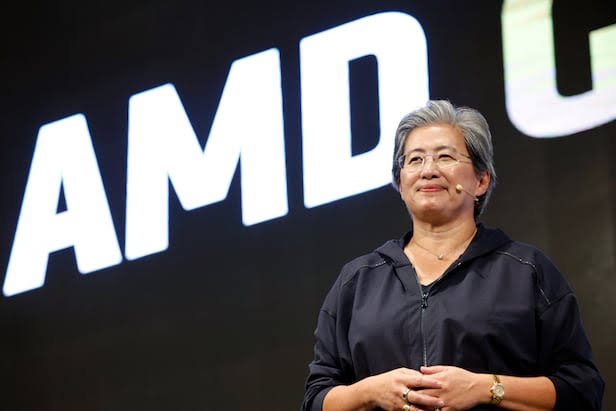

Advanced Micro Devices is exploring a deeper manufacturing partnership with Samsung Electronics as the US chipmaker looks for more capacity to support rapidly growing demand for artificial intelligence processors.
AMD Chief Executive Lisa Su said on October 7 that the company continues to examine opportunities with Samsung across both memory and foundry manufacturing.
The comments came during Su’s visit to Seoul, where she met executives from South Korea’s two largest memory-chip companies, Samsung Electronics and SK Hynix.
The discussions could eventually expand an existing relationship under which Samsung already supplies high-bandwidth memory and other advanced memory products for AMD’s next-generation AI systems.
FCRF Launches CP-FRM to Build India’s Next Generation of Fraud Risk Professionals
No Foundry Deal Has Been Signed Yet
AMD and Samsung have not announced a contract under which Samsung will manufacture AMD processors.
Su said only that the two companies continue to explore such opportunities.
That distinction matters because AMD currently depends heavily on Taiwan Semiconductor Manufacturing Company for production of its advanced CPUs and GPUs.
Samsung is one of the few companies in the world capable of manufacturing leading-edge logic chips at advanced process nodes.
A foundry agreement would therefore give AMD another potential manufacturing partner as AI demand pushes the company to secure more semiconductor capacity.
AMD Already Works With Samsung on AI Memory
The two companies already have a formal partnership in memory.
In March, AMD and Samsung signed an MoU to expand cooperation on next-generation AI memory and computing technologies.
Under that agreement, Samsung is expected to supply HBM4 memory for AMD’s Instinct MI455X AI accelerator.
The partnership also covers advanced DDR5 memory for AMD EPYC processors and its Helios rack-scale computing platform.
At the time, Samsung said the partnership could eventually extend beyond memory into foundry manufacturing and advanced packaging.
The October discussions show that those possibilities remain active.
Why HBM Has Become Critical for AMD
High Bandwidth Memory has become one of the most important components in modern AI infrastructure.
AI accelerators process enormous amounts of data and require memory capable of feeding information to GPUs at extremely high speeds.
HBM stacks memory chips vertically and places them close to the processor, allowing much higher bandwidth than conventional memory.
AMD’s Instinct accelerators compete directly with Nvidia’s AI chips.
That means securing sufficient HBM supply has become just as important as securing the processors themselves.
Samsung and SK Hynix are two of the world’s dominant HBM suppliers.
Lisa Su Says Korean Supply Chain Is Essential
Su said AMD relies heavily on South Korea’s semiconductor supply chain.
She described Samsung and SK Hynix as key partners in AMD’s ambition to expand its data-centre business.
She also urged memory manufacturers to expand production as quickly as possible.
Global demand for AI infrastructure has tightened supplies of HBM and other memory products.
AMD is now planning capacity requirements several years ahead rather than simply responding to current demand.
Su said earlier this week that the company expects to substantially increase chip supply in 2027.
AMD Is Trying to Increase AI Chip Supply
AMD has rapidly expanded its position in the AI accelerator market.
The company remains behind Nvidia in overall AI GPU market share, but its Instinct product line has become one of the most significant alternatives available to large cloud companies and data-centre operators.
Su said AMD is seeing strong demand across its data-centre product portfolio.
The company is therefore working with manufacturing partners to expand production of both CPUs and GPUs.
During her visit to Taiwan before travelling to South Korea, Su met Foxconn and planned discussions with TSMC around additional production capacity.
She said AMD needs more advanced wafer capacity to meet demand over the next several years.
Samsung Could Give AMD Another Manufacturing Option
A Samsung foundry partnership could help AMD diversify its manufacturing supply chain.
AMD designs its own processors but does not operate large semiconductor fabrication plants.
Instead, it relies on contract manufacturers.
TSMC currently produces many of AMD’s most advanced chips and has become one of the most strategically important companies in the global semiconductor industry.
Samsung Foundry competes with TSMC and Intel for advanced chip-manufacturing contracts.
Adding Samsung as another supplier could potentially give AMD greater flexibility as AI chip demand rises.
However, qualifying a new foundry is technically difficult.
Chip designs must be adapted to specific manufacturing processes, and companies must verify that production yields, performance and reliability meet commercial requirements.
That means any potential shift would likely take time.
TSMC Relationship Remains Central
AMD’s exploration of Samsung does not mean it is abandoning TSMC.
TSMC remains a major AMD manufacturing partner.
AMD has already begun ramping production of its next-generation Venice server CPUs using TSMC’s 2-nanometre technology.
Su has also been discussing further capacity expansion with Taiwanese suppliers.
The likely strategy is therefore diversification rather than replacement.
As AI demand increases, AMD may need more manufacturing capacity than any single supplier can easily provide.
Samsung Wants More Advanced Foundry Customers
A deal with AMD would also be strategically important for Samsung.
Samsung remains the world’s largest memory-chip manufacturer, but its foundry business competes against TSMC for large advanced-node customers.
Winning production work from AMD would strengthen Samsung’s position in the market for high-performance computing and AI chips.
Samsung began producing 2-nanometre chips last year and is one of only a small number of companies capable of manufacturing at that level.
The company has also been trying to combine its memory, foundry and advanced-packaging businesses into broader packages for AI customers.
Its existing relationship with AMD gives it a possible route to expand that strategy.
Samsung Is Also Gaining Ground in HBM
Samsung has historically been a major DRAM supplier but initially lagged SK Hynix in supplying advanced HBM products for AI systems.
That gap has narrowed.
Reuters reported this week that Samsung’s global HBM market share is expected to rise to around 34% this year from 20% last year, while SK Hynix remains the market leader.
Samsung has expanded shipments of its HBM4 products and already supplies memory for AMD accelerators.
That existing memory relationship may make broader manufacturing cooperation easier to discuss.
AMD Is Planning Three to Five Years Ahead
The scale of AI infrastructure investment means chipmakers can no longer plan production only a few quarters ahead.
Su said AMD is now thinking three to five years into the future when discussing manufacturing and supply.
That includes advanced wafers, HBM, packaging and complete data-centre systems.
AI accelerators require all of these components to arrive together.
A shortage in one part of the supply chain can delay delivery of the entire system.
That is why AMD is simultaneously negotiating with foundries, memory manufacturers and hardware assembly partners.
AI Boom Is Reshaping Semiconductor Alliances
The discussions between AMD and Samsung reflect a broader transformation in the semiconductor industry.
AI demand is forcing chip designers to build deeper relationships with companies that previously supplied only one part of the system.
Memory manufacturers are becoming strategic AI partners.
Foundries are becoming critical capacity providers.
Advanced packaging has become a major bottleneck.
The result is a semiconductor market where large AI companies increasingly need long-term agreements spanning several different technologies.
AMD’s relationship with Samsung is beginning to move in that direction.
What this means for you
AMD is not moving its chip production to Samsung yet, but it is looking for more ways to diversify the supply chain behind its growing AI business. If a foundry agreement eventually follows the existing memory partnership, Samsung could become a much larger part of AMD’s competition with Nvidia in data-centre AI.
Follow for daily updates on cybercrime, corporate fraud, DFIR, hacking, investigations, and digital forensics
