

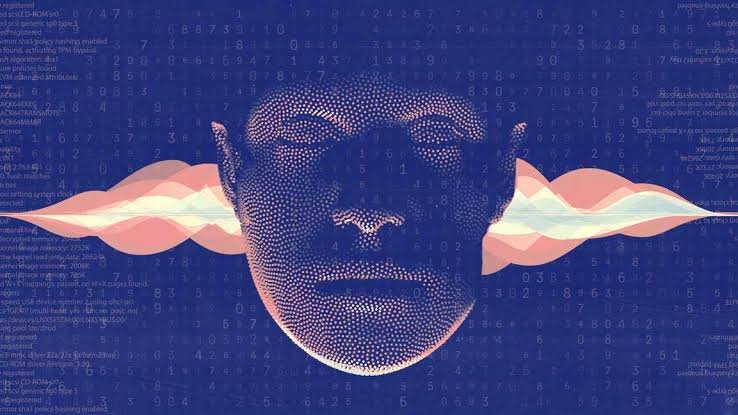

The Karnataka government has signed an agreement with voice-AI company ElevenLabs to help people who have lost the ability to speak communicate using synthetic versions of their own voices.
The memorandum of understanding was signed on October 6 between ElevenLabs and the Karnataka Innovation and Technology Society, or KITS, during the company’s first India Summit in Bengaluru.
The partnership will also explore voice-based government services and a new safety framework for technologies capable of cloning and generating realistic human speech.
FCRF Launches CP-FRM to Build India’s Next Generation of Fraud Risk Professionals
Free Lifetime Licences for Eligible Beneficiaries
Under the agreement, ElevenLabs will provide free lifetime licences to eligible people identified by the Karnataka government or institutions working under its guidance.
The support will be provided through the company’s One Million Voices programme, which was launched in 2024 to expand access to voice technology for people with speech and voice loss.
The programme is intended for people affected by conditions such as oral and throat cancer, ALS and other neurological or degenerative disorders that can permanently alter or remove a person’s ability to speak.
The technology can allow a user to communicate through a synthetic voice designed to sound like their own rather than relying entirely on a generic computer-generated voice.
Mysuru Institute May Help Identify Beneficiaries
KITS is engaging with the All India Institute of Speech and Hearing in Mysuru to explore how the programme could be implemented and how eligible beneficiaries can be identified.
That institution could become an important bridge between AI technology and people who require clinical speech or communication support.
The initiative remains at an implementation-planning stage.
The government has not yet announced how many people will initially receive licences or when the first beneficiaries will be onboarded.
Kannada Voice Restoration Included
One important feature of the project is support for Indian languages.
Moneycontrol reported that eligible users could communicate using their restored or synthetic voice in Kannada.
ElevenLabs currently supports 14 Indian languages and says it plans to expand coverage to all 22 official languages in the coming months.
For assistive technology, language support matters because communication tools are far more useful when people can speak naturally with family members, doctors and public-service providers in the language they normally use.
Voice AI May Also Enter Government Services
The partnership is not limited to medical or accessibility use.
Karnataka and ElevenLabs will also explore using voice AI for citizen-facing government services.
Possible applications include helplines, grievance redressal, access to information about government schemes and entitlements, and voice interfaces in Kannada and other languages used in the state.
Such systems could potentially make digital government services easier to use for people who struggle with apps, websites or text-heavy interfaces.
That could be particularly useful for older users, people with disabilities and citizens who are more comfortable speaking than typing.
Karnataka Also Wants Voice AI Safety Rules
The most significant policy element of the MoU is a proposed platform-agnostic voice AI safety framework.
ElevenLabs will contribute expertise to Karnataka’s Responsible AI framework, focusing specifically on risks associated with synthetic audio and voice cloning.
The work is expected to examine areas including deepfake detection, audio provenance, watermarking, consent for voice cloning, restrictions on cloning public figures and protection against voice-based fraud and impersonation.
That makes the agreement notable because Karnataka is examining both the benefits and the risks of voice AI at the same time.
Voice Cloning Creates a Consent Problem
Voice cloning can be highly useful when a person voluntarily wants to preserve or recreate their own voice.
But the same technology can be misused when someone’s voice is copied without permission.
A cloned voice can potentially be used in scams, fake political messages, impersonation attacks or misleading audio recordings.
That creates a basic governance question: when should a voice be cloned, who can authorise it and how can other people verify whether a recording is genuine?
Karnataka’s proposed framework is expected to address precisely those questions.
Public Officials Could Also Need Protection
The MoU will also explore safeguards against unauthorised cloning of public-facing government representatives and institutions.
This has become increasingly important as synthetic voices become more realistic and difficult to distinguish from authentic recordings.
A convincing fake voice message from a minister, police officer or senior official could potentially be used to spread misinformation or facilitate fraud.
That means voice verification may increasingly become part of public-sector cybersecurity.
Karnataka Had Been Exploring ElevenLabs Pilots Since August
The October 6 agreement follows exploratory discussions held in August.
At that stage, Karnataka was examining possible ElevenLabs pilots in areas such as skilling, healthcare, investment promotion, culture and citizen services, but no agreement had yet been signed.
The new MoU therefore converts those earlier discussions into a formal government-company partnership.
It is also ElevenLabs’ first partnership of this kind with an Indian state government.
India Is ElevenLabs’ Largest Market Outside the US
The partnership comes as ElevenLabs expands aggressively in India.
Co-founder and CEO Mati Staniszewski told Reuters on October 6 that the company plans to invest “hundreds of millions of dollars” in India, including local hiring, model development and work on Indian languages.
The company says India is its largest market outside the United States.
It has worked with around 250 enterprises in the region and says roughly 26,000 developers and businesses actively build using its API each month.
Its Indian customers include companies such as Razorpay, Meesho, Urban Company, Mahindra and IDFC First Bank.
Accessibility and Fraud Risks Are Growing Together
Voice AI presents an unusual policy challenge.
The same technology that can help a person with ALS communicate again can also help a fraudster impersonate a relative or bank executive.
That means accessibility and security cannot be treated as separate conversations.
The Karnataka–ElevenLabs partnership appears designed around that tension: expanding useful applications while simultaneously developing rules around consent, provenance and misuse.
Free Licence Does Not Mean Automatic Eligibility
The announcement should also not be interpreted as free ElevenLabs access for every resident.
The lifetime licences are intended for eligible beneficiaries identified through the state government or approved organisations.
Implementation details, beneficiary numbers and the precise screening process have not yet been announced.
People seeking access should therefore wait for official Karnataka or participating institutional guidance rather than assume immediate enrolment.
What this means for you
Voice AI can be life-changing when it restores communication to someone who has lost their speech, but the same technology can also enable convincing impersonation. Karnataka’s experiment will be important because it attempts to develop accessibility and anti-deepfake safeguards together rather than treating them as separate policy problems.
Follow for daily updates on cybercrime, corporate fraud, DFIR, hacking, investigations, and digital forensics
