

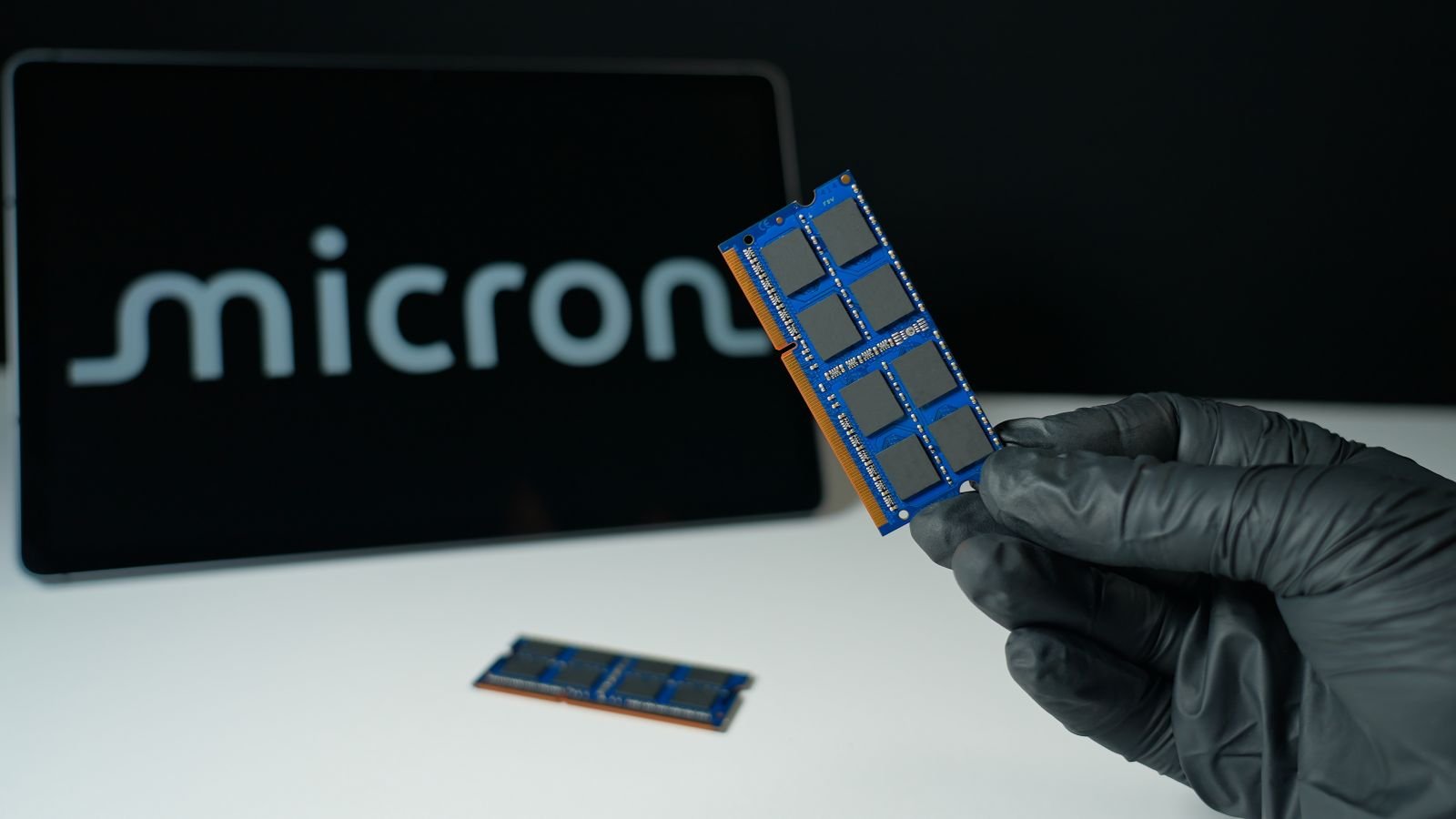

Micron Technology has agreed to pay $600 million to memory-technology company Netlist under a five-year patent licence and settlement that ends all pending legal disputes between the two companies.
The agreement gives Micron access to Netlist’s patent portfolio covering technologies used in server memory and High Bandwidth Memory, or HBM.
Micron will pay Netlist $30 million every quarter from the fourth quarter of 2026 through the third quarter of 2031, bringing the total value of the arrangement to $600 million.
The deal brings an end to years of litigation over memory technologies that have become increasingly important as artificial intelligence drives demand for faster, higher-capacity chips.
FCRF Launches CP-FRM to Build India’s Next Generation of Fraud Risk Professionals
Settlement Covers Server DIMMs and High Bandwidth Memory
Netlist said Micron will receive a five-year licence to its patent portfolio.
That portfolio includes patents covering server DIMMs and High Bandwidth Memory technologies.
DIMMs are memory modules used in servers and high-performance computing systems.
HBM is a much faster form of memory designed to move large amounts of data between processors and memory with very high bandwidth.
That has made HBM one of the most important components in modern AI infrastructure.
Advanced GPUs used to train and run large AI models rely heavily on high-bandwidth memory to process enormous datasets efficiently.
Micron Will Pay $30 Million Every Quarter
The agreement is structured as a series of payments rather than a single $600 million transfer.
Netlist said Micron will pay $30 million per quarter for 20 quarters.
Payments begin in the fourth quarter of 2026 and continue through the third quarter of 2031.
That produces a total payment of $600 million over the five-year licence period.
The arrangement therefore combines a litigation settlement with an ongoing patent-licensing relationship.
All Pending Legal Proceedings Will Be Dropped
The agreement is broader than the resolution of one court case.
Netlist said both companies have agreed to settle and mutually release all pending legal proceedings between them.
That means multiple patent disputes that had been moving through US courts and the International Trade Commission will no longer continue.
This is significant because Netlist had recently intensified its litigation against Micron.
Only days before the settlement, the company filed another complaint at the US International Trade Commission involving HBM technologies used in AI computing.
Netlist Had Sought Import Ban on Micron AI Memory Chips
On September 29, Netlist filed an ITC complaint accusing Micron of infringing two patents related to High Bandwidth Memory.
The case targeted Micron’s HBM3E, HBM4 and HBM4E products.
Netlist asked the ITC to issue exclusion and cease-and-desist orders that could have restricted imports of allegedly infringing memory products into the United States.
The complaint also named Nvidia, Broadcom and Google as downstream respondents because Micron memory was allegedly being used in products or systems connected with those companies.
That gave the patent fight potential consequences beyond Micron itself.
Another ITC Investigation Was Already Underway
The HBM complaint was not Netlist’s only case against Micron.
In August, Netlist also filed an ITC action involving four patents covering DDR5 RDIMMs and MRDIMMs.
The US International Trade Commission formally opened that investigation on September 23.
That case also named Super Micro Computer, Hewlett Packard Enterprise and Lenovo.
Netlist was seeking an import ban on products containing memory that it alleged infringed its patents.
The new settlement now removes the immediate threat of those proceedings between Micron and Netlist.
Netlist Won $445 Million Verdict in 2024
The dispute had already produced one major courtroom victory for Netlist.
In 2024, a federal jury in Marshall, Texas, found Micron had infringed Netlist patents and awarded the company $445 million in damages.
Micron had continued contesting Netlist’s patent claims through multiple legal proceedings.
The settlement means the companies will no longer continue fighting those disputes through litigation.
It also converts what had been an adversarial relationship into a formal licensing arrangement.
Why HBM Matters to the AI Industry
High Bandwidth Memory has become one of the most strategically important components in the semiconductor sector.
AI accelerators need enormous amounts of data to move between memory and processing units every second.
Traditional memory can become a bottleneck.
HBM addresses that problem by stacking memory chips vertically and placing them close to high-performance processors.
The result is much higher bandwidth and lower power consumption compared with conventional memory configurations.
That is why demand for HBM has surged as companies race to build larger AI training clusters.
Netlist Says Deal Validates Its AI Memory Patents
Netlist Chief Executive C.K. Hong said the agreement demonstrates the value of the company’s technology.
“The agreement with Micron further validates the value of our AI memory technologies,” Hong said in the company’s announcement.
Netlist has spent years using patent litigation to defend technologies it says are foundational to modern server and AI memory.
The company has also pursued Samsung in separate patent disputes.
Samsung Reached Separate Deal With Netlist
Netlist’s agreement with Micron follows another major settlement with Samsung.
Reuters reported that Netlist settled its separate patent dispute with Samsung in August after winning patent verdicts worth a combined $421 million against the South Korean chipmaker in Texas.
That means two of the world’s largest memory manufacturers have now entered licensing or settlement arrangements with Netlist within a short period.
The trend could strengthen Netlist’s position when negotiating with other companies using similar memory technologies.
AI Boom Is Making Memory Patents More Valuable
Much of the public discussion around AI chips focuses on processors from companies such as Nvidia and AMD.
But those processors depend heavily on memory technologies.
The value of AI hardware increasingly comes from the entire computing stack — GPUs, networking equipment, packaging and high-bandwidth memory working together.
That means patents covering memory architecture can become commercially significant as AI infrastructure investment rises.
Netlist is clearly positioning its portfolio around that opportunity.
Micron Gains Legal Certainty
For Micron, the agreement reduces legal uncertainty around products that are strategically important to its AI business.
The company is investing heavily in HBM as it competes with Samsung Electronics and SK Hynix for supply contracts linked to AI accelerators.
Potential import restrictions or continuing patent litigation could have created uncertainty for customers planning large AI infrastructure deployments.
A five-year licence provides clearer legal access to the covered technologies.
Settlement Does Not Mean Micron Admitted Infringement
The settlement should not be interpreted as a fresh judicial finding that Micron infringed every Netlist patent involved in the pending cases.
The companies agreed to resolve and mutually release their legal proceedings.
Settlements typically allow parties to eliminate litigation risk without requiring continued court findings on every contested issue.
The separate 2024 jury verdict remains part of the history of the dispute, but the new agreement replaces ongoing litigation with a commercial licence.
What this means for you
The $600 million agreement shows how valuable memory technology has become in the AI boom. As companies spend billions on AI chips and data centres, the patents covering the memory feeding those processors are becoming just as strategically important as the processors themselves.
Follow for daily updates on cybercrime, corporate fraud, DFIR, hacking, investigations, and digital forensics
