

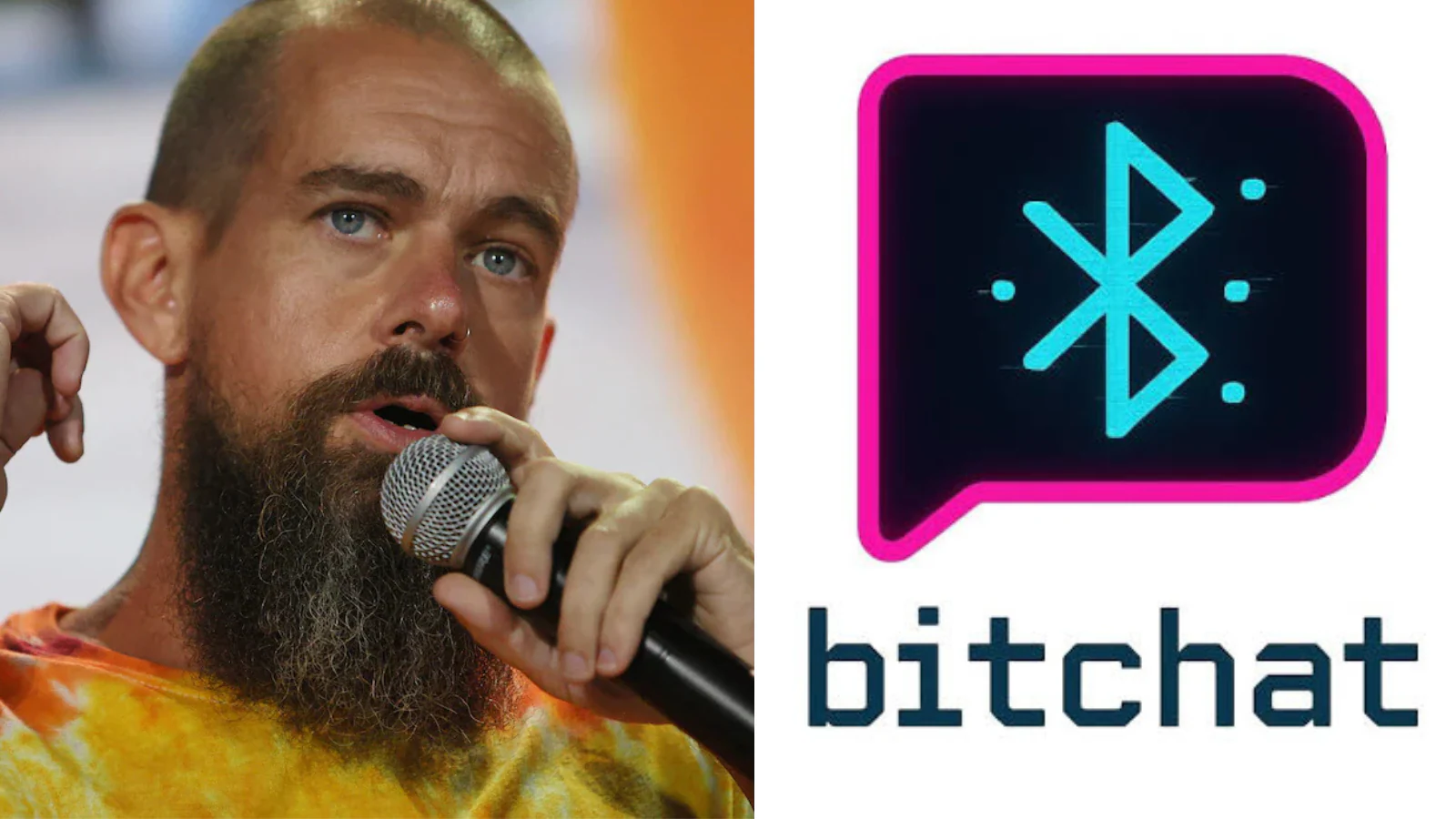

Jack Dorsey-backed messaging app Bitchat has disappeared from Apple and Google’s app stores in India after the government ordered Apple to block access to the service under Section 69A of the Information Technology Act.
Bitchat is unusual because it can exchange messages between nearby phones using Bluetooth mesh networking without requiring mobile data, Wi-Fi or a central server.
Apple informed Bitchat that the Ministry of Electronics and Information Technology had directed it to remove the app from the Indian App Store. The TestFlight version used for beta testing will also become unavailable to users in India.
The app remains available through Apple’s App Store outside India.
Google Play and Bitchat Website Also Become Unavailable
The restriction appears to extend beyond Apple’s App Store, although the exact legal mechanism is still unclear.
TechCrunch found Bitchat unavailable on Google Play in India on October 3.
Moneycontrol independently reported the same result and also found that Bitchat’s website was not opening in India at the time of its checks.
However, neither report could confirm whether Google or Indian internet service providers had received separate blocking directions from the government.
Apple, Google and MeitY did not provide responses to TechCrunch’s requests for comment.
That distinction is important.
The government order disclosed by Jack Dorsey directly establishes Apple’s removal of Bitchat. The reasons for its simultaneous disappearance from other channels have not yet been publicly confirmed.
Government Uses Section 69A to Block Access
Apple’s notification said MeitY issued the demand under Section 69A of the Information Technology Act, 2000.
The provision allows the Central Government to direct intermediaries to block public access to information when it considers such action necessary for grounds including sovereignty and integrity of India, defence, security of the State, public order or prevention of incitement to certain offences.
The notice shared publicly by Dorsey said Bitchat contained content considered illegal in India.
It did not identify the specific content said to violate Indian law or disclose the precise factual ground relied upon by the government.
Apple advised Bitchat’s developers to contact MeitY for further details.
Why Bitchat Is Different From WhatsApp or Signal
Most messaging applications depend on internet infrastructure.
Even when their messages are end-to-end encrypted, users generally still require mobile data or Wi-Fi and the service may rely on centralised infrastructure for functions such as account management or message delivery.
Bitchat was designed differently.
Launched in July 2025, it uses Bluetooth Low Energy mesh networking.
Nearby phones running the app can connect directly and relay messages from device to device, allowing a message to travel through several participating phones without relying on the normal internet.
Users also do not need a phone number or traditional account registration to communicate through its local mesh network.
That architecture makes the service potentially useful during internet outages or shutdowns.
It also makes conventional forms of monitoring, interception and attribution more difficult.
India Had Already Targeted Bitchat’s Source Code in July
The October action is not India’s first attempt to restrict Bitchat.
On July 23, the Indian Cyber Crime Coordination Centre under the Ministry of Home Affairs issued a notice directing GitHub to disable access to three repositories connected with the app.
That earlier action relied on Section 79(3)(b) of the IT Act and Rule 3(1)(d) of the IT Rules rather than Section 69A.
The government notice said Bitchat allowed anonymous communication without mandatory registration, phone-number verification or centralised communication logs.
It argued that this architecture could impede lawful interception, attribution and criminal investigation.
Authorities also raised concerns that such technology could potentially be misused by terrorist organisations, organised criminal groups, cybercriminals or other unlawful actors.
Earlier GitHub Takedown Raised Legal Questions
The July action triggered criticism from digital-rights groups and legal experts.
One issue was whether intermediary-liability provisions could properly be used to suppress an entire open-source software repository rather than particular unlawful content.
Critics also pointed out that deleting source-code repositories would not remove copies of the app already installed on users’ phones.
Because Bitchat works through decentralised Bluetooth connections, existing installations can continue operating without a central Bitchat server.
The open-source nature of the project also means its code can potentially be copied, modified and redistributed through other channels.
That makes enforcement against decentralised software considerably more complicated than blocking an ordinary website.
Government Now Relies on Stronger Blocking Provision
The latest Apple order is legally different from the July GitHub notice.
This time, the government used Section 69A — the specific statutory power for blocking public access to information through computer resources.
Section 69A allows the government to issue blocking directions when specified national-security or public-order conditions are met, with reasons required to be recorded in writing.
The exact blocking order concerning Bitchat has not been made public.
This means the full reasoning, evidence and specific unlawful content identified by the government cannot currently be independently examined.
Digital-Rights Groups Challenge the Move
The Internet Freedom Foundation has criticised the latest action, arguing that Section 69A is meant to address unlawful information rather than ban a communications technology simply because its architecture makes interception difficult.
That is an advocacy position rather than a judicial determination.
No court has yet ruled on the legality of this particular Bitchat blocking order.
The dispute therefore raises a larger legal question: whether the government can restrict an entire communication tool because of its technical capabilities, even when the software itself can also be used for lawful private communication.
Bitchat Saw Sharp Rise in Indian Usage Earlier This Year
Interest in Bitchat rose sharply in India in July.
Sensor Tower data cited by TechCrunch showed India accounted for roughly 85% of the app’s global downloads between July 17 and July 23, compared with around 1% during the previous 30 days.
The increase came during periods when mobile internet access was restricted around public demonstrations.
Reports said some protesters turned to Bitchat and rival offline-messaging application Briar because both could continue functioning locally without a conventional internet connection.
The government’s July notice specifically referred to the app’s ability to continue communications during network restrictions and internet shutdowns.
Blocking a Decentralised App Is Technically Difficult
Removing Bitchat from official app stores makes it significantly harder for ordinary users to install or update the application.
But it does not necessarily eliminate the technology.
Android applications can potentially be distributed outside Google Play.
Open-source code can also be copied before repositories are removed.
And phones that already contain a working version of Bitchat may still be capable of communicating with nearby devices through Bluetooth because the system does not depend entirely on a central server.
This illustrates a broader enforcement challenge as governments confront decentralised communication technologies.
Traditional website blocking works by restricting access to a domain or server.
A peer-to-peer mesh network does not have the same single point of control.
What this means for you
Bitchat’s removal shows that India’s online-blocking powers can extend beyond websites and social-media posts to entire applications distributed through app stores. But decentralised and open-source software creates a new enforcement problem because removing an official download channel does not necessarily disable copies already running on users’ devices.
Follow for daily updates on cybercrime, corporate fraud, DFIR, hacking, investigations, and digital forensics
