

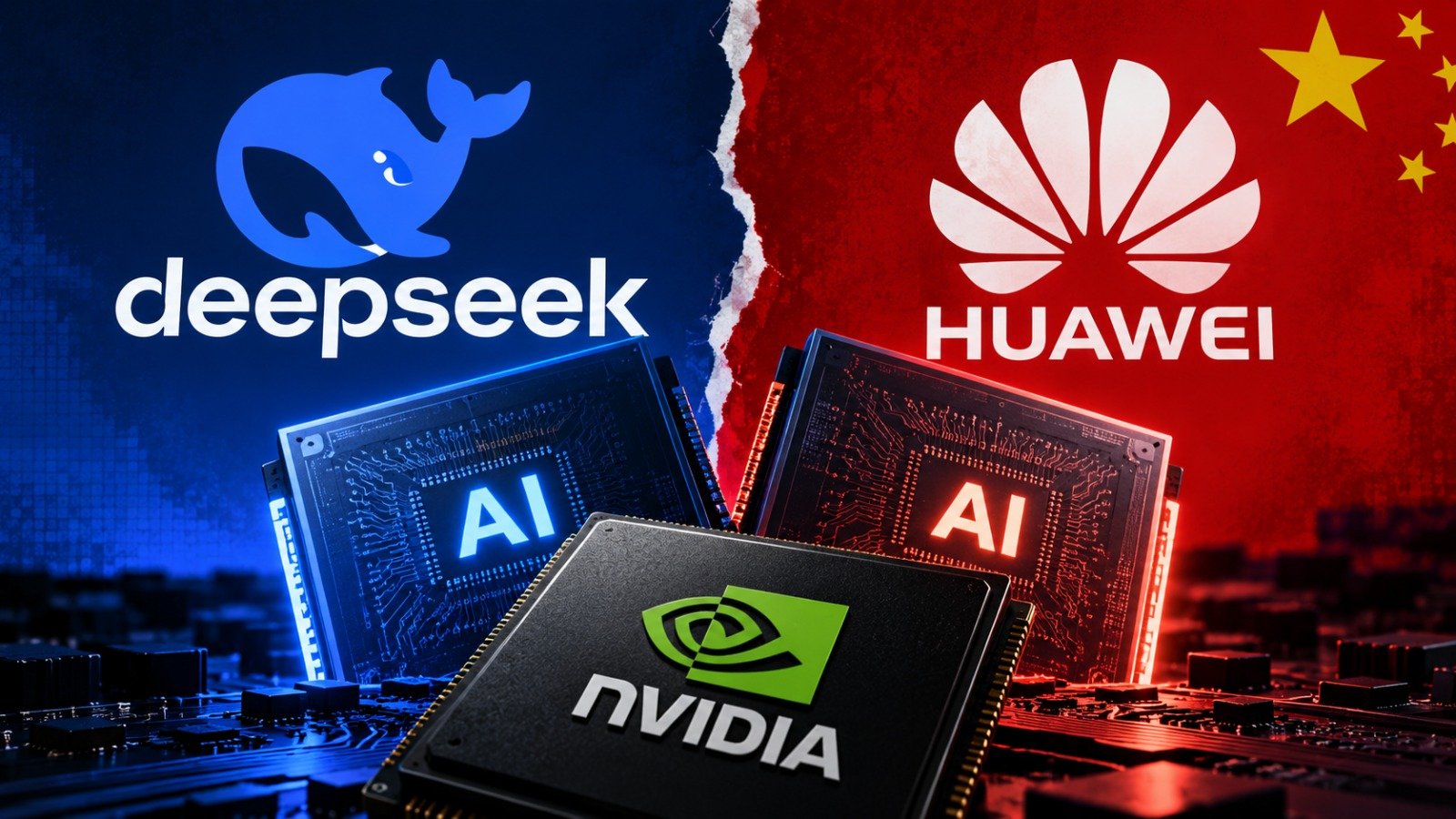

Chinese artificial intelligence company DeepSeek has partnered with Huawei to develop programming tools for Huawei’s Ascend AI chips, as Chinese technology companies accelerate efforts to reduce their dependence on American chipmaker Nvidia.
DeepSeek announced the collaboration on September 30, revealing that it is releasing open-source software infrastructure designed specifically for Huawei’s AI processors. The initiative includes programming tools, computing libraries and communication software intended to make developing AI applications on Chinese-made chips easier.
The two companies have also worked on a computing system connecting 128 Huawei Ascend 950 chips. The system is designed to improve how the processors share information and handle demanding AI workloads.
The announcement comes two weeks after Huawei unveiled its next-generation AI processors and computing systems, positioning them as alternatives to American technology.
FCRF Launches CP-FRM to Build India’s Next Generation of Fraud Risk Professionals
DeepSeek and Huawei Target Nvidia’s Software Ecosystem
Nvidia’s dominance in artificial intelligence extends beyond manufacturing powerful processors. Its CUDA software platform has become an important part of how developers build, train and run AI models.
CUDA allows programmers to write software that uses Nvidia’s graphics processing units, or GPUs, to perform large numbers of calculations simultaneously.
Over time, developers have built applications and research tools around this software ecosystem. That creates an additional challenge for rival chipmakers.
Even if another company develops a capable AI processor, developers may find it difficult or expensive to move existing applications away from Nvidia.
DeepSeek and Huawei are attempting to address this problem by improving the software available for Huawei’s Ascend processors.
According to DeepSeek’s announcement, Huawei provided extensive support in developing the new programming infrastructure.
The companies are releasing computing and communication libraries designed to improve how software interacts with Huawei’s hardware.
Making these tools open-source allows developers to examine, modify and potentially build upon the software without relying entirely on proprietary development systems.
The initiative could make Huawei’s chips more accessible to Chinese AI companies seeking alternatives to Nvidia. However, the companies have not demonstrated that the new software matches CUDA across all applications.
What Is TileLang and Why Does It Matter?
One of the central technologies highlighted in the announcement is TileLang, an open-source programming language designed for AI processors.
Developers use programming languages to tell computer chips which calculations to perform and how to manage the information required for those calculations.
However, writing highly optimised software for AI processors can be complicated. Developers often need detailed knowledge of how a particular chip handles memory, calculations and communication.
TileLang aims to simplify this process.
It allows programmers to describe computational tasks at a higher level, reducing the need to manage every low-level hardware instruction manually.
DeepSeek says TileLang offers a simpler programming approach than Nvidia’s CUDA while helping developers obtain more performance from compatible hardware.
For Huawei, this could address an important problem.
A powerful processor is of limited practical value if developers cannot easily adapt existing AI applications to use it.
By improving programming tools and making them publicly available, DeepSeek and Huawei hope to encourage more developers to build applications for the Ascend platform.
However, TileLang’s effectiveness will depend on its performance, compatibility, documentation and adoption by the wider developer community.
Companies Develop Computing System Using 128 Ascend Chips
The partnership also extends beyond individual programming tools.
DeepSeek revealed that it had worked with Huawei on a supernode solution using 128 Ascend 950 processors.
A supernode connects multiple processors so they can work together on demanding computing tasks.
Training large AI models requires enormous computing resources. A single processor may not have enough processing power or memory to handle the entire workload efficiently.
Companies therefore connect multiple chips and distribute calculations between them.
However, this creates another challenge: processors must exchange large amounts of information quickly without wasting computing capacity.
DeepSeek said its collaboration with Huawei focused on improving both computation and communication within the 128-chip system.
The programming infrastructure is intended to help developers coordinate these processes more efficiently.
The development follows Huawei’s September announcement of its next-generation AI processors and supernode systems.
Huawei has said it expects systems using its newer AI processors to become widely used for model training in 2027.
The companies have not published comprehensive independent benchmarks establishing how their jointly developed 128-chip system performs against equivalent Nvidia-based infrastructure.
US Export Restrictions Drive China’s Push for Domestic AI Technology
The collaboration comes as Chinese technology companies continue developing alternatives to American semiconductor technology.
US export restrictions have limited China’s access to certain advanced Nvidia processors and semiconductor technologies, creating pressure on Chinese companies to strengthen domestic capabilities.
Huawei has emerged as an important supplier of locally developed AI computing equipment.
However, developing competitive processors is only one part of building a domestic AI industry.
Companies also need programming languages, software libraries, networking technology and development tools capable of supporting increasingly complicated AI models.
DeepSeek’s latest announcement addresses this software challenge.
The company had already strengthened its relationship with Huawei earlier in 2026 when its V4 AI models were adapted for Huawei’s Ascend processors.
The latest collaboration expands that relationship into the software infrastructure required to develop and run AI applications.
Nevertheless, reducing dependence on Nvidia will require more than software improvements.
Chinese chipmakers continue to face manufacturing constraints, limited supplies of advanced memory and challenges associated with producing processors at scale.
Huawei acknowledged earlier in September that demand for its AI computing equipment was exceeding its production capacity.
The DeepSeek partnership could help improve access to an alternative software ecosystem, but whether it leads to widespread adoption will depend on hardware availability and performance.
What this means for you
AI developers and businesses could eventually gain another option for building applications without depending exclusively on Nvidia’s software. However, organisations considering Huawei’s processors should evaluate actual performance, software compatibility and long-term support before migrating existing AI workloads.
Follow for daily updates on cybercrime, corporate fraud, DFIR, hacking, investigations, and digital forensics
