
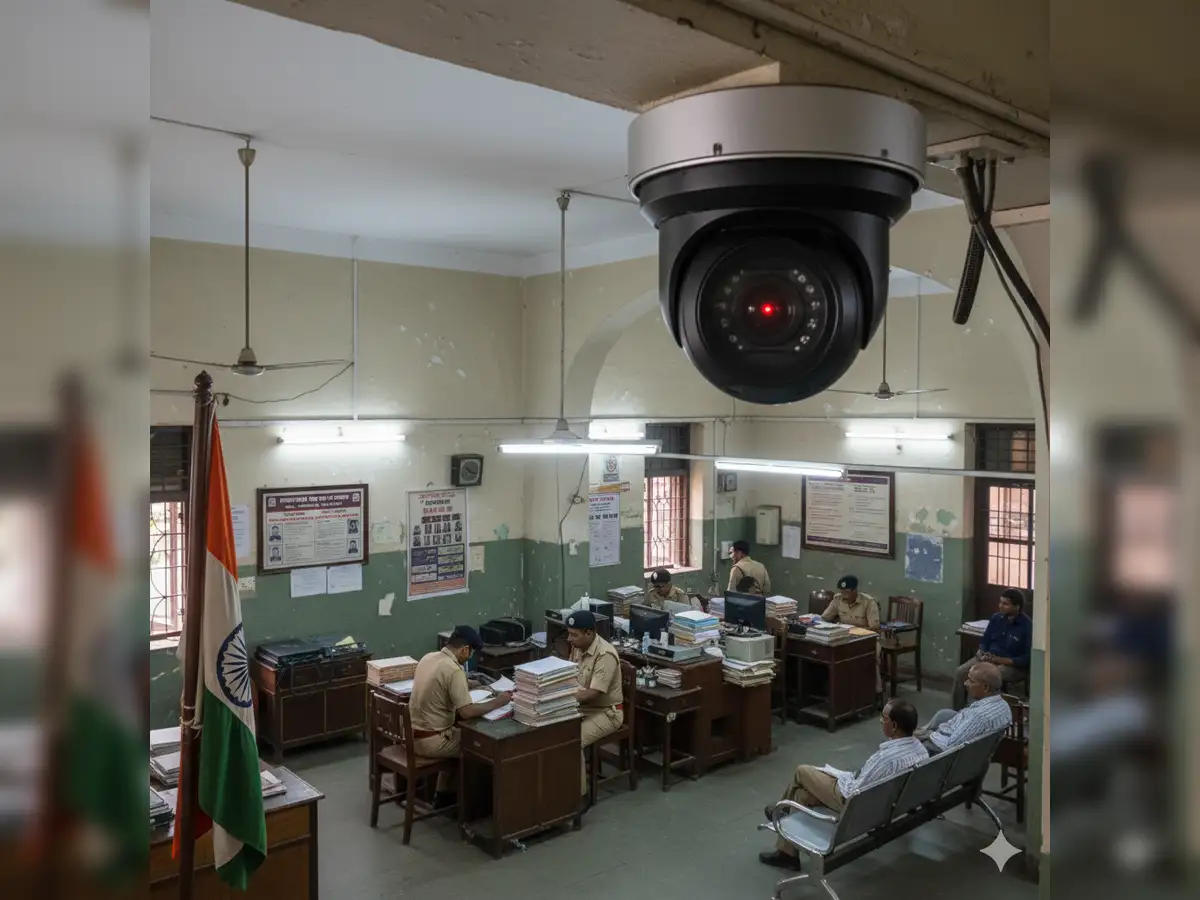
The Karnataka High Court has ordered a State-wide audit of CCTV systems in police stations to ensure continuous surveillance.
Why did the High Court order an audit?
Justice Suraj Govindaraj directed the State to undertake a technical and administrative audit of CCTV systems and their power-backup arrangements across police stations in Karnataka.
The Court said CCTV surveillance was an essential accountability mechanism and could not be reduced to merely installing cameras. Systems must remain functional and capable of recording continuously for the intended safeguards to work.
The directions arose while the Court was examining the non-availability of CCTV footage from Whitefield Police Station in connection with an alleged incident on September 4, 2024.
What happened at Whitefield Police Station?
The State attributed the absence of footage to a failure of the police station’s UPS system. It submitted that the CCTV system operated on mains electricity and required a functioning UPS during a power failure.
According to the State, the UPS had remained non-functional for nearly 11 months, including on the date of the alleged incident. It argued that if a power outage occurred during the relevant period, the CCTV system would not have recorded the incident.
The Court, however, questioned how such a prolonged failure could continue without corrective action.
Proposal for Conducting Cyber Crisis Drill, Tabletop Exercise (TTEx) & CCMP Readiness Exercise
Why did the Court stress power backup?
The Court observed that CCTV cameras in police stations had been installed pursuant to Supreme Court directions in Shafhi Mohammad v. State of H.P., with the objective of monitoring activities and addressing complaints concerning atrocities and other misconduct.
It said that purpose would be defeated if surveillance systems stopped working during power outages. A UPS was intended specifically to provide backup in such circumstances.
The Court said officers responsible for maintenance and supervision at different levels must ensure continuous operation, including during interruptions in electricity supply. Once authorities became aware of a defective UPS, immediate steps should have been taken to repair or replace it.
What problems did the police report reveal?
The Court also examined a report detailing CCTV cameras and UPS systems installed at various police stations and raised concerns over the information presented.
It noted significant differences in reported UPS capacities, ranging from 0.5 KVA or 1 KVA at some stations to as high as 600 KVA elsewhere. In certain cases, CCTV systems were connected to a police station’s main UPS.
The Court found that the report did not adequately explain these variations or establish whether the available backup was sufficient to operate all cameras and recording equipment during power failures.
What will the State-wide audit examine?
The Court directed the Additional Chief Secretary and Principal Secretary of the Home Department, along with the Director General and Inspector General of Police, to personally examine the issue and ensure a detailed inquiry throughout Karnataka.
The audit is to cover CCTV numbers and locations, including whether lock-ups, entrances, exits, corridors, interrogation rooms and other vulnerable areas are covered. It must examine whether cameras work, their installation dates and technical specifications, recording equipment, storage capacity and functioning of recording systems.
Authorities must also examine whether footage is continuously recorded, how long it is preserved, whether it can be retrieved when required and whether it remains accessible if local recording equipment fails.
How will CCTV failures be monitored?
The Court called for a monitoring system that ensures cameras remain operational around the clock, recordings continue without interruption, adequate power backup is available and failures involving cameras, recorders or UPS equipment are detected immediately.
Repairs should be undertaken without delay, footage preserved for the required period, and regular inspections and audits conducted. Higher officers should receive periodic reports, while responsibility must be fixed when prolonged failures are detected.
The Police Computer Wing was also directed to design and implement a State-level information technology system capable of monitoring CCTV systems at every police station. The proposed system is expected to include a centralised dashboard showing the status of cameras, recorders, UPS systems and connected equipment, along with automatic alerts when equipment becomes non-functional.
Follow for daily updates on cybercrime, corporate fraud, DFIR, hacking, investigations, and digital forensics
