
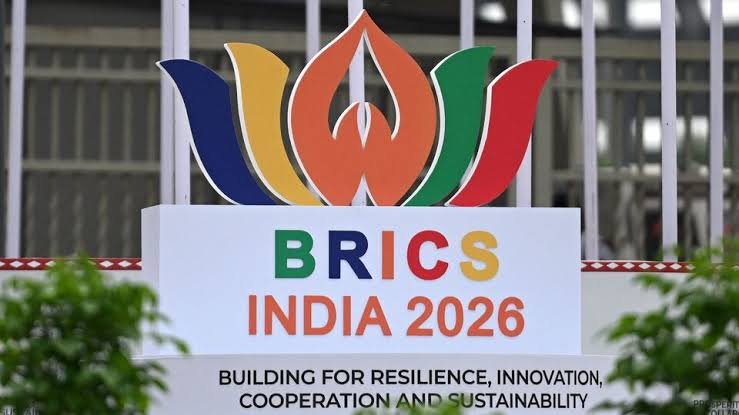

BRICS finance ministers and central bank governors are pushing for greater use of local currencies in trade and investment while exploring faster and cheaper cross-border payment systems among member countries.
The proposal is being developed through the BRICS Payment Task Force, which is studying how national payment and financial-messaging systems could become more interoperable.
The aim is to reduce friction when businesses or governments in BRICS countries pay each other.
But the latest discussions do not amount to the creation of a common BRICS currency.
Proposal for Conducting Cyber Crisis Drill, Tabletop Exercise (TTEx) & CCMP Readiness Exercise
Local currencies could reduce conversion costs
International trade often involves multiple currency conversions.
An Indian company buying goods from Brazil, for example, may traditionally make payment through an international banking chain involving the US dollar.
That process can involve correspondent banks, foreign-exchange conversion costs and settlement delays.
If two countries agree to settle some trade directly in rupees and reais, part of that conversion chain can potentially be avoided.
BRICS finance ministers said they support greater use of members’ local currencies for trade settlements and investment, while recognising that each country has different financial systems and policy priorities.
That is why the bloc is not proposing one mandatory payment model.
Instead, members are examining different bilateral and multilateral mechanisms that could make transactions faster, cheaper, more transparent and more secure.
What does payment-system interoperability mean?
Interoperability simply means that two separate financial systems can communicate and complete transactions with each other.
India already has systems such as UPI that allow money to move almost instantly inside the country.
Other BRICS members have their own payment infrastructure.
The challenge is connecting these systems in a way that allows a business or individual in one country to send money to another without relying on a long chain of intermediaries.
The BRICS Payment Task Force is specifically studying links between payment systems and financial-messaging networks.
If successful, this could shorten settlement times and lower costs for exporters, importers and eventually some retail users.
But technical standards, cybersecurity, foreign-exchange management and anti-money laundering rules would all have to be aligned.
That makes implementation much more difficult than simply connecting two payment apps.
India is also pushing digital-currency connectivity
India has separately explored linking central bank digital currencies, or CBDCs, across BRICS economies.
A CBDC is a digital form of a country’s official currency issued by its central bank.
India’s version is the digital rupee.
Linking CBDCs could theoretically allow two countries to settle bilateral transactions directly through digital central-bank money rather than relying entirely on conventional correspondent banking.
India is expected to push this idea further during its BRICS chairship.
But the proposal faces significant obstacles.
Member countries use different technical standards, regulatory systems and capital-control frameworks.
There are also political and national-security concerns.
India, for example, has historically been cautious about deeper digital-financial integration with China, particularly where payment data and critical infrastructure are involved.
This is not the same as replacing the US dollar
The local-currency push is often described as “de-dollarisation”, but that can oversimplify what BRICS is actually discussing.
The bloc’s latest statement does not announce an effort to abolish the dollar from trade.
Instead, it promotes greater flexibility in how member states settle transactions.
Russia has already said it does not view the process simply as a campaign against the dollar.
Kremlin spokesperson Dmitry Peskov said earlier this week that roughly 90% of Russia’s BRICS trade is already conducted in local currencies and that Moscow is open to different payment methods.
For India, the practical objective is likely to be less ideological.
Reducing dependence on third-country currencies can lower transaction costs, reduce exposure to sudden foreign-exchange movements and make trade settlement more resilient during periods of geopolitical stress.
BRICS is tying payments to wider trade ambitions
The payment initiative is part of a larger BRICS effort to increase trade within the bloc.
Finance ministers warned that global growth remains vulnerable to geopolitical tensions, trade fragmentation, protectionism, inflation and rising debt.
They also criticised unilateral tariffs and non-tariff barriers, arguing that such measures disproportionately hurt emerging and developing economies.
Improving payment infrastructure is therefore being treated as one way to make intra-BRICS trade easier.
India’s 2026 BRICS agenda has similarly placed digital payments, trade connectivity, AI and resilient supply chains among its economic priorities.
The next challenge is turning political support into infrastructure that businesses can actually use.
That will require central banks, payment operators and regulators to agree on technical standards, currency-conversion mechanisms, dispute resolution and security safeguards.
What this means for you: Ordinary consumers will not suddenly receive a new BRICS currency. The more realistic near-term impact is cheaper and faster cross-border payments for businesses, travellers and remittances if national payment systems become directly connected.
The420 Insight: The BRICS payments push is less about creating a rival currency and more about reducing dependence on intermediaries. If member countries can make their existing currencies and payment systems work together, they can change cross-border trade without inventing a new currency at all.
Follow for daily updates on cybercrime, corporate fraud, DFIR, hacking, investigations, and digital forensics
