

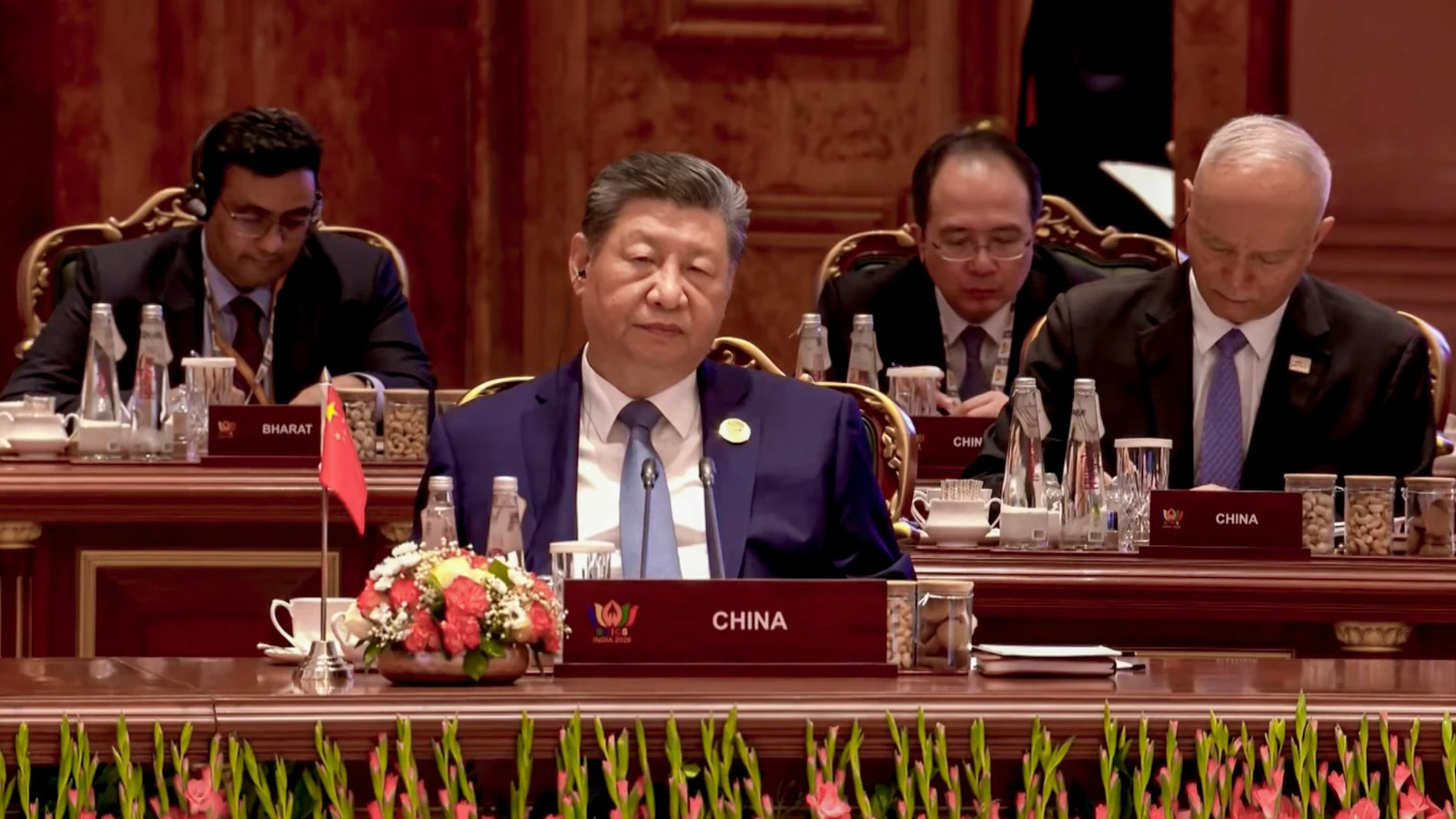

Chinese President Xi Jinping has urged BRICS countries to deepen cooperation on artificial intelligence, open-source technologies and emerging digital industries, as Beijing seeks a larger role in shaping how the Global South develops and governs AI.
Speaking at the BRICS Summit in New Delhi, Xi invited member countries to participate more actively in China-backed AI cooperation initiatives and called for greater collaboration on using AI to support industrial development.
The proposal comes as competition over artificial intelligence increasingly extends beyond individual companies.
The United States and China are now competing not only over the most powerful AI models and advanced chips, but also over which countries adopt their technologies, standards and governance approaches.
Proposal for Conducting Cyber Crisis Drill, Tabletop Exercise (TTEx) & CCMP Readiness Exercise
China wants BRICS to become an AI cooperation platform
Xi urged BRICS members to strengthen open-source AI cooperation and use artificial intelligence to accelerate what Beijing describes as “new industrialisation”.
The idea is to apply AI across manufacturing, healthcare, agriculture, education and other sectors rather than treating it only as a consumer chatbot technology.
China has already built institutional platforms around that goal.
Chinese Ambassador to India Xu Feihong said ahead of the summit that Beijing had established the China-BRICS AI Development and Cooperation Center and the China-BRICS New Quality Productive Forces Research Center, and wanted broader participation from BRICS members.
Xi has also promoted the newly created World Artificial Intelligence Cooperation Organization, or WAICO, based in Shanghai.
At the World AI Conference in July, he said China would develop international AI application cooperation centres with BRICS, ASEAN, the African Union, the Arab League and other groups. Beijing also promised 5,000 AI training and seminar opportunities for developing countries over five years.
That makes the BRICS proposal part of a much larger diplomatic strategy.
What does open-source AI cooperation actually mean?
An open-source AI model generally makes more of its underlying software, model weights or technical components available for developers to inspect, adapt or deploy themselves.
That differs from fully closed systems where users can access an AI service but cannot examine or modify much of the underlying model.
For developing countries, open models can be attractive because they may reduce dependence on a small number of foreign technology companies.
Governments and businesses can potentially customise models for local languages, agriculture, healthcare or public services while keeping more control over data and infrastructure.
China has increasingly promoted this model as an alternative to AI ecosystems dominated by major US companies.
At its July AI conference, Beijing explicitly called for open-source collaboration and argued that advanced AI should not become the privilege of a few countries.
But open access also creates security questions.
Models that are easier to modify can be useful for innovation, while also potentially making it easier to remove safeguards or adapt systems for cyberattacks, surveillance or other harmful purposes.
India has reasons to cooperate — and reasons to be cautious
India sits in an unusual position in this emerging AI rivalry.
It is a BRICS member alongside China and has repeatedly supported greater technology access for the Global South.
At the same time, India is building its own AI ecosystem and has strategic technology relationships with the United States and other Western partners.
Joining deeper BRICS cooperation could provide access to research, training, computing infrastructure and applications tailored for developing economies.
But India is also likely to be cautious about allowing any single country to dominate standards, platforms or data governance.
Previous BRICS declarations have already supported greater cooperation on artificial intelligence, while stressing openness, data protection, sovereignty and safe development.
That suggests cooperation may not automatically translate into alignment with Beijing’s entire AI framework.
India could support joint research or open-source development while maintaining its own policies on data, security and critical infrastructure.
AI governance is becoming part of geopolitical competition
Xi also urged BRICS countries to play a larger role in setting rules in emerging areas such as cyberspace, outer space and deep-sea activity.
This is where the proposal becomes more politically significant.
AI governance standards will influence issues ranging from model safety and data flows to intellectual property, surveillance and access to advanced computing.
If BRICS countries coordinate positions, they could carry considerable influence.
The grouping represents a large share of the world’s population and includes major emerging economies whose decisions could determine whether global AI rules remain largely Western-led or become more multipolar.
China’s pitch is therefore about more than selling technology.
It is also about building institutions, training networks and technical standards that increase Beijing’s influence over how AI develops outside the US-led ecosystem.
For India, the challenge will be extracting practical benefits from cooperation without surrendering strategic autonomy over one of the most important technologies of the next decade.
What this means for you: The immediate effect on ordinary users will be limited. But deeper BRICS AI cooperation could eventually influence which models, standards and digital infrastructure are used in areas such as banking, healthcare, agriculture and government services.
The420 Insight: The next phase of the AI race may be decided as much by alliances as by algorithms. China is increasingly offering developing countries not just AI models, but training, infrastructure and governance platforms — turning artificial intelligence into another arena where technology policy and geopolitics are becoming inseparable.
Follow for daily updates on cybercrime, corporate fraud, DFIR, hacking, investigations, and digital forensics
