
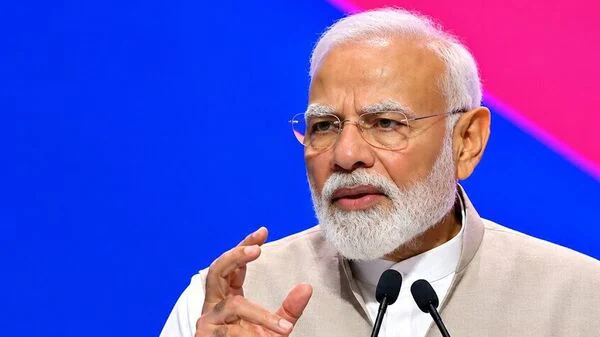

Prime Minister Narendra Modi on September 8 called for India’s Unified Payments Interface to connect with more foreign payment systems, aiming to reduce the cost of sending money across borders and make digital transactions easier for Indians overseas.
Speaking at the seventh Global Fintech Fest in Mumbai, Modi said the next stage of India’s digital payments growth should focus on countries with large Indian diasporas, significant trade relationships or a willingness to partner with India.
The proposal builds on UPI’s expansion to 11 countries and its existing connection with Singapore’s PayNow system. No new bilateral payment link or implementation deadline was announced during the speech.
Proposal for Conducting Cyber Crisis Drill, Tabletop Exercise (TTEx) & CCMP Readiness Exercise
From Domestic Success to International Payments
Modi said UPI’s growth over the past decade had created a foundation for a larger international role.
The system processed 24.51 billion transactions in August 2026, according to figures released by the National Payments Corporation of India. The total value of those transactions was approximately ₹29.82 lakh crore.
UPI has become a central part of everyday payments in India, allowing people to transfer money directly between bank accounts using mobile applications.
The Prime Minister argued that this success should now be extended beyond domestic payments. Greater international connectivity could make it easier for workers, students, businesses and families to move money between India and other countries.
The focus is particularly relevant to Indians who regularly send funds home or support relatives living abroad.
How the Singapore PayNow Link Works
India’s existing connection with Singapore provides an example of the model Modi wants to expand.
The UPI-PayNow linkage was launched in February 2023. It allows eligible users of participating banks and financial institutions in the two countries to send money through their respective payment systems.
A person in India can use an enabled banking application to transfer funds to an eligible recipient in Singapore without requiring both parties to join the same payment network.
The arrangement is designed to reduce the complexity and cost of cross-border remittances.
However, it is not an unrestricted international money-transfer service. Participating institutions, transaction limits, permitted purposes and foreign-exchange rules continue to apply.
The RBI’s published guidance specifies that the linkage supports eligible person-to-person transfers, including maintenance of relatives abroad and gifts, subject to applicable regulations.
What Is a Cross-Border Payment Link?
A cross-border payment link connects payment systems operating in different countries so that users can transfer money between them more easily.
For example, India’s UPI and Singapore’s PayNow are separate domestic systems. Their linkage allows participating institutions to communicate and process eligible transfers across the two networks.
The money does not simply travel from one phone to another. Banks and payment operators must handle identity checks, currency conversion, settlement and compliance with the laws of both countries.
Such links can reduce the number of intermediaries involved in a transfer and improve speed and transparency. They do not automatically eliminate exchange-rate charges or make every transaction free.
The actual cost depends on the participating bank or payment provider, the conversion rate and the applicable rules.
Why Remittance Costs Matter
India is one of the world’s largest recipients of money sent by people working and living overseas.
Remittances support household expenses, education, healthcare and other needs. Even a small reduction in transfer charges can be meaningful when money is sent regularly.
Traditional international transfers may involve several intermediaries, each adding processing costs or delays. A direct link between national payment systems can simplify parts of that process.
Modi’s proposal seeks to make India’s digital infrastructure more useful to the diaspora while strengthening economic connections with partner countries.
The potential savings, however, will depend on the design of each bilateral arrangement. The government did not announce a specific reduction in fees or a universal remittance price.
UPI’s Presence in 11 Countries
The official PIB backgrounder states that UPI operates in 11 countries as of September 2026.
This figure includes different forms of international availability. In some locations, Indian travellers can make merchant payments using UPI-enabled applications. In others, there may be a direct connection between domestic payment systems.
These services should not be treated as identical.
A merchant acceptance arrangement allows an eligible user to pay a participating business. A person-to-person linkage, such as UPI-PayNow, enables eligible transfers between individuals across countries.
Users must therefore check the specific service available in their destination before assuming that they can send money, receive remittances or pay at every merchant.
Fintech Must Expand Beyond Payments, PM Says
The Prime Minister also urged India’s fintech industry to develop services beyond payments.
He said the next phase should place greater emphasis on credit, insurance, savings and pensions. These areas could benefit from digital infrastructure that reduces paperwork and makes financial products more accessible.
The Global Fintech Fest’s 2026 theme is “Potential to Impact”, with discussions focused on agentic AI, tokenisation, quantum technology and trusted global financial systems.
Modi called on the industry to turn emerging technologies into practical benefits rather than limiting innovation to payment transactions.
The speech was a policy direction and industry appeal. It did not create a new regulatory obligation or announce a specific financial product.
Security and Data Protection Remain Important
International payment integration also brings questions about fraud prevention, customer identity and the handling of financial data.
Different countries have different rules for payment operators, data protection, anti-money-laundering checks and consumer complaints. A cross-border system must operate within those requirements.
The RBI has previously emphasised that faster and cheaper international payments must also be safe and secure.
A separate Reuters report on September 3 said India had stalled a proposed UPI-Alipay+ linkage over security and data concerns. The reported decision illustrates that international expansion may involve commercial and national-security considerations, not merely technical compatibility.
There was no indication in Modi’s September 8 speech that the Alipay+ proposal had been approved or revived.
What Comes Next for International UPI?
The next steps will depend on negotiations between Indian authorities, NPCI International, foreign payment operators and the relevant regulators.
Each proposed connection must address technical interoperability, settlement arrangements, currency conversion, legal requirements and consumer protection.
The government has not announced which country will receive the next full payment-system linkage or when a new service will become available.
For now, the speech signals a stronger push to make India’s payment infrastructure part of international financial connectivity, particularly where it can serve the diaspora and trade relationships.
https://www.linkedin.com/company/policetechnology/
