

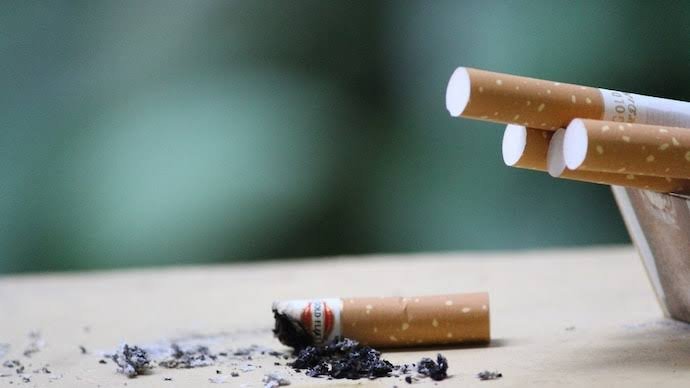

An estimated 3.25 lakh people in India died from diseases attributable to second-hand smoke in 2023, while 444 million people were exposed to tobacco smoke from others, according to a new global study.
The research, published in The Lancet Public Health on September 7, found that India had the world’s second-largest exposed population after China. The estimated annual death toll rose from 217,700 in 1990 to 325,600 in 2023, an increase of nearly 50%.
The findings show that the harm caused by tobacco extends beyond the person smoking. People who share homes, workplaces and other enclosed spaces with smokers can also face serious health risks, particularly children and those who have little control over their surroundings.
Proposal for Conducting Cyber Crisis Drill, Tabletop Exercise (TTEx) & CCMP Readiness Exercise
Fewer People Exposed Proportionally, but More in Absolute Numbers
The study found that India’s age-standardised exposure prevalence declined from 43.2% in 1990 to 30.6% in 2023.
Yet the estimated number of people exposed increased from 375 million to 444 million, a rise of approximately 18.4%. Population growth is one reason that a declining exposure rate can coexist with a larger number of affected people.
An age-standardised rate adjusts for differences in the age structure of populations. It helps researchers compare health risks across countries or periods without allowing changes in the proportion of older or younger people to distort the comparison.
The figures therefore point to both progress and an unfinished public-health challenge. Exposure has become less common relative to the population, but the absolute number of people breathing other people’s smoke remains enormous.
Deaths Increased Among Women and Men
The estimated mortality burden increased across both sexes.
Among women, annual deaths attributable to second-hand smoke rose from approximately 113,400 in 1990 to 156,900 in 2023. Among men, the figure increased from around 104,300 to 168,700.
These are population-level estimates based on research into exposure and disease risk. They do not mean that investigators examined every individual death and confirmed passive smoking as its sole cause.
Many serious illnesses have multiple contributing factors. The study estimates the share of disease and death that can be attributed to second-hand smoke using established epidemiological methods.
India Lost 9.28 Million Healthy Life-Years
The burden is not limited to premature deaths. The study estimated that second-hand smoke accounted for approximately 9.28 million disability-adjusted life-years in India in 2023.
A disability-adjusted life-year, or DALY, represents one year of healthy life lost. It combines years lost because of premature death with years lived with illness or disability.
For example, a person who dies earlier than expected contributes years of life lost, while someone living with a serious chronic disease may contribute years lived in reduced health.
The measure allows researchers to capture the wider impact of a disease or risk factor rather than looking only at the number of deaths.
The supplied figure of 92.8 million was a decimal error. The correct India estimate is 9.28 million, compared with 44.8 million healthy life-years lost globally.
Why Children Face Particular Risks
Children are especially vulnerable because their lungs and other organs are still developing. They may also spend long periods in homes where adults smoke and have limited ability to avoid exposure.
Second-hand smoke is associated with an increased risk of respiratory infections, asthma-related problems and other health complications in children. Exposure during pregnancy can also affect maternal and infant health.
The global study estimated that 767 million children aged 0–14 were exposed in 2023. It also linked second-hand smoke to approximately 5.2 million lower respiratory infections among children worldwide.
The figures underline why protecting children requires more than asking them to move away from a smoker. The environment itself needs to be smoke-free.
What Is Second-Hand Smoke?
Second-hand smoke, also called passive smoke, is the tobacco smoke inhaled by people who are not actively smoking.
It includes smoke released from the burning end of a cigarette or other tobacco product, as well as smoke exhaled by the person smoking. Both can contain harmful chemicals and fine particles.
The World Health Organization states that there is no safe level of exposure to second-hand tobacco smoke. Even brief exposure can cause harm, while repeated exposure increases the risk of serious disease.
Opening a window, using an exhaust fan or smoking in a separate room does not reliably protect others. Smoke can move through indoor spaces, and ventilation cannot remove all harmful pollutants.
The most effective protection is to keep indoor environments completely smoke-free.
Heart Disease, Cancer and Respiratory Illness
The study examined the burden of several diseases associated with second-hand smoke, including ischaemic heart disease, stroke, lung cancer, chronic obstructive pulmonary disease, type 2 diabetes, asthma and lower respiratory infections.
Ischaemic heart disease occurs when the heart muscle does not receive enough blood because the arteries supplying it become narrowed or blocked. It was the leading contributor to the global disease burden associated with second-hand smoke.
Chronic obstructive pulmonary disease, or COPD, is a long-term condition that makes breathing difficult, often through damage to the airways and lungs.
The research also considered other health outcomes supported by its risk-assessment framework. The precise strength of evidence differs across diseases, and not every illness in an exposed person can be attributed to tobacco smoke.
2.71 Billion People Exposed Worldwide
The global analysis estimated that 2.71 billion people were exposed to second-hand smoke in 2023. The exposure contributed to approximately 1.66 million deaths and 44.8 million healthy life-years lost.
China recorded the largest exposed population, at around 664 million, followed by India with 444 million. China, India and Indonesia together accounted for nearly half of the global exposed population.
The researchers examined trends from 1990 to 2023 across 204 countries and territories. Although the global proportion of people exposed declined, population growth kept the absolute number broadly stable.
The study also identified substantial regional differences, with exposure increasing in parts of sub-Saharan Africa, North Africa and the Middle East.
What India’s Tobacco-Control Law Provides
India’s Cigarettes and Other Tobacco Products Act, 2003, commonly known as COTPA, prohibits smoking in public places under Section 4, subject to the specific provisions and exceptions set out in the law.
The legislation provides a framework for protecting people in public spaces, but exposure inside homes remains a separate challenge. Children and family members may spend many hours around tobacco smoke without being able to control the environment.
The study’s findings strengthen the case for effective enforcement of smoke-free rules, public awareness and practical support for people who want to quit smoking.
Reducing tobacco consumption is important, but protecting non-smokers also requires ensuring that shared spaces are not contaminated by smoke.
What this means for you: If someone in your household smokes, keep the home and vehicle completely smoke-free. Smoking near a window or in another room is not a reliable substitute. Avoid exposing children and pregnant women to tobacco smoke, and seek medical advice if persistent breathing symptoms or other health concerns develop. People who smoke can reduce risks to themselves and others by seeking support to quit.
https://www.linkedin.com/company/policetechnology/
Follow for daily updates on cybercrime, corporate fraud, DFIR, hacking, investigations, and digital forensics
