


Thousands of people who escaped or were freed from cyber-fraud compounds across Southeast Asia remain stranded in Cambodia, often without passports, money, valid visas or a clear route home, according to accounts and information visible in the screenshots. Many had been trafficked into scam operations after being promised legitimate jobs, but months after crackdowns on compounds in Cambodia, Myanmar and Thailand, some survivors say they remain trapped by immigration restrictions, mounting overstay fines and limited access to repatriation support.
Police and troops across the region carried out raids on large scam centres after artillery fire and other security operations forced workers to flee. The crackdown appeared to offer a route out for people trafficked into an industry that has defrauded victims around the world and generated billions of dollars for organised criminal networks.
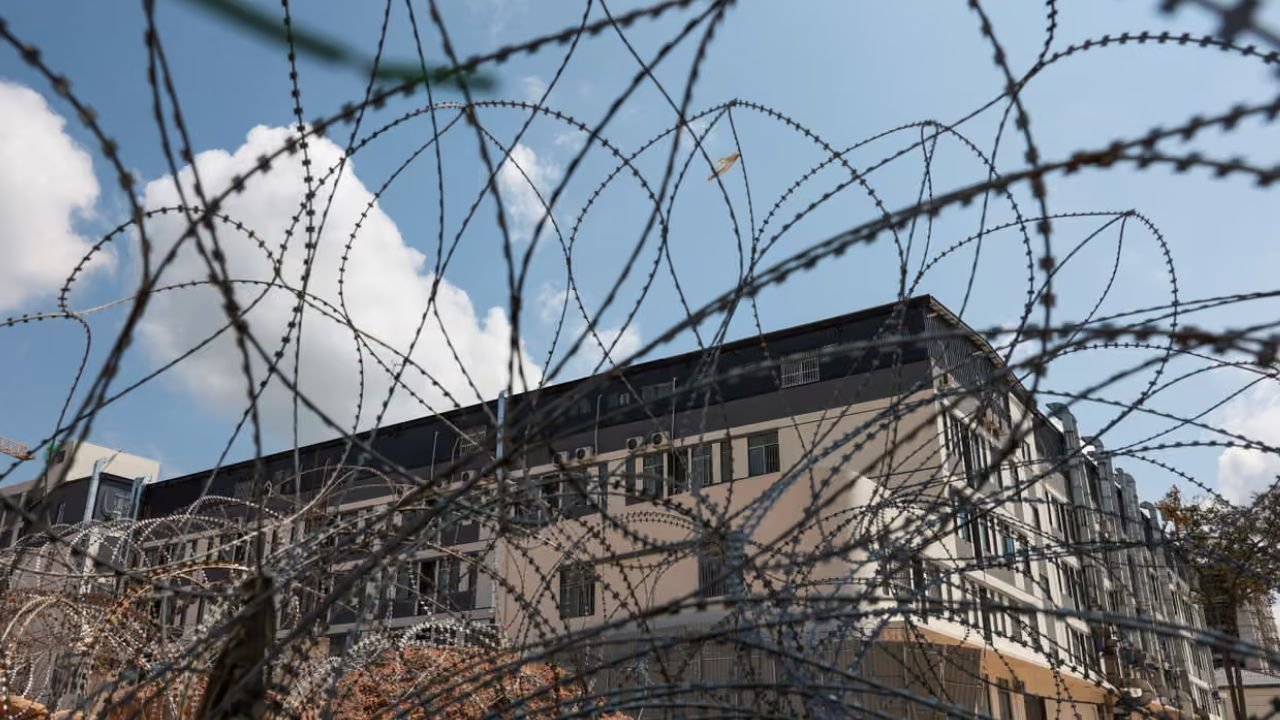
For many survivors, however, escape has not meant freedom. Some have drifted to Phnom Penh, where they are sleeping rough and surviving with little assistance. Others have been placed in immigration detention centres that are now overcrowded. One former scam compound, Mango 2, has reportedly been converted into a detention centre.
Overstay Fines and Detention Leave Survivors Unable to Go Home
Survivors who remained in compounds after their visas expired have accumulated substantial overstay penalties, in some cases amounting to thousands of dollars. Those unable to pay can be prevented from leaving the country, while humanitarian support has become increasingly limited.
Judah Tana of anti-human trafficking NGO Global Advance Projects described the situation as chaotic, saying many people who escaped do not know how they will return home.
One survivor identified as Emmanuel, 27, from Liberia, said he travelled to Cambodia after being offered what he believed was a legitimate graphic design job. Instead, he said he was taken to a compound in a jungle area, where his passport and phone were confiscated and he was ordered to defraud Americans and Europeans through online scams.
Emmanuel said workers who refused to meet targets faced beatings and other punishment. He described a “dark room” where people were allegedly beaten and tortured, and said armed guards prevented escape.
After nearly a year, raids began and around 400 workers were able to leave the compound, he said. But Emmanuel was left without shelter, possessions or money, and his visa had expired. His family later raised enough money for a flight home, but he said officials prevented him from leaving because of an overstay fine of almost $4,000.
Trafficking Victims Say They Are Being Treated as Criminals
Aid groups have warned that survivors are often being treated as perpetrators rather than victims of trafficking.
Mechelle Moore, chief executive of anti-trafficking NGO Global Alms Incorporated, said people emerging from scam operations were not being properly screened to determine whether they had been trafficked.
Amnesty International said in June that none of the 73 survivors it interviewed had been recognised as trafficking victims, even though the organisation concluded that all of them met the definition.
Without formal recognition, survivors can struggle to access emergency accommodation, legal assistance and repatriation programmes. Ling Li of the nonprofit EOS Collective said a lack of safe shelter had also exposed some women to sexual abuse while sleeping outside.
Another survivor, identified as Matthew, a 34-year-old Ethiopian IT graduate, said he was recruited for what he thought was a hardware and software maintenance job in Cambodia paying at least $850 a month with accommodation, food and a visa.
After travelling to Phnom Penh, he said he was taken to a large compound near the Vietnamese border. On his first day, his passport and phone were seized and he was told he would instead be running online investment scams.
Matthew said he was ordered to pose as a wealthy woman online and persuade people in the Philippines to invest in fraudulent cryptocurrency schemes. He alleged that workers who missed targets were beaten, fined, publicly humiliated or given electric shocks.
Criminal Networks Rebuild as Some Survivors Face Recruitment Back Into Compounds
Aid organisations say the dismantling of scam compounds has proved temporary in some areas. Moore said criminal networks had rebuilt and relocated, while compounds previously emptied in Myanmar were becoming active again.
Her organisation has documented at least nine new scam compounds built in Myanmar during the past six months and continues to receive calls from people who say they have recently been trafficked into the industry.
Researchers also say scam operators in Cambodia are recruiting from the growing population of stranded former workers. Survivors sleeping rough can be particularly vulnerable because they have no income, no housing and limited access to assistance.
Moore described what she called a “mass recruitment drive” among former workers who remain unable to leave Cambodia. She said some operators no longer need to pay recruitment fees or airfares because stranded survivors are already in the country.
Tana said the crisis had also exposed a gap between governments demanding the rescue of their citizens and their willingness or ability to arrange repatriation once those people were freed.
Matthew said Ethiopia has no embassy in Cambodia, leaving him to seek help through its embassy in South Korea. He said repeated requests went unanswered and that he survived on donations from strangers.
Kenya, Uganda and Ghana also lack resident embassies in Cambodia, according to the material shown, leaving their citizens reliant on diplomatic missions elsewhere in the region for consular support.
Cambodia’s interior ministry has previously rejected criticism of its handling of the crisis, saying authorities had rescued and repatriated large numbers of scam workers, including trafficking victims, in accordance with the law.
For many of those who escaped, however, the immediate danger of forced work inside scam compounds has been replaced by another form of uncertainty, with no money, no legal status and no clear path home.
About the author — Suvedita Nath is a science student with a growing interest in cybercrime and digital safety. She writes on online activity, cyber threats, and technology-driven risks. Her work focuses on clarity, accuracy, and public awareness.
Follow for daily updates on cybercrime, corporate fraud, DFIR, hacking, investigations, and digital forensics
