

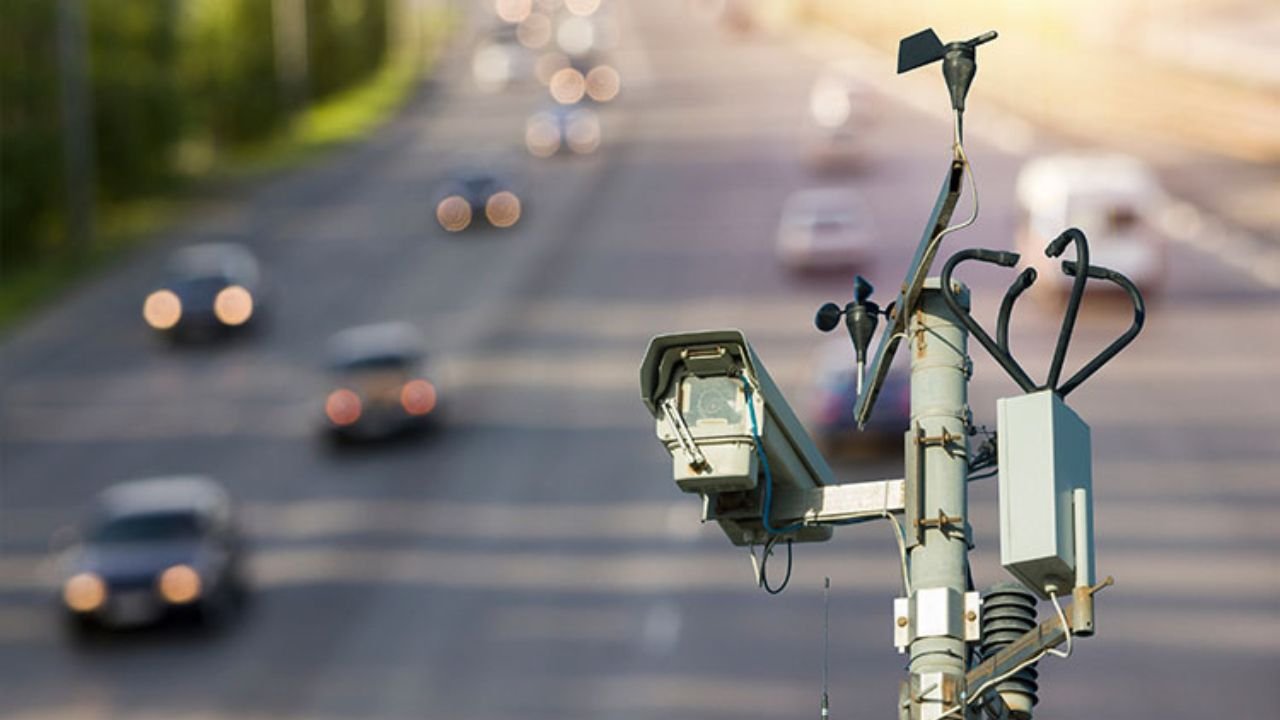

New Delhi: FASTag and Automatic Number Plate Recognition (ANPR) cameras, primarily used for toll collection and vehicle identification on national highways, are set to play a wider role in monitoring organised crime and terrorist activities. The Ministry of Road Transport and Highways has issued guidelines to facilitate the use of toll-plaza vehicle data by authorised security and investigative agencies. The move is aimed at tracking suspicious and blacklisted vehicles, identifying stolen vehicles and helping investigators trace the movement of vehicles linked to criminal activities.
Under the new framework, information generated through FASTag transactions and ANPR cameras at toll plazas can be made available to authorised agencies for specific investigations. Particular emphasis will be placed on identifying vehicles suspected of being linked to criminal or terrorist activities. Vehicles such as cars, trucks, vans and motorcycles have previously been used in terrorist attacks, including as Vehicle-Borne Improvised Explosive Devices (VBIEDs), making vehicle tracking an important component of security monitoring.
Real-time alerts for suspicious vehicles
The new system is expected to provide real-time alerts when a blacklisted or suspicious vehicle is detected at a toll plaza. The National Investigation Agency (NIA) and other authorised intelligence and investigative agencies will be able to receive relevant alerts under the prescribed mechanism.
Such alerts could help agencies monitor the movement of suspicious vehicles through sensitive areas and establish possible travel routes following a criminal or terrorist incident. Information from multiple toll plazas can also help investigators connect vehicle movements across different locations.
Officials said the system could prove particularly useful in cases where criminals attempt to conceal a vehicle’s identity by changing its number plate. FASTag records and ANPR inputs can be compared with other available databases to establish the identity and movement history of a vehicle.
Access to data to remain restricted
The vehicle data generated through FASTag and ANPR systems will not be made publicly available. Authorised agencies, including the NIA, Enforcement Directorate (ED), police and transport departments, will receive controlled access under the prescribed procedures.
Officials said a Standard Operating Procedure (SOP) will govern the sharing of information. Data will be provided only when required for a legitimate investigation and on the request of authorised senior officials. The framework is also intended to ensure that privacy and data-security requirements are taken into account.
This means that information relating to every vehicle passing through a toll plaza will not automatically become available to investigative agencies without procedural safeguards. Access will depend on the nature of the case, investigative requirements and applicable rules.
Faster identification in hit-and-run cases
The technology could also strengthen investigations into hit-and-run incidents. Officials said timestamped records from toll plazas near the location of an accident can potentially be combined with vehicle-tracking information to reconstruct the likely route taken by a suspect vehicle.
Such data could help investigators identify a vehicle that fled the scene and determine the direction in which it travelled. The information may also assist investigations into robbery, dacoity, kidnapping and arms trafficking where vehicles are used to transport suspects or illegal material.
By establishing which toll plazas a vehicle crossed before or after an incident, investigators can develop additional leads and narrow down the vehicle’s movement pattern.
Stolen vehicles also under greater scrutiny
Officials said an estimated 1.5 lakh to 2 lakh vehicles are reported stolen in India every year. A significant proportion of cases are linked to Delhi-NCR, while stolen vehicles are often moved to other states or border areas within a short period.
Criminal networks sometimes attempt to evade detection by using fake number plates or cloned FASTags. The integration of FASTag records with ANPR technology is expected to make such attempts more difficult.
ANPR cameras can identify a vehicle’s registration number and, depending on the available system, compare characteristics such as colour, make and model. If the FASTag record does not match the vehicle detected by the camera, the system can generate an alert for further verification.
The move is expected to strengthen the digital trail available to investigators. By linking toll-plaza records with other law-enforcement information, agencies could obtain additional clues about the movement of stolen or suspicious vehicles and track networks operating across state boundaries.
Officials believe the integration of FASTag and ANPR systems with authorised security mechanisms could significantly improve vehicle monitoring on national highways. The system is intended to provide investigators with faster leads, while controlled access and procedural safeguards are expected to limit misuse of the data.
About the author — Suvedita Nath is a science student with a growing interest in cybercrime and digital safety. She writes on online activity, cyber threats, and technology-driven risks. Her work focuses on clarity, accuracy, and public awareness.
Follow for daily updates on cybercrime, corporate fraud, DFIR, hacking, investigations, and digital forensics
