

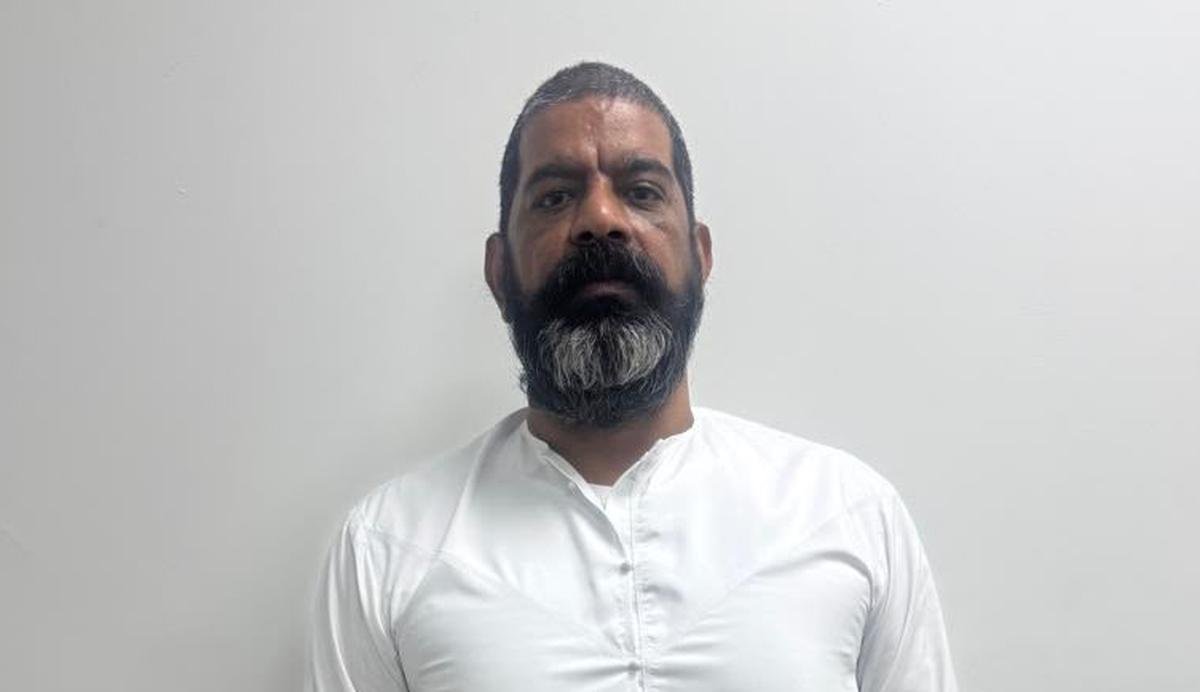

The Narcotics Control Bureau has secured the return to India of Virendra Singh Basoya, alias Veeru, an alleged mastermind wanted in connection with a mephedrone trafficking network valued at approximately ₹6,000 crore, marking one of the most significant successes yet in the agency’s expanding campaign against Indian drug fugitives operating from abroad. Basoya was taken into custody immediately upon landing at Delhi’s Indira Gandhi International Airport on Friday morning, having been arrested in the UAE in June under an Interpol Red Notice issued at India’s request.
His return caps a case that began modestly in February 2024, when Pune City Police seized just 500 grams of mephedrone, a routine bust that investigators subsequently expanded into a sprawling probe uncovering one of the largest synthetic drug networks dismantled in India in recent years. Subsequent follow-up operations recovered approximately 867 kilogrammes of mephedrone in Pune and a further 970 kilogrammes in Delhi, taking the total seizure linked to the case to roughly 1,837 kilogrammes before the investigation was transferred to the NCB’s Mumbai Zonal Unit for wider inquiry.
From a Small Seizure to a Cross-State Syndicate
Basoya, a resident of Pilanji in Delhi’s Sarojini Nagar area, allegedly fled India and relocated to Dubai as the investigation into the syndicate intensified, prompting the NCB to register a case against him and launch a coordinated international effort to secure his arrest and eventual return. Investigators allege he played a central role in the procurement, transportation, storage and distribution of narcotics across a network spanning locations linked to Delhi, Gujarat and Punjab.
His brother, Ravindra, has also come under investigative scrutiny, allegedly having assisted Virendra within the network, and both are now being examined for their respective roles in drug distribution and the management of proceeds generated by the operation. Investigators are expected to use Basoya’s questioning, combined with digital communications and financial records already gathered, to reconstruct how narcotics were sourced through overseas contacts and distributed within India.
A Possible Link to an Even Larger ₹13,000 Crore Network
Perhaps the most consequential thread investigators are now pursuing is an alleged connection between Basoya and another major trafficker identified as Sandeep, whose name has separately surfaced in a case involving suspected drug trafficking worth approximately ₹13,000 crore. Establishing whether the two networks shared contacts involved in procurement, financing or logistics could significantly expand the scope of the investigation, potentially revealing a far larger and more interconnected trafficking ecosystem than either case suggested in isolation.
Part of a Sustained Global Crackdown
Basoya’s return forms part of Operation Global Hunt, a three-year campaign the NCB launched in 2026 targeting roughly a hundred international drug networks run by Indian fugitives operating from bases in Dubai, Canada and Europe. The operation’s first major success came in April, when the NCB secured the deportation of Mohammad Salim Dola, a Mumbai-based drug lord with reported ties to Dawood Ibrahim’s syndicate, from Istanbul, where he had been detained on a Red Notice request pending since 2024.
Union Home Minister Amit Shah has repeatedly framed the operation as a demonstration of the government’s zero-tolerance approach to narcotics, describing the coordinated pursuit of fugitives abroad as evidence that no location offers lasting refuge for drug kingpins. Security analysts have noted that Operation Global Hunt reflects a broader strategic shift in how India treats narcotics trafficking, increasingly framing it not merely as a law-and-order concern but as a security challenge intertwined with hawala networks and, in some cases, terror financing.
What Basoya’s Custody Means for the Wider Probe
Central agencies are now expected to question Basoya extensively about the structure of the alleged network, its overseas financing arrangements and the identities of associates who may still be operating beyond the reach of Indian jurisdiction. The NCB’s broader enforcement record lends context to the scale of this effort, the agency seized over 1.33 lakh kilogrammes of narcotics valued at roughly ₹1,980 crore in 2025 alone, while securing convictions in 131 cases with a rising conviction rate of 66.8 per cent.
Whether Basoya’s questioning yields fresh leads connecting his network to Sandeep’s alleged ₹13,000 crore operation will likely determine how far this particular thread of Operation Global Hunt ultimately extends, and how many additional individuals, in India and abroad, may yet be drawn into the investigation
Follow for daily updates on cybercrime, corporate fraud, DFIR, hacking, investigations, and digital forensics
