

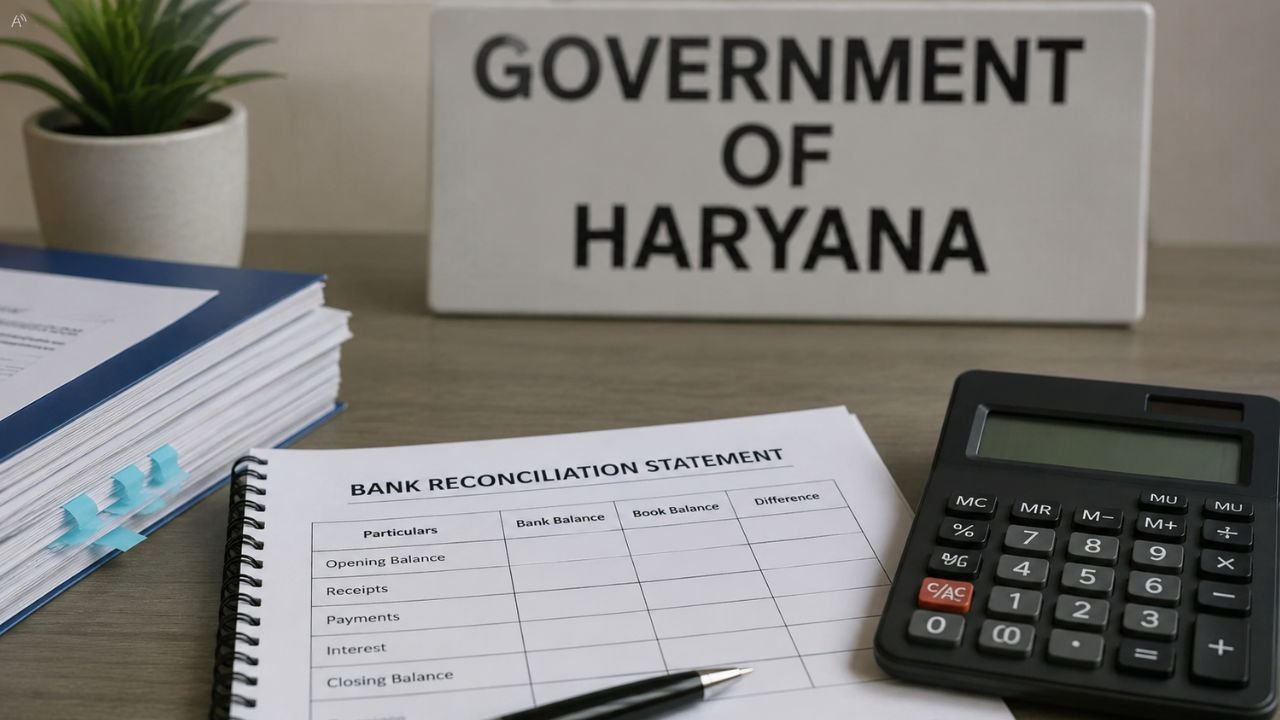

Chandigarh: The Haryana government has introduced a stricter system for monitoring government funds and bank accounts following allegations of financial irregularities involving IDFC First Bank and Kotak Mahindra Bank. The Finance Department issued an order on August 13 directing corporations, boards and other government institutions to conduct quarterly reconciliation of their bank balances with their accounting records. The respective Managing Directors or Chief Executive Officers will also be required to certify the accuracy of the reconciliation.
The new system is aimed at detecting discrepancies between government funds recorded in bank accounts and the amounts shown in institutional books of accounts at an early stage. Under the new instructions, all concerned institutions will have to prepare a Bank Reconciliation Statement, or BRS, comparing bank records with the figures recorded in their books of accounts and balance sheets. The certification must confirm that there is no unexplained discrepancy between the two sets of records.
Quarterly Financial Monitoring
Under the Finance Department’s instructions, verification of government bank accounts will no longer be limited to annual audits. Institutions will have to reconcile their accounts every quarter and submit reports within the prescribed timeline.
The MD or CEO of each institution will be responsible for certifying that the balances reflected in bank statements match the amounts recorded in the books of accounts. If any discrepancy is detected, the institution will have to identify its cause and take corrective action rather than allowing the difference to remain unresolved.
Action Follows Alleged Banking Irregularities
The government’s decision comes against the backdrop of allegations involving nearly ₹600 crore in government funds. Former officials of IDFC First Bank and Kotak Mahindra Bank were allegedly involved in irregularities in government funds in collusion with officials and employees of the Haryana government.
According to the reported findings, adequate verification and monitoring were allegedly not carried out after the maturity of fixed deposits containing government funds. The weaknesses in the verification process were allegedly exploited to move or manipulate funds held in bank accounts.
The developments prompted the government to strengthen financial controls and introduce a more frequent system of verification for government institutions.
Savings, Current, FD and Flexi Accounts Covered
The quarterly reconciliation will cover all categories of accounts maintained by the concerned institutions. These will include savings accounts, current accounts, fixed deposits and flexi accounts.
The institutions will also have to verify whether interest earned on government investments has been properly credited to the relevant bank account or fixed deposit receipt. This requirement is intended to ensure that interest income is correctly recorded and does not remain unaccounted for or get credited to an unauthorised account.
The verification will therefore cover not only the principal amount held in government accounts but also returns generated through investments and deposits.
Audit Findings Must Also Be Reported
The certification process will extend beyond the reconciliation of bank balances. Institutions will have to confirm that their bank accounts are being operated in accordance with the Finance Department’s prescribed guidelines.
The certification must also include details of the position emerging from the latest statutory audit and internal audit. This means quarterly reports will have to take into account bank statements, accounting records, balance sheets and available audit observations.
The system is designed to create a clear chain of financial accountability and ensure that discrepancies identified during audits or bank reconciliation are addressed promptly.
Regular Reports to Be Submitted
The Finance Department has instructed all concerned government institutions to submit their quarterly reports regularly and within the specified deadlines. The reports will enable the department to monitor the status of government funds and identify unusual transactions or unexplained differences at an early stage.
The new mechanism is expected to increase accountability among government corporations, boards and other institutions by bringing banking records and accounting records under more frequent scrutiny. Regular review of fixed deposits, investment accounts, bank balances and interest earnings could also help identify financial discrepancies that might otherwise remain undetected for extended periods.
The quarterly certification requirement places greater responsibility on the heads of government institutions and is intended to strengthen internal financial controls following the alleged irregularities involving government funds.
About the author — Suvedita Nath is a science student with a growing interest in cybercrime and digital safety. She writes on online activity, cyber threats, and technology-driven risks. Her work focuses on clarity, accuracy, and public awareness.
Follow for daily updates on cybercrime, corporate fraud, DFIR, hacking, investigations, and digital forensics
