

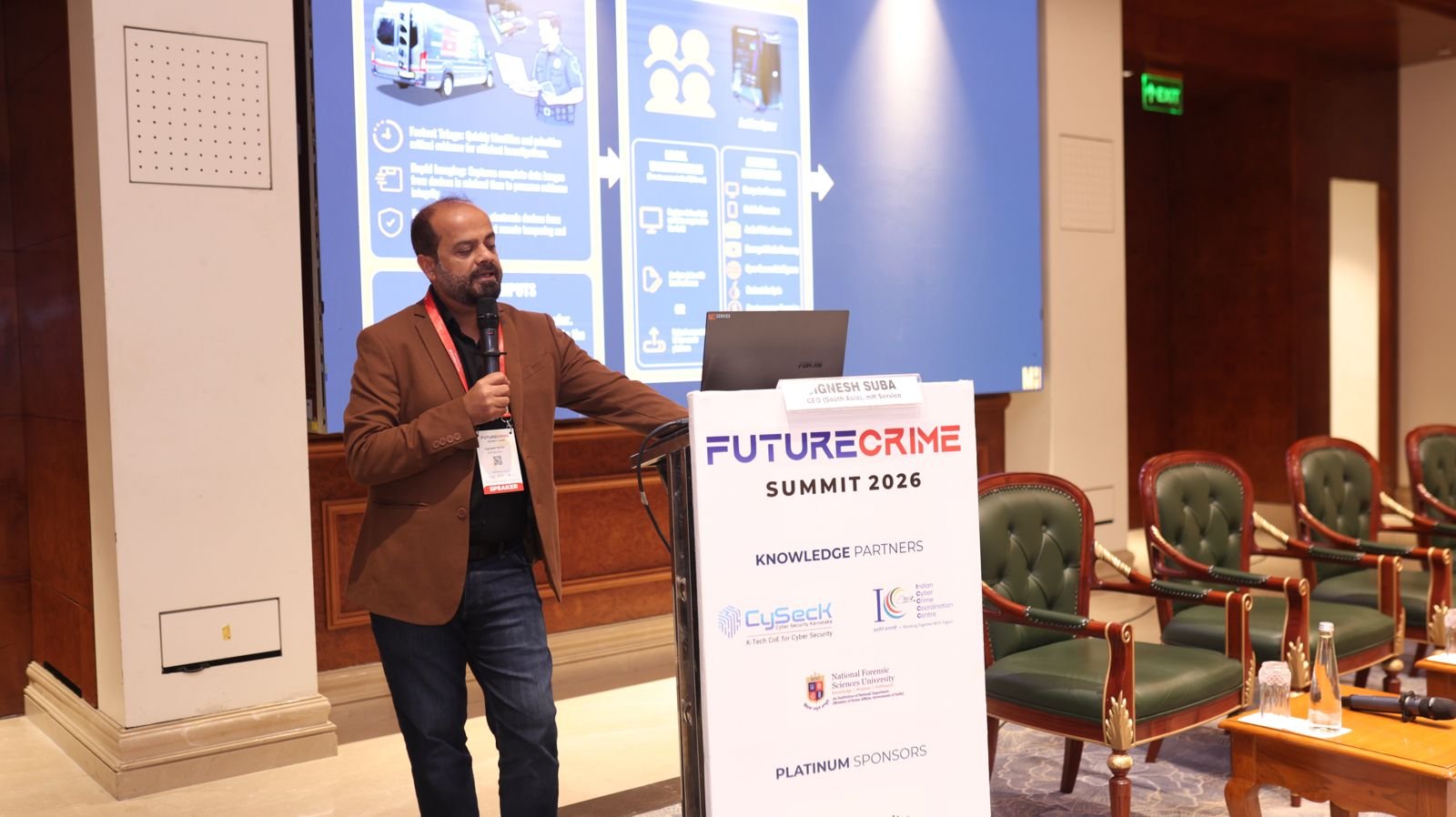
At the FutureCrime Summit 2026, a workshop titled “Powering Next-Generation Investigations” examined how advanced digital forensic capabilities and investigative technologies are reshaping the way cybercrime and technology-enabled cases are handled.
The workshop was conducted by mH Service and led by Jignesh Suba, CEO (South Asia), mH Service. The session focused on the growing need for investigative teams to work with increasingly complex digital evidence as mobile devices, cloud services, applications and connected systems become more deeply embedded in everyday life.
Digital Investigations Are Becoming More Complex
Modern investigations increasingly depend on digital evidence. A single case may involve multiple smartphones, computers, online accounts, communication platforms and financial records, creating a large and fragmented body of information for investigators to examine. The challenge is no longer limited to recovering data from a device. Investigators must determine which information is relevant, how different pieces of evidence are connected and what those connections reveal about an incident.
The workshop theme reflected this transformation. Next-generation investigations require technologies capable of helping forensic professionals manage large volumes of digital information while preserving the reliability of the evidence being examined. As the number of digital sources expands, investigative workflows must become faster without compromising accuracy.
Technology Can Accelerate Investigative Workflows
Advanced forensic tools can support investigators during different stages of an investigation, from the acquisition of digital material to its examination and interpretation.
The “Powering Next-Generation Investigations” workshop led by Jignesh Suba, CEO (South Asia), mH Service, placed emphasis on how technology can strengthen these workflows. Digital investigations frequently involve the examination of large datasets. Investigators may need to identify relevant communications, files, activity records or relationships hidden among enormous amounts of information. Technology can help organise and analyse this material, allowing investigators to focus their attention on information that may be most significant to a case.
The effectiveness of such tools, however, still depends on the expertise of the professionals using them. Investigators must understand the context of recovered information and determine how individual findings fit into the wider sequence of events.
Evidence Must Remain Reliable And Defensible
Speed is important in digital investigations, but so is evidence integrity. Information recovered during forensic examination may later become part of an investigative or judicial process. That makes careful evidence handling, documentation and repeatable procedures essential.
The growing sophistication of investigative technologies does not remove these requirements. Instead, new tools must operate within workflows that preserve confidence in the evidence and allow investigators to explain how information was obtained and analysed. This combination of technological capability and forensic discipline is central to the idea of next-generation investigation.
From Data Recovery To Investigative Intelligence
The broader significance of the workshop was its focus on moving beyond simple data extraction.
Modern forensic investigations increasingly require professionals to transform large quantities of digital information into useful investigative intelligence. That means identifying connections, understanding timelines and helping investigators build a clearer picture from fragmented sources. The session by mH Service, led by Jignesh Suba, highlighted how this shift is changing expectations from forensic technology.
As cybercrime becomes more sophisticated and digital evidence appears across a wider range of cases, investigative agencies will need tools and skills capable of keeping pace. The “Powering Next-Generation Investigations” workshop at FutureCrime Summit 2026 underscored that the future of investigation will depend not simply on collecting more digital data, but on examining it accurately, connecting it intelligently and turning it into evidence that can support effective investigative decisions.
