

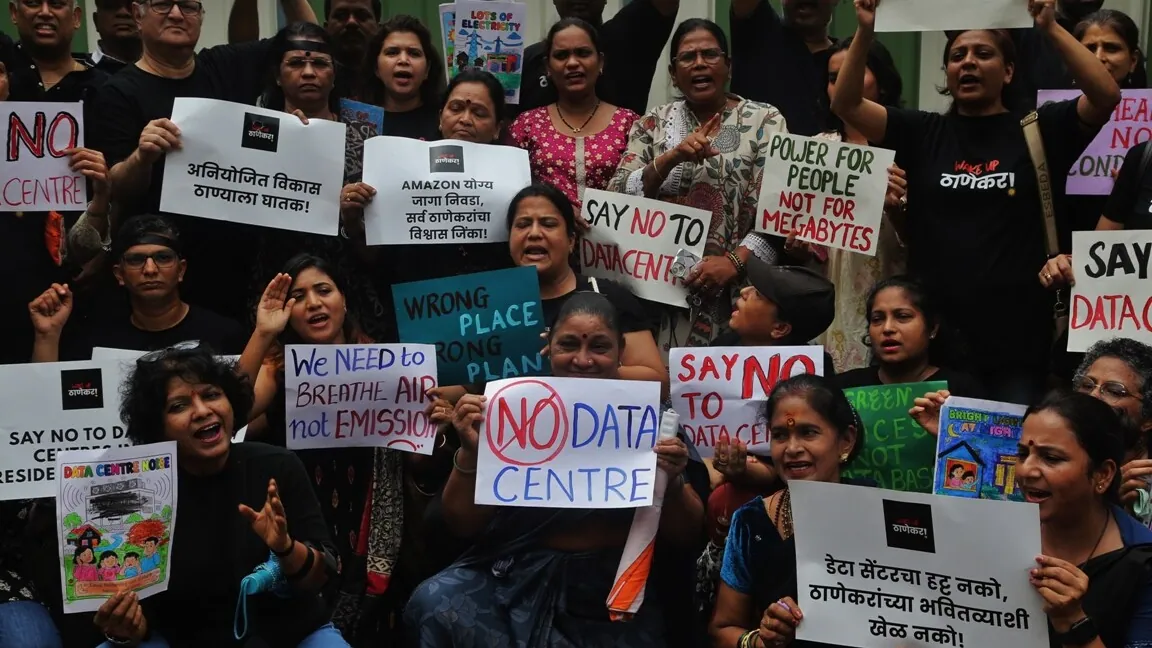

India’s strategic push to establish itself as a global artificial intelligence and cloud computing powerhouse is encountering unprecedented grassroots resistance in key urban and coastal hubs. In Thane, Maharashtra, and Visakhapatnam, Andhra Pradesh, local residents have mobilized organized campaigns protesting against massive hyperscale data center developments. The pushback reflects growing public anxiety over the severe strain these resource-intensive facilities could impose on municipal water supplies, power grids, and localized urban ecosystems as corporate investments in digital infrastructure accelerate rapidly across the country.
The protests mark a noticeable shift in India’s technology ecosystem, aligning local civic sentiment with global trends previously seen across parts of North America and Europe. As tech giants move to expand physical infrastructure to support heavy AI workloads, citizens are questioning the long-term trade-offs of placing industrial-scale server farms adjacent to densely populated residential neighborhoods, schools, and hospitals. The movement highlights a central policy dilemma between meeting national digital growth targets and safeguarding essential public utilities for local communities.
Resource Allocation and Environmental Concerns in Thane
In Thane, the epicenter of community pushback centers around Amazon’s proposed hyperscale data facility spanning approximately 53 to 58 acres across the Balkum and Majiwada areas. Led by civic groups such as the “Wake Up Thanekar” campaign, residents argue that constructing one of the country’s largest data centers in a residential zone exacerbates existing urban distress. Activists point out that large portions of Thane already experience chronic water scarcity and rely heavily on private water tankers, raising fears that industrial cooling requirements will siphon off vital drinking water.
Tensions intensified after citizens discovered that data centers had been designated as essential services by regulatory bodies, giving rise to concerns over prioritized access to water and electricity during severe seasonal shortages. In response to resident inquiries, civic group organizers issued a comprehensive twenty-two-point questionnaire to the Thane Municipal Corporation and Amazon. The inquiry sought legally binding disclosures regarding environmental clearances, sewage discharge approvals, local thermal impact, noise pollution controls from emergency power generators, and grid load calculations.
Tech Giants and Civic Authorities Respond to Community Fears
Addressing the rising pushback, tech operators and municipal leaders have issued detailed clarifications aimed at dispelling public misgivings regarding resource consumption. Amazon explicitly stated that its Thane facility will not utilize potable municipal water for server cooling systems, noting that approved permits allow only a minimal volume of zero point zero one million liters per day strictly reserved for basic employee sanitation and drinking needs. The company further emphasized that heat generated by servers would be safely dissipated into the upper atmosphere through modern air-handling systems without elevating localized ground temperatures.
Concurrently, the Thane Municipal Corporation reassured residents that civic drinking water supplies would not be diverted or compromised to service commercial server facilities. Meanwhile, similar scrutiny has emerged in Visakhapatnam over the Google-Adani data center project in Tarluvada, where local communities are demanding heightened transparency and mandatory disclosures regarding power usage effectiveness and carbon footprints. Industry analysts suggest that resolving these conflicts will require standardized environmental benchmarks and integrated siting tools to balance technological ambition with local sustainability.
Follow for daily updates on cybercrime, corporate fraud, DFIR, hacking, investigations, and digital forensics
