

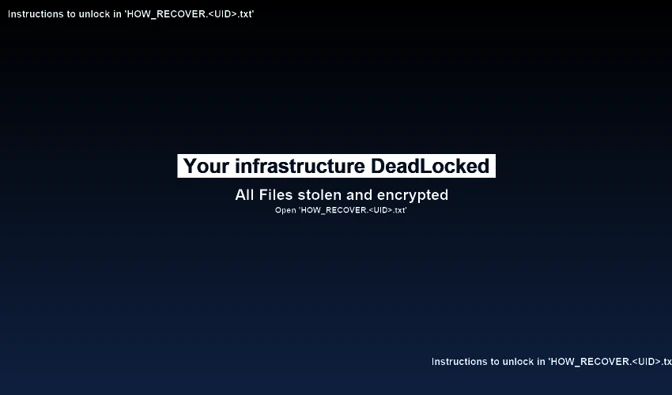

In an alarmingly sophisticated technological shift for cyber extortion syndicates, the newly emerging Deadlock ransomware family has integrated decentralized blockchain protocols directly into its command-and-control framework. By anchoring its communication endpoints, victim negotiation portals, and dynamic payload configurations within immutable public ledgers, the ransomware operation effectively neutralizes traditional law enforcement disruption tactics, such as domain seizures, server impoundments, and DNS sinkholing.
This tactical evolution marks a critical turning point in cybercrime infrastructure. Rather than relying on central cloud hosting or vulnerable domain registrars, Deadlock transforms standard command-and-control mechanisms into resilient, self-healing networks that operate entirely beyond the reach of federal regulatory authorities, law enforcement injunctions, and court-ordered web domain confiscations.
Technical Mechanics of Blockchain-Driven Command and Control
Traditional ransomware variants historically depend on centralized domain name servers, standard web hosting services, or bulletproof hosting providers to maintain contact with compromised endpoints and manage decryption keys. However, when law enforcement agencies identify these centralized endpoints, they can issue emergency legal notices, seize physical servers, or instruct domain registries to sinkhole malicious traffic. Deadlock completely bypasses this inherent single point of failure by utilizing decentralized domain resolution protocols and smart contracts deployed across public blockchain networks.
When the Deadlock payload infects an enterprise network, its internal execution routine initiates queries against specific public smart contracts or transaction metadata to retrieve its active operational parameters. The malware extracts dynamically updated server URLs, encryption configuration files, and payment gateways without ever making a direct call to a vulnerable centralized DNS server. This decentralized architecture ensures that the malware can establish outbound connections across heavily monitored networks without triggering standard domain reputation flags.
The Immutable Ledger Advantage and Self-Healing Network Design
The primary strategic advantage gained by the Deadlock operators stems from the fundamental immutability of public distributed ledgers. Once a smart contract or transaction record is committed to a public blockchain, no centralized corporate entity, court order, or international police intervention can modify, alter, or erase that data. If law enforcement agencies manage to shut down an external front-end payment portal or block a standard web relay, the underlying Deadlock payload simply executes an automated fallback routine that queries the blockchain once again.
Upon querying the ledger, the smart contract immediately returns a fresh mirror domain or an alternative IP address created by the extortionists. This creates a perpetual, self-healing communication loop that keeps the ransomware operational continuously throughout an attack cycle. Consequently, threat actors can maintain uninterrupted negotiations with compromised organizations and manage ransom demands without facing the threat of operational decapitation from coordinated law enforcement takedowns.
Severe Challenges for Threat Intelligence and Security Operations
For corporate security operations centers and threat intelligence analysts, Deadlock’s adoption of blockchain infrastructure introduces unprecedented detection and mitigation challenges. Modern perimeter defenses rely heavily on static Indicators of Compromise, such as blacklisted IP addresses, malicious domain registries, and known bad URL hashes. Against a malware strain that resolves its communication infrastructure dynamically through legitimate public blockchain RPC nodes, static blocklists offer virtually no meaningful defense.
Furthermore, distinguishing malicious command-and-control traffic from legitimate enterprise activity becomes remarkably difficult because queries to public blockchain gateways frequently mirror standard Web3 applications or decentralized services. Security teams can no longer rely on simple domain filtering or perimeter blocklists to detect active infections, as the underlying traffic appears as routine API calls to established public blockchain nodes.
Strategic Defense Posture and Enterprise Outlook
To counter the emerging threat posed by Deadlock and similar blockchain-backed malware strains, cybersecurity experts emphasize that enterprise defenders must overhaul their posture from perimeter filtering to deep behavioral monitoring. Organizations must implement endpoint detection and response tools capable of flagging unauthorized process executions and unexpected API requests directed at public blockchain RPC endpoints. Restricting outbound connections to known crypto-node infrastructure and enforcing zero-trust network policies are vital steps in containing the threat before encryption takes place.
Looking ahead, the weaponization of Web3 and decentralized technology by ransomware syndicates signals a permanent shift in cyber warfare tactics. As threat actors refine decentralized command structures, isolating compromised endpoints prior to payload execution remains the single most reliable line of defense. Cybersecurity vendors and regulatory bodies must adapt quickly to monitor public ledger interactions, as decentralized protocols are set to become the standard blueprint for resilient malware operations worldwide.
Follow for daily updates on cybercrime, corporate fraud, DFIR, hacking, investigations, and digital forensics
