

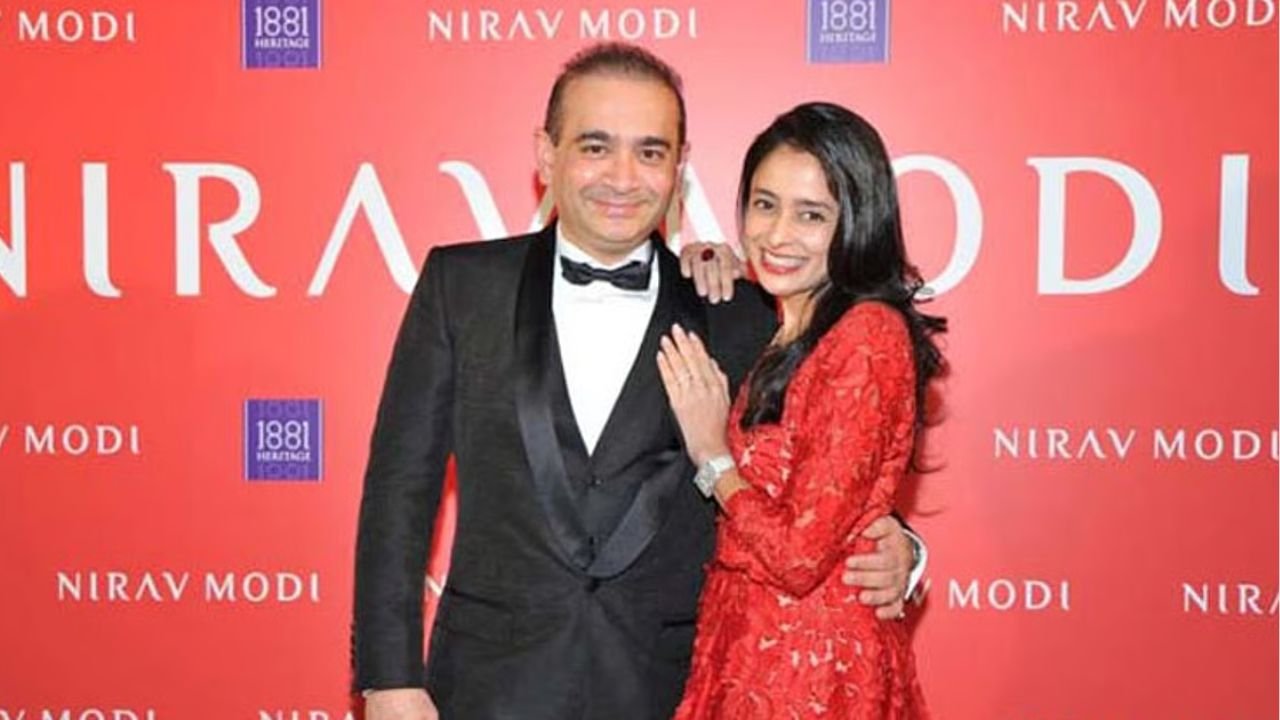

Mumbai: A special CBI court in Mumbai has rejected a plea filed by Purvi Modi, sister of fugitive diamantaire Nirav Modi, seeking permission to record her statement through video conferencing in the multi-crore Punjab National Bank (PNB) fraud case. Purvi Modi, who has already approached the court seeking to turn approver, had requested that her statement be recorded remotely before the court decides her plea. The court’s decision means she will now have to follow the procedure prescribed for recording her statement before her request for approver status can be considered.
The order was passed by Special CBI Court Judge Subash Karhale. The Central Bureau of Investigation (CBI) had earlier maintained that Purvi Modi’s statement was required to be recorded before her application to become an approver could be decided. Her lawyer sought permission for the statement to be recorded through video conferencing, but the court rejected the request.
Purvi Modi, a Belgian national and Nirav Modi’s younger sister, has been named as an accused in the PNB fraud case. Multiple chargesheets have been filed by the CBI and the Enforcement Directorate (ED) in connection with the alleged bank fraud and related money laundering activities. Her request to become an approver is significant because an approver can provide evidence or testimony against other accused persons, subject to the court accepting the plea and compliance with applicable legal conditions.
The development also assumes importance because Purvi Modi and her husband, Maiank Mehta, have already been granted approver status in a related money laundering case being investigated by the ED. Their role and statements in that proceeding could potentially have a bearing on the broader investigation, although her separate plea in the underlying PNB fraud case is yet to be decided by the special CBI court.
The PNB case dates back to 2018 and centres on alleged financial irregularities at the bank’s Brady House branch in south Mumbai. Nirav Modi, his uncle and diamantaire Mehul Choksi, along with several other accused, have been accused of being involved in a scheme in which fraudulent Letters of Undertaking (LoUs) were allegedly issued in connivance with bank officials.
These LoUs were allegedly used to obtain credit from overseas branches of Indian banks. Investigators have alleged that the transactions continued over a period of time without being properly reflected in PNB’s internal systems, eventually resulting in massive financial exposure for the bank. The alleged fraud was reported at more than $2 billion, which was equivalent to over ₹13,000 crore at the time.
Both the CBI and ED have been investigating the alleged fraud and associated money laundering since 2018. The case became one of India’s most prominent banking fraud investigations and triggered wider scrutiny of the safeguards surrounding LoUs, international banking transactions and internal controls at financial institutions.
Nirav Modi subsequently left India and has been involved in prolonged legal proceedings in the United Kingdom over India’s efforts to secure his extradition. He remains lodged in a London jail while the legal process surrounding his extradition and the Indian investigations continue.
For the CBI, Purvi Modi’s proposed statement could be relevant to the ongoing proceedings because of her alleged association with the accused and the transactions under investigation. However, her request to become an approver has not yet been finally decided. The court must first obtain and examine her statement in accordance with the applicable procedure.
The rejection of the video-conferencing plea does not by itself determine whether Purvi Modi will be granted approver status. Instead, it clears the immediate procedural issue concerning the manner in which her statement is to be recorded. Once the statement is recorded, the court can consider her application on its merits and decide whether she meets the legal requirements for being treated as an approver.
The latest development comes as the long-running PNB fraud investigation continues to generate legal proceedings involving the accused, financial investigators and various courts. The case remains closely watched because of its scale, the alleged use of banking instruments to secure overseas credit and the continuing efforts of Indian agencies to establish the full chain of transactions and responsibilities.
About the author — Suvedita Nath is a science student with a growing interest in cybercrime and digital safety. She writes on online activity, cyber threats, and technology-driven risks. Her work focuses on clarity, accuracy, and public awareness.
Follow for daily updates on cybercrime, corporate fraud, DFIR, hacking, investigations, and digital forensics
