

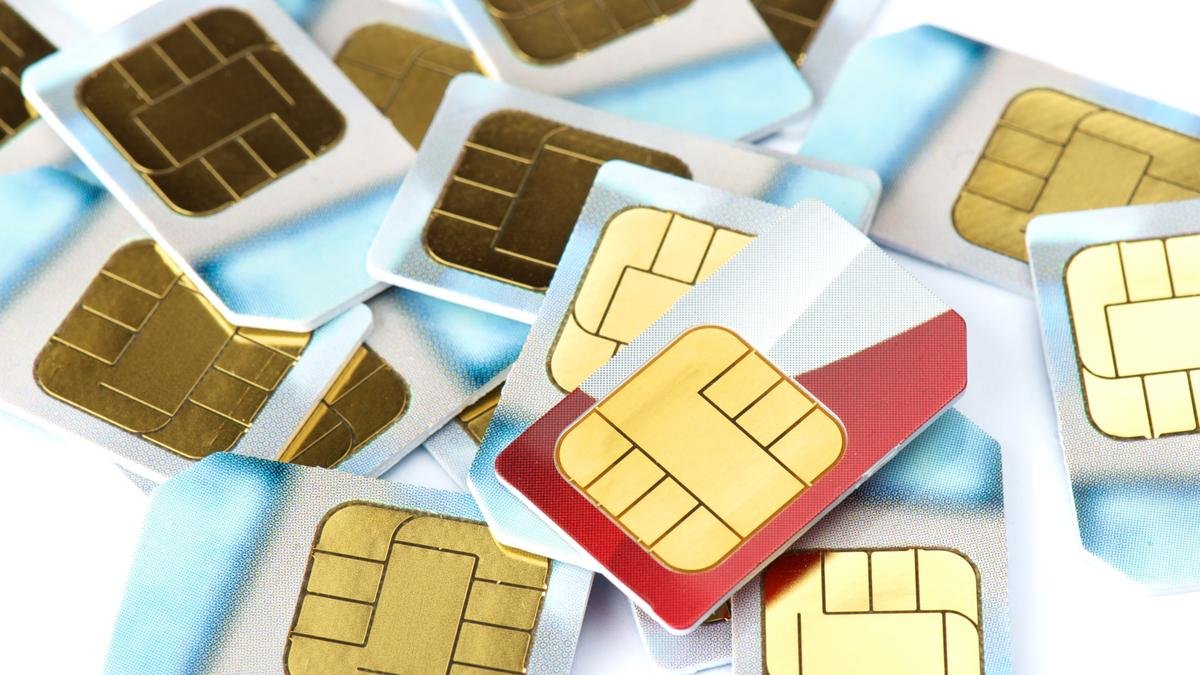

A mobile shop tucked away in Baliapur, a small block in Jharkhand’s Dhanbad district, has emerged as the origin point of a cyber fraud network with a nationwide reach. Police say 57 SIM cards issued through the shop were funnelled to cyber criminals operating across state lines, using the identity documents of villagers who had little idea how their names would be used. Six people, including the alleged kingpin Kaju De alias Pritam, are now in judicial custody, and an FIR names 17 accused with several others yet to be identified.
The case fits a familiar but troubling pattern from this belt of Jharkhand, where Jamtara district next door has long carried the unofficial title of India’s phishing capital. What distinguishes the Baliapur case is not the fraud itself but the infrastructure behind it: a documented, three-tier supply chain that moved from village doorstep to national scam call centre with unsettling efficiency.
How the identity pipeline allegedly worked
Investigators say the operation depended on financially vulnerable villagers being persuaded to hand over Aadhaar cards and other identity papers in exchange for small sums of money. Shop operator Kaju De, allegedly assisted by employees Gaurav Kumar Gupta and Sonu Swarnkar, used these documents to activate SIM connections that were never meant for the people whose names appeared on them. A separate pair, Govind and Madhusudan, allegedly handled the recruitment end, convincing residents to part with their documents in the first place.
The numbers involved are striking on their own terms. Between January 1 and May 29, multiple SIM cards were issued repeatedly against single identities, with 20 cards traced to one individual, Chandana Bauri, and 14 and 13 respectively to two others. Telecom regulations permit an individual to hold up to nine connections, a threshold this case appears to have blown past by a wide margin without triggering any real-time intervention.
Police believe the division of labour — sourcing documents, activating connections, and finally supplying working SIM cards to cyber criminals — was deliberate. It creates distance between the person actually defrauding a victim and the paper trail investigators must follow, a structure cybercrime officers describe as one of the most persistent obstacles in prosecuting organised online fraud.
A national enforcement effort still catching up
The Baliapur case lands at a moment when the Central Government has been scaling up its response to exactly this kind of SIM-based fraud. The Department of Telecommunications’ Sanchar Saathi platform, built around modules such as TAFCOP and the facial recognition-driven ASTR system, had by mid-2026 disconnected more than 50 million fraudulent mobile connections nationwide, a tally credited with preventing an estimated ₹1,800 crore in cyber losses. Earlier enforcement drives had already uncovered lakhs of connections activated on invalid or counterfeit documents, echoing precisely the pattern investigators allege in Dhanbad.
Yet the scale of that national cleanup underscores how deeply embedded the practice remains at the ground level. Jharkhand’s own cybercrime numbers help explain why. The state recorded 967 cases in 2022 alone, ranking second highest in the country, with districts including Dhanbad among those most affected. Bulk SIM procurement rackets feeding these districts are not new either; a 2023 Delhi Police case saw nearly 22,000 SIM cards seized from a single trader supplying Jamtara’s cyber operators over roughly a year.
What remains unresolved
Of the 57 SIM cards traced in the Baliapur case, only six have so far been conclusively linked to fraud, amounting to a confirmed ₹60 lakh, with victims Kavita Mandal and Uttam Barman among those identified. The remaining 51 connections are still being reconstructed through call records and transaction data, and police have not ruled out that the numbers were used well beyond Jharkhand’s borders.
Whether the villagers who supplied their documents understood the eventual use of those SIM cards is itself part of the ongoing inquiry, a question with real bearing on how culpability is eventually apportioned. Investigators are also examining whether additional intermediaries operated between the Baliapur shop and the cyber criminals who used the numbers, suggesting the network’s true size may only become clear once financial trails across all 57 connections are fully mapped.
“SIM cards activated in another person’s name remain one of the most difficult layers for investigators to pierce in organised cyber fraud, since they insert deniability between the perpetrator and the paper trail,” said Prof. Triveni Singh, a cybercrime expert and former IPS officer.
Follow for daily updates on cybercrime, corporate fraud, DFIR, hacking, investigations, and digital forensics
