

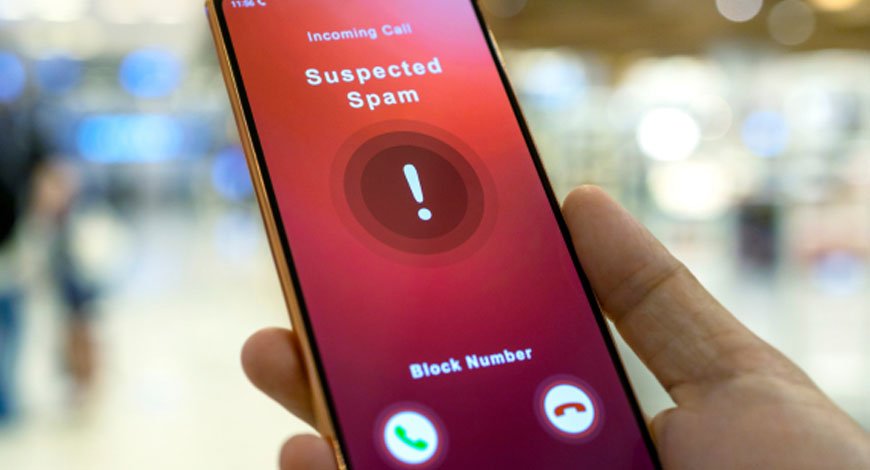

The Central Government has confirmed that telecom operators have begun trials of a government-backed Calling Name Presentation service, a KYC-verified caller identification system designed to work much like Truecaller but sourced directly from telecom operators’ own subscriber records rather than crowdsourced data. Communications Minister of State Dr. Pemmasani Chandra Sekhar disclosed the development in a written Lok Sabha reply, confirming that operators are currently testing the feature on 4G and higher-generation networks, with a nationwide rollout decision to follow once the trial phase concludes.
A Verified Alternative to Crowdsourced Caller ID
What distinguishes CNP from existing third-party caller identification apps is where its data comes from. Rather than relying on user-submitted or crowdsourced tags that can be inaccurate or manipulated, the government-backed system draws names directly from the KYC records telecom operators already maintain for every SIM issued, information verified at the point of purchase using documents such as Aadhaar.
That distinction matters considerably for fraud prevention. Cybercriminals routinely spoof identities or exploit the unreliability of crowdsourced caller ID to pose convincingly as bank officials, law enforcement personnel, tax authorities or telecom representatives, precisely the kind of impersonation that underpins digital arrest scams, fake KYC update calls and a large share of India’s social engineering fraud. A verified, government-sourced caller name is intended to close that particular gap by making it considerably harder for a fraudulent caller to present as someone they are not.
A Rollout That Has Moved More Cautiously Than First Planned
The regulatory groundwork for this system, formally known as CNAP, dates back further than the current trial phase suggests. TRAI first sought public consultation on making caller name display mandatory as early as 2022, before formally approving the framework in October 2025 with an initial target of nationwide availability by March 2026. That original timeline has evidently slipped, with the government’s latest Parliamentary disclosure confirming that as of August 2026, the service remains in active 4G trials rather than live nationwide deployment, an indication that technical feasibility testing has proven more involved than the initial schedule anticipated.
The phased rollout structure explains part of that caution. India’s ageing 2G networks cannot technically support Calling Name Presentation in their current form, meaning the feature will initially reach only 4G and 5G subscribers, leaving a meaningful segment of users, particularly in rural and lower-income segments where 2G devices remain common, without access until the technology can be extended further. Officials have said any expansion beyond 4G and 5G will depend entirely on what the ongoing trials reveal about technical feasibility across older infrastructure.
A Useful Layer, Not a Complete Solution
Government officials and independent experts alike have been careful to frame CNP as one tool among several rather than a definitive fix for India’s cyber fraud problem. Officials acknowledge that the service’s actual effectiveness in reducing spam and fraudulent calls can only be properly assessed once the trial and technical evaluation phases are complete, and have flagged that operators are still working through how the system performs under varying network conditions and existing infrastructure constraints.
That caution is well founded. Caller identification, however accurate, cannot on its own defeat fraudsters who continuously adapt their methods, including spoofing techniques designed to exploit exactly the kind of technological loophole a verification system like this is meant to close. Experts have stressed that a displayed name, even one sourced from verified KYC data, should never be treated as absolute proof of a caller’s legitimacy, and that users must continue verifying identities independently before sharing personal information, OTPs or banking credentials, regardless of what appears on their screen.
Cybercrime expert and former IPS officer Prof. Triveni Singh said a verified caller identification system could become a meaningful addition to India’s cybersecurity framework, but cautioned it should be treated as only one layer of a broader defence. He said public awareness, strong authentication mechanisms and robust telecom security standards will remain just as essential as any single technical feature in preventing financial fraud and social engineering attacks going forward. With trial results still pending and no confirmed rollout date beyond continued testing, the practical impact of CNP on India’s spam and fraud call problem remains, for now, a matter authorities say can only be judged once the pilot phase runs its course.
Follow for daily updates on cybercrime, corporate fraud, DFIR, hacking, investigations, and digital forensics
