
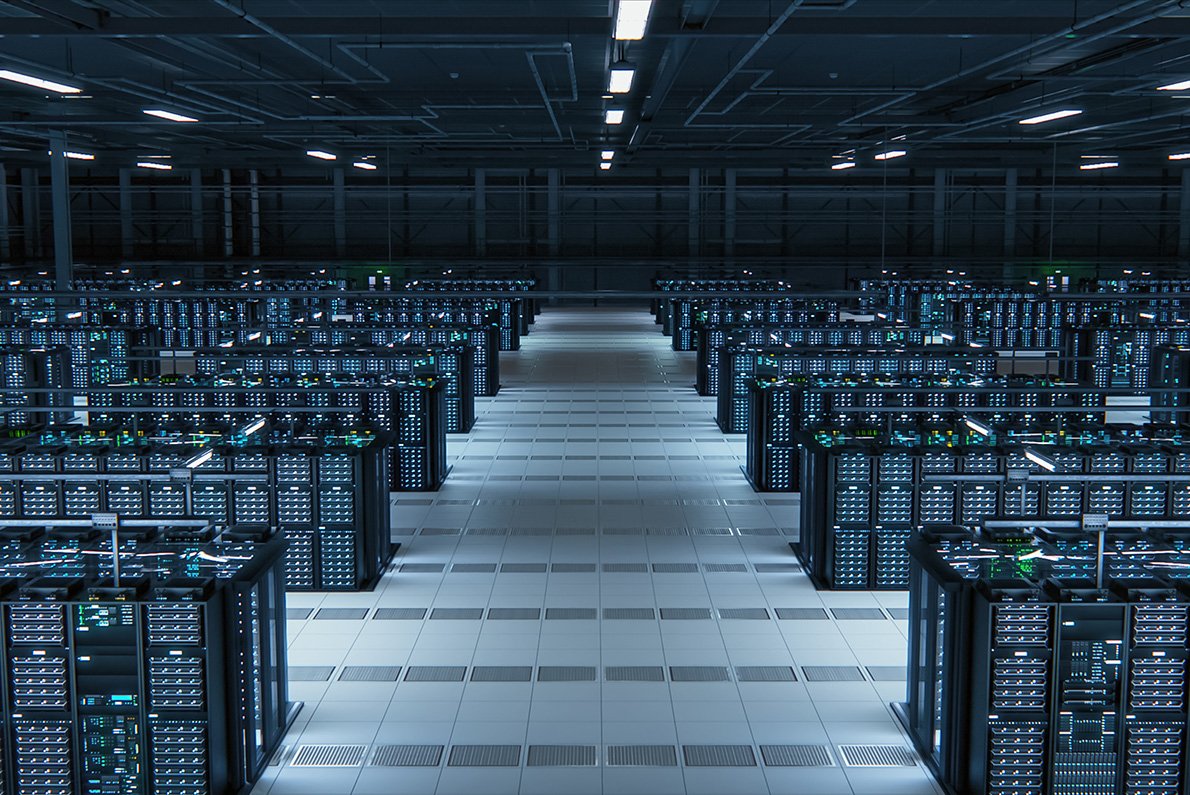

India’s digital infrastructure ecosystem is undergoing its most aggressive expansion phase in history, with installed data centre capacity projected to quadruple from 1.5 gigawatts (GW) in 2025 to 6.5 GW by 2030. According to a research report by Rubix Data Sciences, the nation added 387 megawatts (MW) of IT capacity in 2025 alone. This marks a 103 per cent year-on-year increase over the 191 MW added in 2024, signaling a rapid acceleration in digital infrastructure deployment.
A $90 Billion Investment Pipeline Fueled by AI
The relentless adoption of enterprise artificial intelligence, 5G rollouts, unified payments, and hyperscale cloud services has fundamentally altered India’s infrastructure requirements. The current investment pipeline, spanning projects under active development and formal announcement, stands at approximately $90 billion, or nearly ₹7.5 Lakh Crore. This figure represents a sixfold surge compared to the $13 billion to $15 billion invested across the sector between 2020 and 2024.
Global cloud conglomerates are driving the lion’s share of this capital expenditure. Amazon Web Services, Microsoft, and Google have collectively committed $67.5 billion to expand their physical footprint across key Indian regions. Furthermore, Union Government projections suggest that AI-led digital infrastructure assets could eventually catalyse up to $200 billion in cumulative investments as regional powerhouses scale up domestic operations.
Metro Dominance and Structural Cost Advantages
India hosts 271 operational data centres, placing the country seventh globally by total facility count. A major concentration persists across five key tier-one metropolitan hubs, with Mumbai, Hyderabad, Delhi NCR, Bengaluru, and Chennai accounting for nearly 65 per cent of all active capacity. Mumbai continues to lead as the primary landing zone for submarine cables, while Hyderabad is rapidly emerging as a preferred location for custom-built hyperscale campuses.
A primary catalyst attracting international capital is India’s compelling cost efficiency. Construction and operational setup costs for data centre facilities in India remain 30 to 40 per cent lower than comparative builds in China or the United States. Despite generating nearly 20 per cent of the world’s digital data, India currently accounts for only 3 to 4 per cent of global data centre capacity, highlighting substantial headroom for sustained expansion.
Resource Bottlenecks and Execution Challenges
Despite robust capital inflows, the physical scaling of massive server clusters presents acute environmental and infrastructural hurdles. India’s data centres currently consume roughly 150 billion litres of water annually, a figure projected to climb to 359 billion litres by 2030. This surge is particularly concerning given that more than half of existing and planned facilities reside in regions already classified as water-stressed.
Power requirements present an equally formidable bottleneck for regional utilities and project developers. Estimates from the Ministry of Power indicate that grid demand from data centres will skyrocket from 1 gigawatt today to 13.56 gigawatts by 2031–32. Navigating this immense energy requirement while maintaining alignment with India’s 2070 net-zero carbon commitment will require aggressive integration of dedicated renewable power purchasing agreements.
Addressing these operational friction points will determine whether India can fully capitalise on its digital momentum. Tushar Bhaskar, President of Rubix Data Sciences, noted that the industry has moved past its nascent development phase into an intensive AI-driven cycle where execution is paramount. He highlighted that long-term industry leadership will depend on how effectively developers and policymakers resolve structural constraints around power, water, and grid resilience.
Follow for daily updates on cybercrime, corporate fraud, DFIR, hacking, investigations, and digital forensics
