

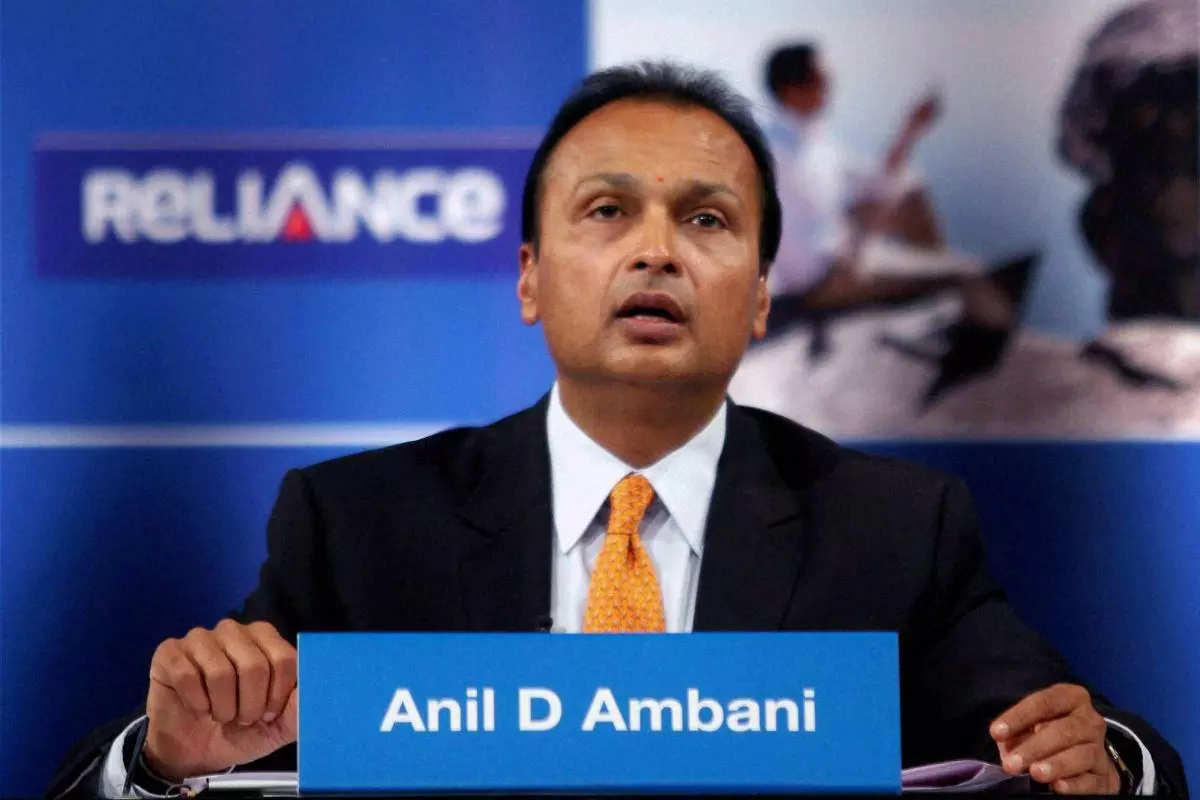

The Supreme Court on Monday declined to make any specific observations on the extent to which the Enforcement Directorate and the Central Bureau of Investigation are probing industrialist Anil Ambani in connection with an alleged multi-crore bank fraud involving Reliance ADAG companies. A bench led by Chief Justice of India Surya Kant recorded Solicitor General Tushar Mehta’s submission that chargesheets had been filed in three cases, with the remaining investigations still underway, and granted the agencies time to place a fresh status report on record.
Where the Investigation Currently Stands
Appearing for the CBI and ED, Mehta told the court that out of a total of seven cases under investigation, three chargesheets had already been filed, while the Enforcement Directorate had also filed a prosecution report, equivalent to a chargesheet, in related money laundering proceedings. The scale of the alleged fraud has been described in overlapping but not always consistent figures across hearings: the total loss across the seven cases under probe has been put at ₹27,337 crore, while the underlying public interest litigation has separately alleged loan fraud exceeding ₹40,000 crore across ADAG entities. The ED has specifically alleged defaults of ₹7,500 crore in Reliance Home Finance and ₹8,200 crore in Reliance Commercial Finance, citing large-scale diversion of public funds, alongside a probe into forged bank guarantees submitted to the Solar Energy Corporation of India that allegedly caused a loss exceeding ₹105 crore.
Senior advocate Prashant Bhushan, appearing for petitioner EAS Sarma, a former Union government secretary, argued that despite the agencies indicating in an earlier hearing that three chargesheets would be filed by June, it remained unclear what action had been taken against Ambani specifically. Bhushan contended that Ambani, arrayed as Respondent No. 5 and named Chairman of the Reliance Communications companies, was responsible for the issuance of fake bank guarantees, and noted that while SEBI had separately described him as the “kingpin” of the alleged scheme, only lower-level officials appeared to have faced arrest.
Sharp Exchanges Over Arrest and Judicial Restraint
Mehta pushed back firmly on that characterisation, telling the court it would be incorrect to suggest action had been confined to junior officials, noting that a managing director had also been arrested among those taken into custody so far. When Bhushan asked the bench to at least examine whether the filed chargesheets contained material implicating Ambani, the court declined, stating it would not place any such observation on record and that the agencies themselves should review the chargesheets for relevant content.
Senior advocate Kapil Sibal, representing Ambani, objected that even an observation of that kind could prejudice proceedings, pointing out that the trial court had not yet taken cognisance of the chargesheets filed against his client. Chief Justice Surya Kant acknowledged the concern, remarking that the bench was consciously refraining from any statement that could influence the ongoing investigation or subsequent judicial process, adding that the court remained “over-conscious” of how its observations might affect the parties involved.
A Pattern of Restraint Stretching Back Months
Monday’s hearing extends a consistent posture the court has maintained since at least March, when it constituted a Special Investigation Team at the ED’s request but stopped short of directing any arrest. In a May hearing, the bench explicitly ruled out ordering Ambani’s arrest “to sensationalise” the case, with Justice Joymalya Bagchi noting that arrests can only be ordered at an investigating agency’s own initiative, not to satisfy public pressure around a high-profile figure. Ambani has separately given the court a standing undertaking not to leave India without prior permission while the investigation continues, and has stated he has fully cooperated with ED summons issued during the probe.
The Reliance side has pushed its own counter-narrative in earlier hearings, with senior advocate Shyam Divan arguing on behalf of Reliance Infrastructure and Reliance Power that project revenues flow directly into lender-controlled accounts requiring prior written lender approval for any withdrawal, an architecture he described as answering allegations of fund diversion on its own terms, alongside eight provisional attachment orders already issued against group assets. With the next hearing date yet to be specified in the court’s written order, the case now moves forward on the same track it has followed for months: continued monitoring by the apex court, paired with a deliberate refusal to let its own remarks shape the outcome of a trial still awaiting cognisance.
