
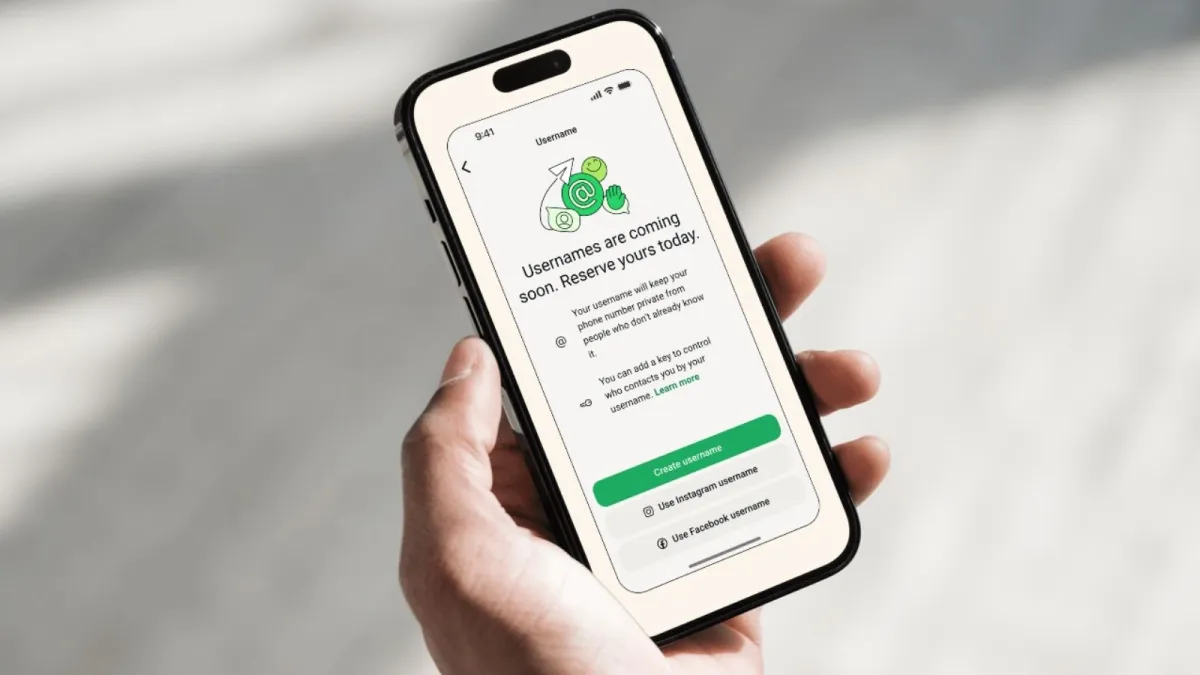

The Central Government has begun examining WhatsApp’s response over its proposed username feature, after the Ministry of Electronics and Information Technology issued a formal notice demanding an explanation of its cybersecurity implications. WhatsApp submitted its reply on Thursday night, and officials are now conducting a detailed technical and legal assessment. The government has made clear the feature will not be introduced in India until consultations conclude to its satisfaction.
How the Standoff Began
The dispute traces back to June 29, when WhatsApp announced users would soon be able to reserve a unique username, framing it as a privacy upgrade that would reduce reliance on phone numbers and cut exposure to SIM-swap attacks. Within 48 hours, MeitY had sent Meta a formal legal notice ordering the rollout suspended for Indian users.
In its notice, MeitY warned the feature could materially increase online fraud, phishing, digital arrest scams and impersonation attacks by letting bad actors contact victims without exposing their phone numbers. The ministry specifically flagged the risk of handles closely resembling genuine public authorities, financial institutions and government agencies. It also asked WhatsApp to explain why regulatory action should not be initiated under the IT Act.
A deeper concern underlying the notice is traceability. If phone numbers stop being the primary identifier for first contact, MeitY warned, law enforcement loses its most reliable tool for determining whether a suspect is based in India or operating from abroad, a concern with direct bearing on the cross-border call centres behind many digital arrest scams.
WhatsApp’s Safeguards, and Their Limits
WhatsApp has said users will still need to register with a phone number even after usernames launch, with the feature positioned only as an additional way to connect rather than a replacement. The company says it has proactively reserved usernames tied to public figures, government entities and verified accounts, and plans contextual warnings when users receive a first-time message, showing whether the sender is a new account, shares mutual groups, or is based in another country.
Those safeguards have not fully reassured critics. During testing, usernames closely resembling prominent figures and institutions, including handles styled after well-known business leaders and even one resembling an RBI verification handle, remained available to reserve. MobiKwik chief executive Bipin Preet Singh separately noted that variations of his own name had already been claimed during the testing phase, underscoring how easily lookalike handles can slip past automated filters.
A Notice Facing Its Own Legal Pushback
The government’s intervention has drawn criticism from digital rights groups. The Internet Freedom Foundation argued that MeitY’s notice lacks a clear legal basis, noting that neither the IT Act nor the Intermediary Guidelines were designed to govern a single product feature, and warned the move risks setting a precedent for the executive to dictate product design by letter rather than through rulemaking. The group pointed to a similar notice MeitY withdrew within a fortnight after facing comparable criticism over an alleged licensing requirement with no basis in the IT Act.
The Centre, for its part, has extended its scrutiny beyond WhatsApp alone. Similar notices have gone to Telegram and Signal over their existing username systems, though IT Secretary S. Krishnan has said neither company has yet responded within the prescribed deadline. Meta has separately faced government notices over alleged child sexual abuse material appearing in Instagram advertisements, while Telegram has been directed to curb the circulation of pirated films and OTT content on its platform.
Why Digital Arrest Scams Shape the Government’s Reflexes
The intensity of the government’s response is best understood against the scale of India’s digital arrest problem, a fraud in which criminals impersonate CBI officers, judges or customs officials over video calls to extort victims into transferring money. Prime Minister Narendra Modi flagged such scams as among the most dangerous cyber threats facing citizens in an earlier Mann Ki Baat address, and the pattern has since become one of the most widespread categories of financial cybercrime in urban India.
Whether the standoff ends in a compromise, such as WhatsApp retaining phone-number visibility for first-contact messages in India or offering law enforcement a dedicated disclosure mechanism for usernames, will depend on how the ongoing consultations unfold. For now, both sides have signalled they are prepared to take their time: WhatsApp says it wants to “get it right” before any rollout later this year, while MeitY has given no indication it will ease its position until it is satisfied the feature cannot be weaponised by the same fraud networks the government is already struggling to contain
Follow for daily updates on cybercrime, corporate fraud, DFIR, hacking, investigations, and digital forensics
