
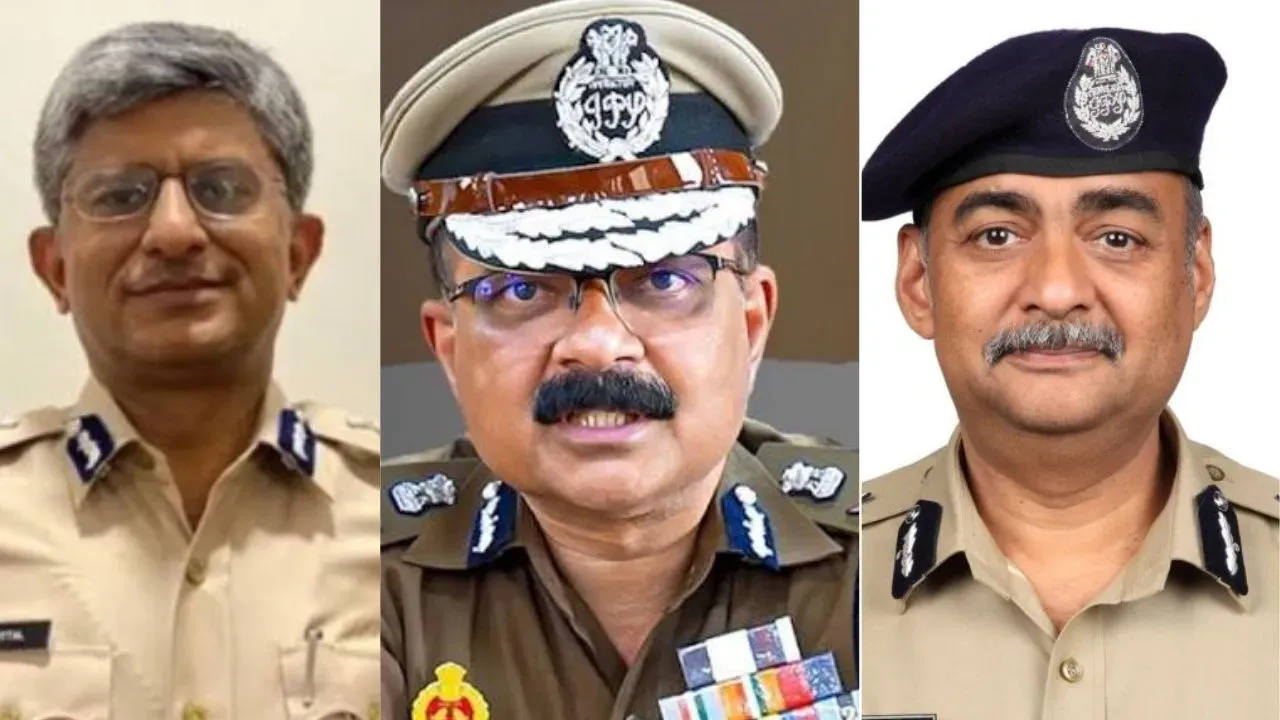

The Appointments Committee of the Cabinet (ACC) has approved a major leadership reshuffle at the highest levels of India’s central police and training organizations. According to an official order issued by the Department of Personnel and Training (DoPT), three senior Indian Police Service (IPS) officers have been assigned critical command roles to head vital federal security and administrative bodies. This coordinated realignment effectively fills key institutional vacancies and sets a clear operational direction for central police governance.
The high-profile shifts will redefine leadership at the Bureau of Police Research and Development (BPR&D), the National Crime Records Bureau (NCRB), and the premier Sardar Vallabhbhai Patel National Police Academy (SVPNPA). By placing veteran administrators at the helm of these apex organizations, the central government is ensuring absolute operational continuity at a time when federal security infrastructure is undergoing a massive digital and analytical modernization drive.
A New Research Chief for Police Modernization
Senior IPS officer Alok Kumar Mittal, a 1993-batch officer from the Haryana cadre, has been officially appointed as the new Director General of the Bureau of Police Research and Development (BPR&D). Mittal, who was previously serving within his home state cadre, steps into the Level-16 pay scale post to spearhead vital tasks, including national law enforcement research, comprehensive prison reforms, and technology deployment strategies for field forces across the country.
According to the official DoPT notification, Mittal’s tenure will run from his formal date of joining up until June 30, 2029, which marks his scheduled date of superannuation. His induction places an experienced administrative hand at the helm of the BPR&D at a time when the government is heavily pushing for advanced algorithmic updates, standardized training modules, and upgraded forensic capabilities for state police forces.
Fresh Command at the National Crime Database
In another crucial lateral move, the central government has appointed Amit Garg to lead the National Crime Records Bureau (NCRB) as its incoming Director. Garg, a 1993-batch IPS officer belonging to the Andhra Pradesh cadre, transitions to the capital from his current role running the country’s top police academy. To facilitate this high-level placement, the ACC has temporarily upgraded the NCRB Director post to a Director General rank on a personal basis.
Garg takes over the hot seat following the retirement of Alok Ranjan, a 1991-batch延 Madhya Pradesh cadre officer who officially stepped down on June 30, 2026. Tasked with managing the country’s vast criminal record databases and statistical networks, Garg’s command is mandated to last until his retirement on October 31, 2027. His primary focus will involve upgrading national digital tracking platforms to counter the rise of sophisticated cyber-syndicates and trans-state crimes.
Securing the Premier Training Grounds
The vacancy created by Garg’s departure from the Hyderabad-based Sardar Vallabhbhai Patel National Police Academy (SVPNPA) will be filled by Sujeet Pandey. A distinguished 1994-batch IPS officer hailing from the Uttar Pradesh cadre, Pandey has been named the new Director of the nation’s premier training grounds for newly recruited civil security officers.
Pandey will assume full administrative charge of the elite facility, with his tenure securely fixed until his retirement on July 31, 2028. This comprehensive shakeup, executed smoothly following formal proposals from the Ministry of Home Affairs, successfully resolves leadership vacuums across India’s most critical internal security centers, ensuring that the next generation of law enforcement leaders receives uninterrupted, world-class institutional training.
Follow for daily updates on cybercrime, corporate fraud, DFIR, hacking, investigations, and digital forensics
