
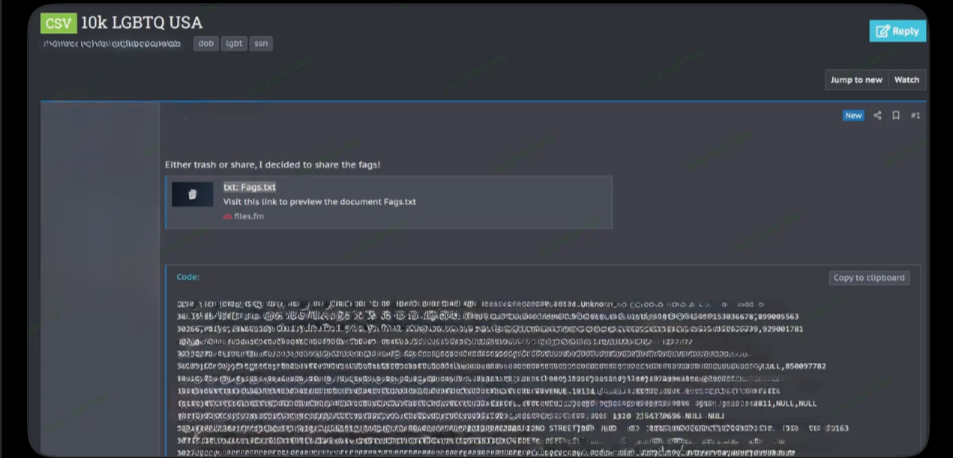

Threat intelligence platforms have flagged a significant data exposure event on an underground cybercrime forum involving approximately 10,000 alleged records targeting LGBTQ+ individuals in the United States. As documented in the initial threat intelligence alert on the Daily Dark Web Data Exposure Registry, a malicious actor published the dataset alongside derogatory language, providing an active download link to the compiled information. While the authenticity of the material has not yet been independently verified by forensic specialists, the emergence of the file highlights a persistent trend of threat actors weaponizing demographic and identity data to facilitate social engineering and targeted intimidation campaigns.
Assessing the leaked data parameters
According to initial reports from open-source intelligence monitors, the uploaded archive claims to contain highly sensitive personally identifiable information. The threat actor asserts that the package includes full names, exact dates of birth, Social Security numbers, and various secondary personal markers that could allow for detailed individual profiling. Security researchers note that even if portions of the dataset turn out to be aggregated from previous historic breaches or public records, the consolidation of data based specifically on protected personal traits presents unique operational and security challenges for corporate and civilian defense teams.
For organizations managing digital footprints, the leak emphasizes the importance of proactive credential monitoring and perimeter defense. When data packets containing government identification numbers find their way into dark web marketplaces, automated botnets often exploit the information to conduct credential stuffing attacks or execute fraudulent credit applications. The localized nature of this specific leak suggests the threat actor may be attempting to appeal to specific ideological subsets within the hacking community, increasing the likelihood that the data will be used for secondary malicious operations rather than simple financial extraction.
Mitigating downstream harassment and fraud vectors
Cybersecurity analysts warn that data exposures focusing on specific demographic characteristics carry a high risk of downstream physical and digital harassment. Beyond standard financial identity theft, individual profiles can be cross-referenced by bad actors to orchestrate highly targeted phishing schemes, extortion attempts, or digital doxxing campaigns that threaten personal safety. Because these datasets bypass traditional corporate parameters and leak directly into unindexed networks, defensive teams must focus heavily on user-side vigilance and early warning systems.
To neutralize the potential impact of the exposure, threat intelligence groups recommend that compliance officers and platform administrators closely audit their networks for the redistribution of these specific files. If investigations reveal that the dataset originated from an unpatched corporate repository or a third-party vendor, the affected organizations must quickly initialize legal notification protocols to inform citizens whose data may be compromised. Furthermore, cybersecurity experts advise individuals to maintain active multi-factor authentication across all sensitive personal accounts and systematically freeze credit files if they suspect their corporate or national identity markers have been exposed to public trading forums.
Follow for daily updates on cybercrime, corporate fraud, DFIR, hacking, investigations, and digital forensics
