
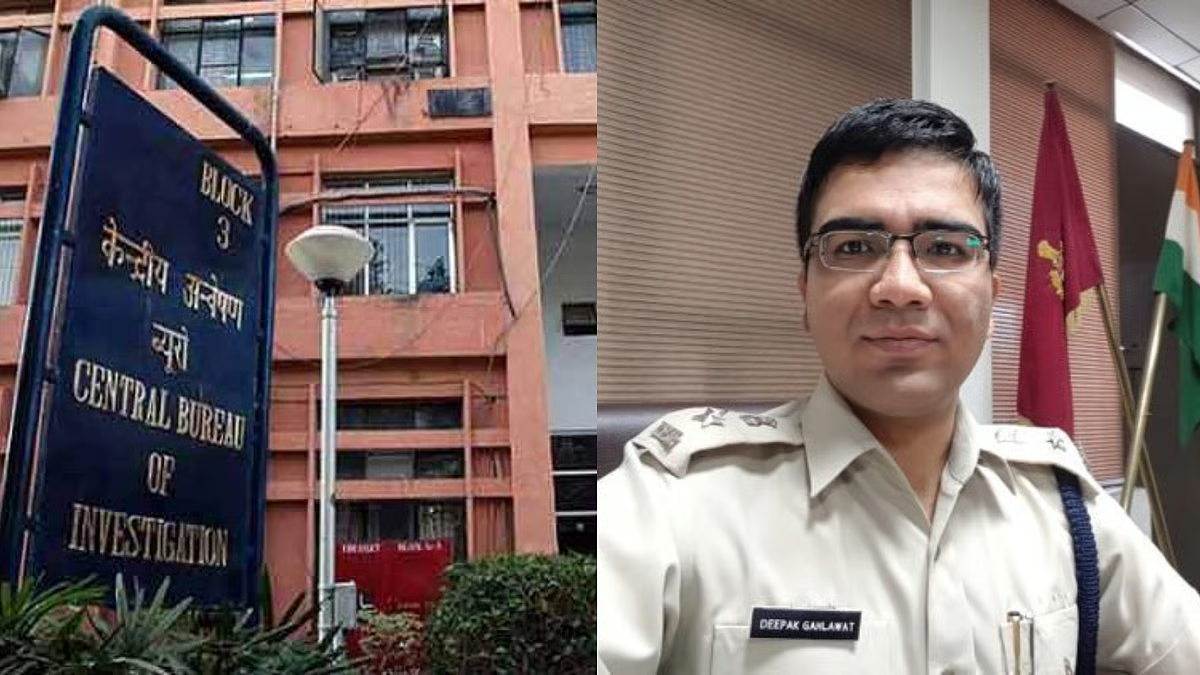

The Central Bureau of Investigation (CBI) has arrested Deepak Gahlawat, a 2012-batch IPS officer of the Haryana cadre, unearthing a deeply unsettling compromise within national law enforcement. Gahlawat, serving on central deputation, stands accused of leveraging his official stature to dilute an active federal investigation into a vast medical counterfeiting network. This high-profile arrest does not simply mark another routine entry into the country’s anti-corruption register; it highlights a profound systemic vulnerability where the machinery of justice allegedly became a tradable commodity.
The gravity of this development extends far beyond the typical parameters of white-collar bribery or administrative misconduct. By inserting corrupt influence into a criminal inquiry centered on spurious pharmaceuticals, the alleged actions intersect with a form of organized crime that functions as a silent threat to public safety. When a senior guardian of public order is accused of selling protection to syndicates that profit off human illness, the discourse shifts from simple financial malfeasance to an existential crisis concerning institutional integrity and human life.
Details of the Multi-Crore Bribery Scheme
Federal investigators have outlined an intricate timeline detailing how the senior offiCBI has arrested senior IPS officer Deepak Gahlawat for allegedly demanding a ₹3 crore bribe to compromise a massive counterfeit medicine investigation.cer allegedly sought to monetize his position and purported institutional connections. The CBI alleges that Gahlawat demanded an illicit gratification totaling ₹3 crore from N Raja, a central orchestrator of a sprawling fake medicine network rooted in Puducherry. According to agency documentation, the arrested IPS officer claimed he could exploit his personal network within the central investigative architecture to guarantee comprehensive legal relief and systematically derail the gathering of evidence against the prime suspect.
The bribery trail began collapsing following a series of coordinated tactical arrests executed by federal counter-corruption units targeting key intermediaries and facilitators. Investigators successfully intercepted a Delhi Police Crime Branch inspector alongside an independent middleman who were actively managing the physical movement of the extorted funds across local boundaries. Intelligence records reveal that Gahlawat had already accepted an initial payment of ₹1 crore as part of the illicit transaction before the enforcement trap was sprung. The CBI is currently auditing electronic logs to map this operation.
The Sprawling Scale of the Puducherry Racket
The underlying criminal enterprise that Gahlawat allegedly attempted to protect represents one of the most expansive and financially devastating medical frauds uncovered by domestic regulators. Initial valuation metrics compiled by enforcement directorates estimate the overall financial turnover of the Puducherry-based counterfeit drug ring at approximately ₹5,000 crore. This industrial-scale syndicate did not merely operate on the fringes of the black market; it established sophisticated manufacturing units designed to replicate the packaging, labeling, and visual presentation of highly trusted global pharmaceutical brands.
The network systematically flooded legitimate commercial supply chains, distribution networks, and retail pharmacies with entirely spurious or sub-standard chemical formulations. By masking their illicit products as genuine, life-saving therapies, the operators successfully extracted massive profit margins from unsuspecting institutional buyers and vulnerable families navigating medical emergencies. The sheer geographic and financial scale of the racket indicates a highly organized logistics framework that required sophisticated coordination, shell entities, and potentially, the active connivance of compromised public officials who chose to overlook clear regulatory red flags.
Public Health Vulnerabilities and Spurious Medicine Risks
In the broader landscape of criminal jurisprudence, counterfeit medicine rackets occupy a uniquely hazardous category because their operations inflict direct, physical harm on human populations. Unlike conventional financial scams that deplete bank accounts, spurious pharmaceuticals operate silently within the human body, denying patients the active therapeutic agents required to combat severe pathologies. A falsified antibiotic may contain zero active ingredients, causing a treatable infection to progress into systemic organ failure, while a diluted oncology drug can quietly extinguish a cancer patient’s remaining window of survival.
The dynamic proliferation of substandard medications poses a severe macroeconomic and epidemiological threat by actively fueling global antimicrobial resistance. When illicit syndicates distribute medicines containing weak, non-lethal dosages of active compounds, they inadvertently train bacterial strains to survive modern medical interventions, undermining decades of scientific progress. The World Health Organization estimates that a staggering one in ten medical products circulating across low- and middle-income countries is either completely falsified or severely substandard. This systemic contamination erodes public confidence in diagnostic medicine.
Institutional Fallout and the Crisis of Public Trust
The arrest of a serving elite officer places an immense burden of proof and institutional introspection on the Central Bureau of Investigation itself. Because Gahlawat explicitly marketed his alleged ability to manipulate internal federal processes, the agency must systematically audit its own operational units to ensure absolute structural containment. Investigators must determine whether the suspect possessed genuine, exploitable access to the active case files or if he was simply operating an elaborate influence-peddling bluff designed to extort capital from a desperate criminal defendant.
Ultimately, this case serves as an uncompromising warning regarding the moral boundaries of public administration and the enforcement of the rule of law. An IPS officer carries a distinct constitutional mandate to protect human life, uphold statutory codes, and ensure that wealthy criminal cartels cannot purchase immunity from prosecution. If the judicial process ultimately validates these bribery charges, the case will stand as a dark benchmark of public betrayal, reinforcing the necessity of treating medical counterfeiting as an act of absolute hostility against the state and its citizens.
Follow for daily updates on cybercrime, corporate fraud, DFIR, hacking, investigations, and digital forensics
