

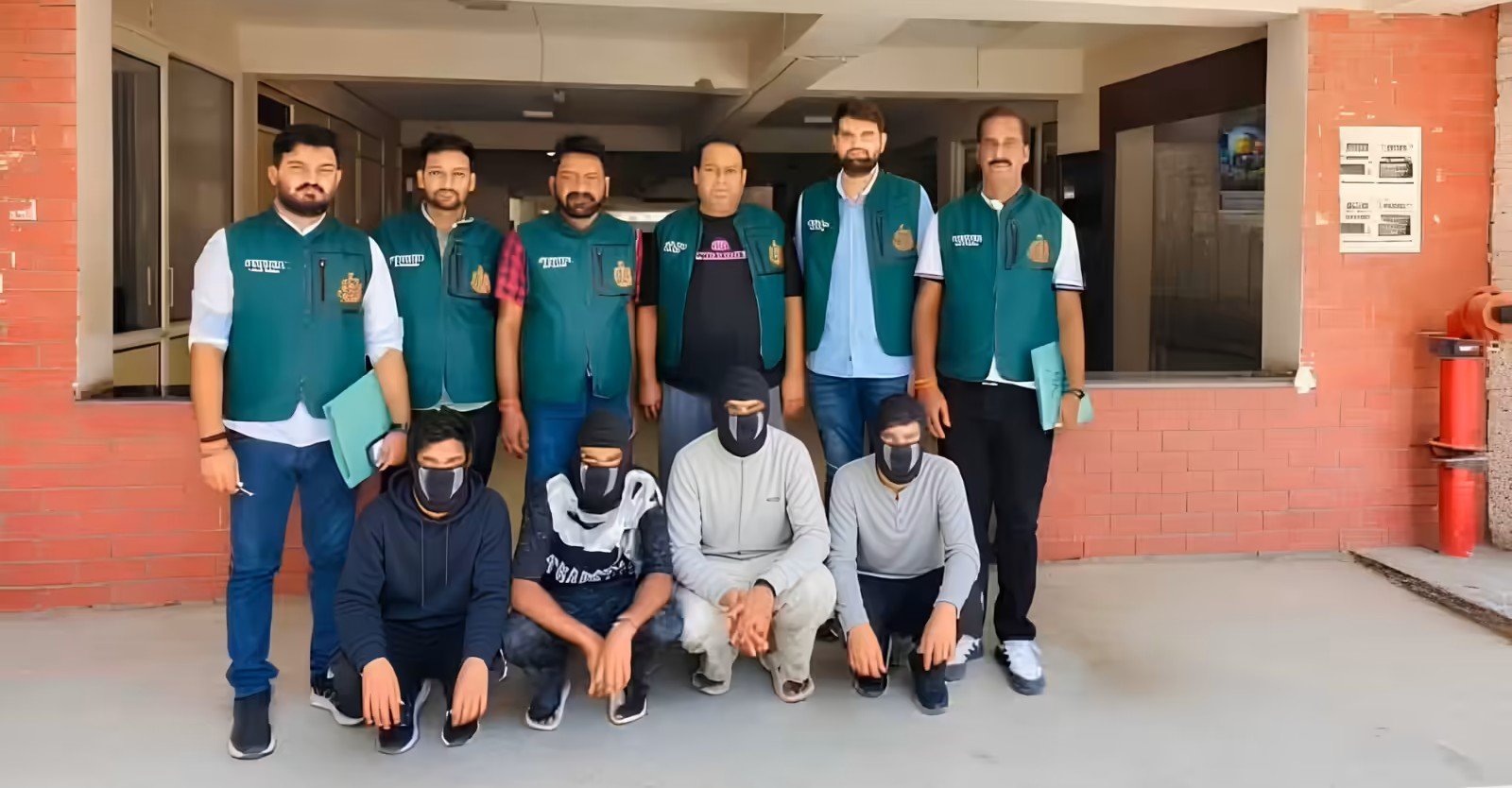
The Special Cell of the Delhi Police has intercepted an organized international terror network attempting to establish active operational sleeper cells within the National Capital Region (Delhi-NCR). Following a highly coordinated technical intelligence sweep spanning multiple state boundaries, enforcement squads arrested four heavily radicalized operatives acting under the direct patronage of Pakistan’s Inter-Services Intelligence (ISI). The tactical breakthrough has disrupted a sophisticated pipeline involving cross-border drone weapons drops, encrypted foreign communications, and target reconnaissance designed to execute armed assaults within the capital.
Registration Begins for FutureCrime Summit 2026, India’s Largest Cybercrime Conference
Drone-Assisted Supply Lines and the Target Reconnaissance Matrix
The multi-state counter-terrorism operation was initiated after federal intelligence units intercepted persistent electronic signals indicating that a Pakistan-based handler, identified as Shahzad Bhatti, was actively deploying weapon modules into Indian territory. Operating remotely, Bhatti utilized social media platforms and encrypted messaging applications to recruit unemployed local youths, supplying them with untraceable foreign mobile numbers to mask their logistical footprints from automated domestic surveillance filters.
The conspiracy was designed to progress through a series of highly synchronized operational phases. The cross-border logistics layer relied entirely on low-flying unmanned aerial vehicles (drones) to execute stealth drops of high-grade military hardware and narcotics across the international border into secluded sector zones in Punjab. Once the weapons were retrieved by localized ground runners, the operational blueprint shifted toward tactical field reconnaissance. Operatives were embedded within New Delhi to execute detailed physical surveillance, videography, and GPS mapping of high-priority targets, including vital state police establishments, security pickets, and prominent religious shrines. The final execution phase dictated utilizing the smuggled foreign firearms to carry out high-impact shooting incidents across crowded municipal sectors to incite communal panic and destabilize regional law and order.
Coordinated Inter-State Raids and Specialized Hardware Seizures
Acting on actionable technical tracking data and confidential field inputs, the Delhi Police Special Cell launched simultaneous containment raids across Punjab and Delhi. The initial operational breakthrough occurred in Amritsar, where counter-terror units pinned down 23-year-old Shubhdeep Singh (alias Vishal) on Majitha Road, catching him in possession of a semi-automatic pistol, five live cartridges, and dual communication terminals. Under specialized custodial interrogation, Shubhdeep exposed the precise coordinates of his regional network, leading detectives to rapidly apprehend his primary logistical accomplices, Gurjant Singh (alias Rishi, 22) and Sajan Singh (alias Honey, 28), who were intercepted carrying an advanced Zigana semi-automatic pistol alongside additional live ammunition.
The final tactical sweep culminated in New Delhi, where elite units arrested 24-year-old Gaganpreet, the core reconnaissance operative tasked with mapping the capital’s security installations. A comprehensive forensic sweep of the suspects’ seized smartphones and electronic devices exposed a vast repository of incriminating media files, including raw target videography, direct coordinate logs shared with Pakistani servers, and explicit voice command notes detailing the planned firing runs.
Proxy Warfare Defenses and Judicial Containment
The Delhi Police have formally booked the four suspects under stringent national security provisions, alongside relevant sections of the Arms Act and the Bharatiya Nyay Sanhita. Ballistic experts and digital forensic analysts are currently conducting deep-dive technical reviews on the seized hardware registries to isolate the encryption keys used by the handlers and trace the financial transactions routed through clandestine hawala lines to fund the operations.
National security commands emphasize that the successful neutralisation of this cell exposes a continuing strategy by cross-border handlers to leverage local criminal networks and advanced drone technology to wage proxy warfare within major metropolitan zones. To permanently insulate the national capital against similar asymmetrical penetrations, law enforcement wings are deploying expanded counter-drone radar arrays along border check-lines and tightening real-time digital surveillance monitoring across public communication hubs. Authorities maintain that while the preliminary evidence confirms an imminent threat matrix, the complete scope of the syndicate’s infrastructure will be meticulously established as the electronic and physical evidence charts move through the formal judicial process.
