

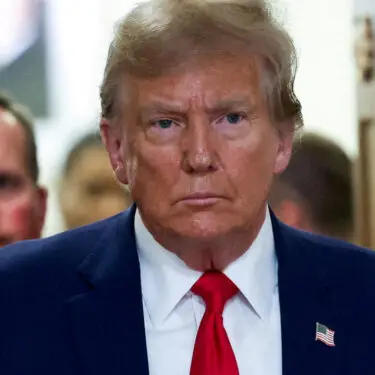
U.S. President Donald Trump reportedly carried out more than 22,000 stock transactions during 2025, marking an unprecedented level of investment activity compared with both his first presidential term and that of former President Joe Biden. According to an analysis of publicly available financial disclosures cited by the Financial Times, Trump’s stock purchases during the year may have ranged between $461 million and $1.4 billion, equivalent to approximately ₹4,333 crore to ₹13,160 crore.
The report states that Trump disclosed 22,136 stock transactions in 2025. By comparison, only 517 transactions were reported throughout his first presidential term from 2017 to 2020, while former President Joe Biden disclosed just 13 stock transactions during his entire presidency. The figures suggest a sharp increase in investment activity during 2025.
Registration Begins for FutureCrime Summit 2026, India’s Largest Cybercrime Conference
Because U.S. financial disclosure rules require reporting transactions within value ranges rather than exact amounts, the precise investment figures are not publicly available. Based on those disclosure ranges, analysts estimate that Trump’s stock purchases totaled between $461 million and $1.4 billion. Stock sales during the same period are estimated to have ranged from $138 million to $433 million, or roughly ₹1,297 crore to ₹4,070 crore.
The disclosures indicate that Trump’s investment portfolio included shares of several major U.S. technology companies. The reported holdings included investments of up to $70 million in Microsoft, up to $63 million in Apple, up to $33 million in Amazon, up to $21 million in Broadcom, and up to $67 million in Nvidia. Nvidia attracted particular attention because of its dominant position in artificial intelligence and semiconductor technologies.
According to the report, the investments were managed through eight separate investment accounts. Seven of those accounts primarily tracked broad U.S. stock market indices, while one account held selected individual stocks, including companies such as Kura Sushi and Kratos Defense.
A spokesperson for the Trump Organization said the President’s investments are managed by independent third-party investment firms. The spokesperson added that neither Trump nor his family is involved in selecting individual stocks or making day-to-day investment decisions.
The financial disclosures also show that Trump earned substantial income outside the stock market during 2025. According to the filings, he reported more than $2.2 billion in external income from a combination of cryptocurrencies, real estate, licensing agreements, legal settlements, and share sales.
Cryptocurrency reportedly emerged as the largest source of earnings. The disclosures indicate that businesses linked to Trump’s family generated more than $1.16 billion through crypto-related ventures and memecoin royalties. That figure reportedly includes approximately $526.8 million from sales of World Liberty Financial (WLFI) tokens.
Beyond digital assets, the disclosures indicate significant income from real estate and licensing businesses. International licensing agreements in countries including India, Saudi Arabia, Qatar, and the United Arab Emirates reportedly generated about $58 million. In the United States, Mar-a-Lago Resort recorded approximately $77.5 million in revenue, while three golf courses located in New Jersey, Florida, and Virginia generated more than $94 million.
The disclosures have also prompted renewed debate among ethics experts, some of whom argue that extensive personal investments by a sitting president could create the appearance of conflicts of interest between public policy decisions and private financial holdings. Representatives for Trump have rejected those concerns, maintaining that all investment decisions are handled independently and without the President’s involvement.
If confirmed, the scale of Trump’s reported investment activity in 2025 would represent one of the most extensive personal investment portfolios disclosed by a sitting U.S. president, renewing discussions about financial transparency, disclosure requirements, and safeguards against potential conflicts of interest in public office.
