

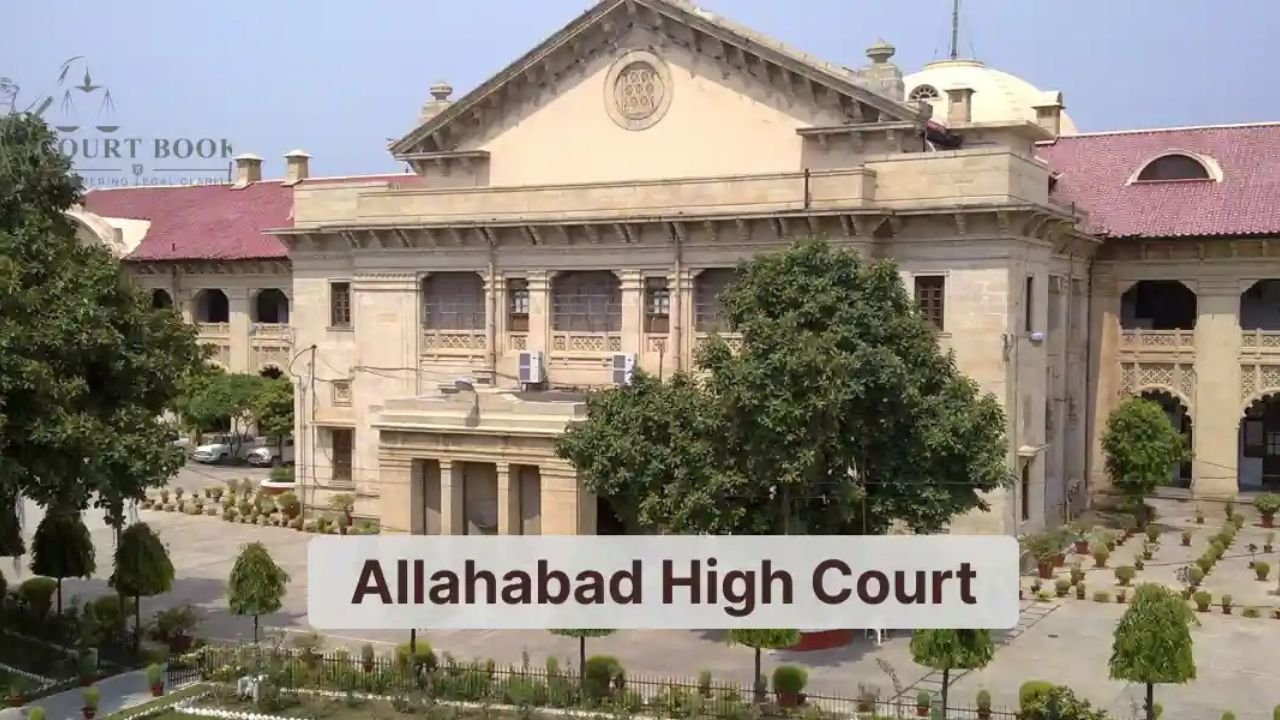

Prayagraj | In a significant judgment, the Allahabad High Court has held that a long-term consensual relationship between two adults cannot be treated as rape merely because the relationship did not culminate in marriage. The court observed that where a relationship is based on mutual consent and there is no evidence that the promise of marriage was false from the outset, the offence of rape is not made out prima facie. On this basis, the court quashed the criminal proceedings pending against the accused.
A single bench of Justice Vivek Kumar Singh allowed the petition filed by Sanjay Saroj alias Sanjay Kumar after examining the evidence, circumstances and submissions presented by both sides. The court concluded that the material on record indicated a prolonged consensual relationship and that the matter could not be classified as rape solely because the parties ultimately did not marry.
FCRF’s Flagship Cyber Law Certification Returns With a New Four-Week Cohort
The case originated in the Colonelganj area of Prayagraj, where an FIR was registered in 2019 under various provisions of the Indian Penal Code. The complainant alleged that the accused had established physical relations with her on the false promise of marriage and later refused to marry her. She further alleged that whenever she raised the issue of marriage, the accused assaulted and threatened her.
During the investigation, the complainant stated that the accused had lived with her and had allegedly recorded an objectionable video to blackmail her. She also claimed that a symbolic marriage ceremony had been conducted in the presence of some of the accused’s relatives. However, medical examination reportedly did not reveal any evidence of physical injuries. After completing the investigation, police filed a chargesheet in 2020, and the magistrate court took cognisance of the matter in 2021.
The accused subsequently approached the High Court seeking the quashing of the entire criminal proceedings. During the hearing, the court also took note of the fact that the complainant and the accused had married after the FIR was lodged. The court considered this circumstance relevant and observed that it could indicate that the criminal complaint had been used as a means to exert pressure for marriage.
In its detailed judgment, the court noted that the relationship had continued from 2014 to 2019, spanning nearly five years. Given the duration of the relationship, the court said it was difficult to accept that consent on every occasion was granted solely because of a promise of marriage. The bench observed that where a relationship continues voluntarily over a long period and there is no proof of a dishonest intention from the beginning, the subsequent breakdown of the relationship or failure to marry cannot automatically be treated as rape.
The judgment referred to several important Supreme Court rulings dealing with consent and promises of marriage. The High Court reiterated that a rape charge based on a promise to marry can be sustained only if it is established that the promise was false from the very inception and that consent was obtained on the basis of that deception. Where a genuine relationship existed and circumstances changed later, criminal liability for rape does not automatically arise.
The court further remarked that treating every failed long-term relationship as a rape case could amount to misuse of criminal law. It observed that the present matter fell within the category of exceptional cases where continuation of criminal proceedings would serve no useful purpose and would constitute an abuse of the judicial process.
Based on these findings, the High Court quashed all criminal proceedings pending against the accused before the trial court in Prayagraj. Legal observers view the ruling as an important precedent in cases involving allegations of rape arising from relationships based on promises of marriage, particularly in determining the distinction between a consensual relationship and one allegedly induced through deception.
