
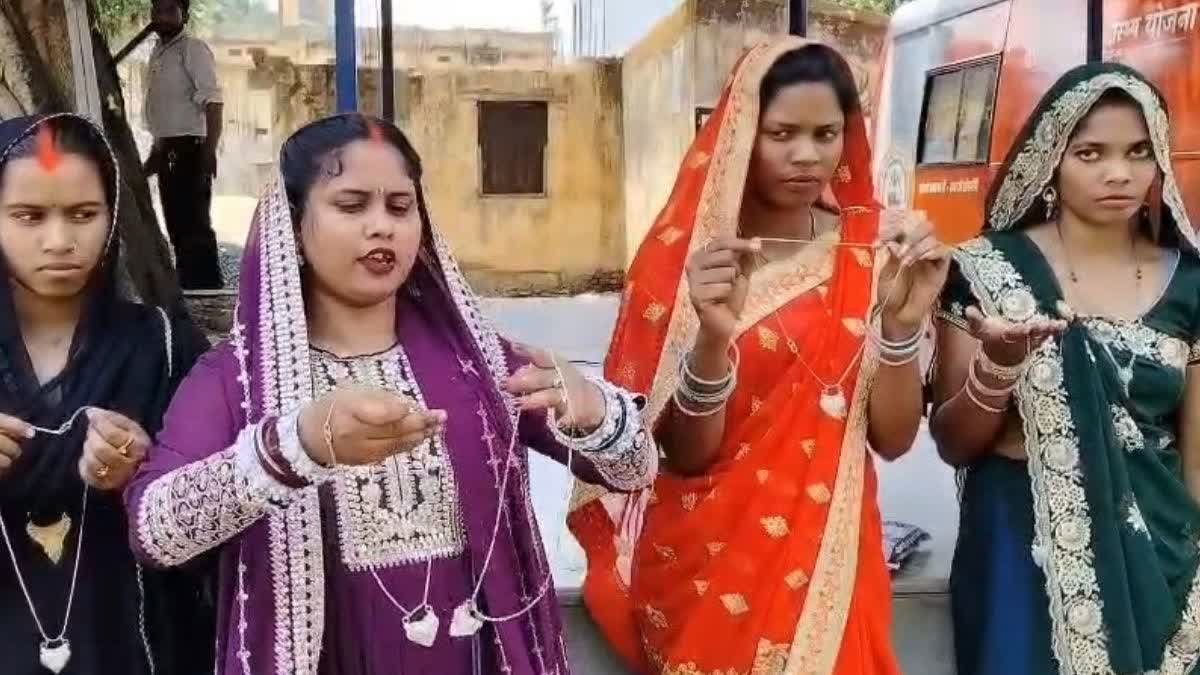
A major controversy has erupted in Chhattisgarh’s Manendragarh-Chirmiri-Bharatpur (MCB) district after mangalsutras distributed to newly married women under the Mukhyamantri Kanya Vivah Yojana allegedly turned pitch black within weeks of a mass wedding ceremony. The incident has triggered protests over corruption, fraud, and the misuse of public funds. The affected brides claim they were promised pure silver ornaments worth ₹15,000 each but were handed cheap jewelry made from fake metal alloys.
The controversy is linked to a mass wedding ceremony held on February 10 at the Mahamaya Temple complex in Chanwaridand, Khadgawan, under the state-sponsored welfare scheme. Around 180 economically underprivileged couples were married during the event, which was attended by high-ranking dignitaries and public representatives.
Registration Begins for FutureCrime Summit 2026, India’s Largest Cybercrime Conference
The “Gillet” Base-Metal Alloy Discovery
Initially, the beneficiaries did not suspect any foul play. However, within a few weeks of the wedding, several women noticed that the brilliant silver shine of their mangalsutras began to fade rapidly, leaving behind an oxidized black finish.
Driven by growing suspicion, five affected brides took their sacred wedding ornaments to independent local jewelers for professional testing. The laboratory evaluation dropped a bombshell: the ornaments, which officials had explicitly assured were pure silver, contained zero precious metal. Instead, they were found to be counterfeit items made from a cheap base-metal alloy mixture of copper, zinc, and nickel, commonly known in secondary markets as “Gillet.”
Betrayal of Sacred Marital Trust
The chemical findings triggered immediate protests by the affected brides, who demonstrated outside the district office of the Women and Child Development (WCD) Department. Displaying the tarnished, blackened mangalsutras to media channels, the newlywed women accused procurement officials of running a deliberate kickback scheme.
The beneficiaries argued that a mangalsutra is not merely a piece of decorative jewelry but a sacred symbol of marriage, dignity, and social respect. They emphasized that handing counterfeit trinkets to economically weaker families under a state welfare scheme was a deeply insulting betrayal of trust. One affected bride, Sanjana Dayal, stated:
“We were explicitly assured by department officials that these were genuine silver mangalsutras worth ₹15,000. Within weeks, the shine vanished completely and they turned entirely black. This is a cruel mockery of our dignity.”
WCD Rejects Claims and Explains Budgets
As the controversy intensified, the opposition Congress launched a scathing political attack on the ruling administration. Sushil Anand Shukla, Chairman of the Congress media cell, along with former MLA Gulab Kamro, accused the state machinery of exploiting the religious and emotional sentiments of underprivileged tribal families just to line the pockets of corrupt middlemen.
However, the Department of Women and Child Development categorically rejected the allegations of systemic corruption. WCD representative Aditya Sharma clarified that the department’s actual procurement ledger entirely contradicts the brides’ assumptions. He stated that the department had paid a mere ₹989 for each custom-ordered mangalsutra, as the scheme’s primary financial aid is routed directly via bank transfer.
According to state rules, rather than spending large tranches on physical jewelry, a direct cash benefit of ₹36,000 was securely deposited into the brides’ retail bank accounts via RTGS transfers. Chhattisgarh Health Minister and local MLA Shyam Bihari Jaiswal acknowledged the public outrage and promised a transparent, impartial inquiry into the procurement and quality-testing loop to resolve the unrest.
