
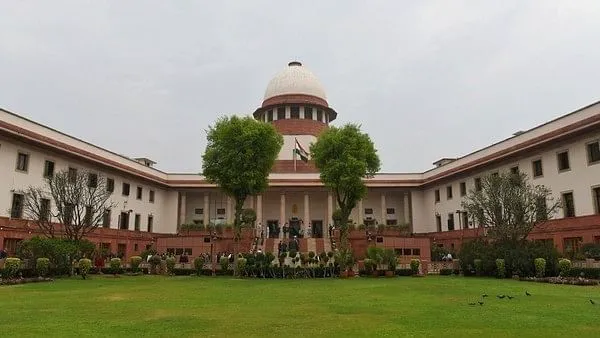
The Supreme Court on May 29 formally closed proceedings in a case that led to the creation of a nationwide digital system for processing premature release cases of prisoners. The Court noted that the National Informatics Centre has launched the “E-Prisons Early Release Processing Module” in collaboration with relevant stakeholders, paving the way for a uniform technology-based process across states.
Court Notes Launch Of Digital Module
A bench comprising CJI Surya Kant, Justice JK Maheshwari, Justice Pankaj Mithal, Justice Joymalya Bagchi and Justice Vipul M Pancholi noted that the new software module had been developed by the NIC to streamline the processing of early release cases.
FCRF’s Flagship Cyber Law Certification Returns With a New Four-Week Cohort
The Court said the responsibility for implementation has now been assigned to the State Legal Services Authority, in coordination with prison authorities and other prescribed authorities of the State Government. In view of this development, the bench found it appropriate to close the proceedings and dispose of the appeal.
Earlier Directions Sought Uniform System
The latest order follows an April 13, 2026 judgment by a bench of Justice JK Maheshwari and Justice Atul S. Chandurkar, which had sought an automated and uniform system for dealing with premature release of life convicts across the country.
The Court had issued comprehensive directions for the development of a software platform through the NIC after examining delays in the consideration of remission and premature release cases. It observed that dependence on physical files was contributing to delays and that a technology-based process was needed to ensure timely consideration of eligible prisoners.
Appeal Stemmed From Murder Conviction Case
The April 13 judgment arose from an appeal filed by Surendra alias Sunda against his conviction and life sentence in a murder case. During the proceedings, however, the Court considered broader issues relating to delays in remission and premature release cases in Uttar Pradesh prisons.
The Court found that a substantial backlog existed among eligible prisoners whose cases remained pending at different levels of the administration. With the launch of the E-Prisons Early Release Processing Module and the assignment of implementation responsibility to state authorities, the Supreme Court has now formally brought the proceedings to a close.
